America and Iran War: Infrastructure in the Crosshairs and Threats of Further Escalation

The war between the United States and Iran is witnessing an escalation that has extended to targeting infrastructure facilities, with mutual threats of further escalation, amid uncertainty about the future of the memorandum of understanding between the two parties and the fate of the Strait of Hormuz, and the regional and global repercussions that entails.
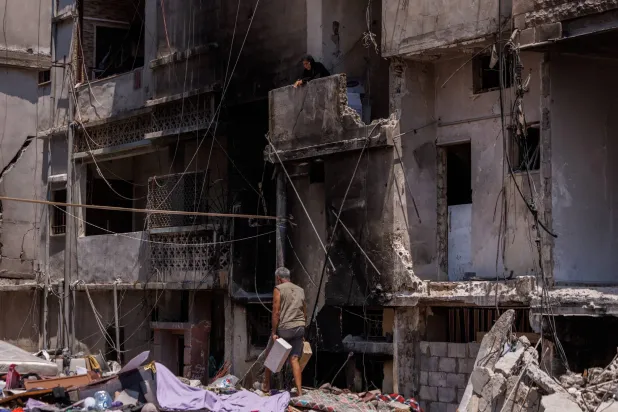
The United States has escalated its bombing campaign against Iran, carrying out continuous strikes over 6 days that have targeted several bridges in an attempt to cut off supply routes to the port of Chabahar, Iran's only port on the ocean.
According to The Wall Street Journal, this port typically handles 90% of the country's container traffic. Iran also uses these facilities to launch attacks on ships, according to a senior US official.
A US official told Axios that the military has bombed at least 7 bridges in the vicinity of Bandar Abbas, a center for Iranian Revolutionary Guard operations in the Strait of Hormuz. He added that ammunition, supplies, and reinforcements pass through Bandar Abbas to other areas of the strait.
The US Central Command said it destroyed on Thursday the observation tower at the Shahid Kalantari port in the Iranian city of Chabahar, noting that it was 'part of a maritime surveillance network on Iran's coast overlooking the Gulf of Oman'.
Electricity and nuclear facilities in the crosshairs
Three US and Israeli officials said the Donald Trump administration informed Israel of its intention to send dozens of additional refueling aircraft in preparation for a possible expansion of military operations against Iran, while the US president studies escalation options that could include striking Iranian infrastructure and nuclear facilities.
Axios quoted the sources as saying that the options under consideration include bombing infrastructure facilities in Iran, such as power plants, and launching more attacks on Iranian nuclear facilities to bury the enriched uranium stockpile at a greater depth, in addition to bombing the underground Pickaxe Mountain site, which is suspected of being a facility under construction.
Pickaxe Mountain is a fortified underground Iranian nuclear site near Natanz, which Western reports say could pave the way for Tehran to produce a nuclear bomb out of reach of airstrikes.
The Wall Street Journal also quoted a knowledgeable source as saying that flight tracking data showed the United States is redeploying fighter jets from Europe to the Middle East.
Earlier on Friday, US Central Command (CENTCOM) announced it had begun a new round of strikes against Iran for the seventh consecutive night, in the biggest escalation since the signing of the memorandum of understanding in June.
The Central Command said the strikes aim to continue weakening Iranian military capabilities, under the direction of President Donald Trump.
Iranian state television reported on Friday that the United States launched a series of violent attacks and airstrikes on various areas of the country.
The television said the sound of five explosions was heard in Yazd in central Iran, and that the United States launched a violent raid on the Larestan area in Fars province in southern Iran.
Iranian television added that explosions were heard in Sirik, Qeshm, and Bushehr, and quoted the governor of Khuzestan as saying that the United States is carrying out a large-scale attack on areas around the city of Ahvaz.
Iranian attacks target Jordan and Gulf states
The US attacks came after Iran launched a series of missile and drone assaults on Gulf states as well as Jordan, targeting vital facilities.
The Kuwaiti army announced on Friday that a fire had broken out and damage had occurred as a result of Iranian targeting of a number of vital civilian facilities, including facilities of a power and water desalination plant, due to drone attacks.
The Kuwaiti army confirmed in a statement the injury of a number of Kuwaiti ground force personnel in the Iranian attack on several of its facilities and camps, noting that the injured are in stable condition.
The army said that missiles and drones were detected in its airspace since dawn on Friday, and were intercepted and dealt with, resulting in falling debris that caused material damage.
The Kuwaiti Ministry of Electricity and Water also announced on Friday that the power and water desalination plant had sustained damage affecting a large number of electricity generation units.
It added in a statement that the damage necessitated activating emergency plans and immediate response to mitigate its effects and maintain the stability of the electrical system.
Iran threatens escalation
For his part, Mohsen Rezaei, military advisor to Iran's Supreme Leader, said that 'the armed forces may be forced to change their strategy and activate their ground capabilities' if the United States continues what he called 'its miscalculations'.
Rezaei added, according to Tasnim news agency, that Iran plans to deliver what he called a 'final blow' to those it considers 'aggressors', claiming that Tehran used the ceasefire period over the past months to identify and address its weaknesses, rebuild its capabilities, and strengthen its power.
Rezaei said that 'Iran's lack of entry into the ground attack phase and execution of large-scale destruction operations beyond its borders is due to Tehran's desire to avoid activating security fault lines at the international level,' according to his words.
The Iranian Tasnim news agency quoted a informed source as saying that a ship flying the Thai flag was targeted in the Strait of Hormuz on Friday after ignoring warnings and trying to pass through the strait without permission from the Iranian Revolutionary Guard Navy.
Oil prices rise
A return to a broader conflict could increase pressure on oil prices, which have already risen more than 10% this week, and could cast a shadow over the global economy—risks the US president said he is concerned about.
Oil prices rose more than 4% on Friday, hitting their highest levels in over a month.
Brent crude futures rose $3.87, or 4.59%, to settle at $88.10 per barrel. US West Texas Intermediate crude futures rose $3.54, or 4.48%, to $82.49 per barrel. Both benchmarks hit their highest levels since mid-June.
Both crudes rose about 16% during the week, with Brent on track for a third consecutive weekly gain and US crude on track for a second weekly gain.
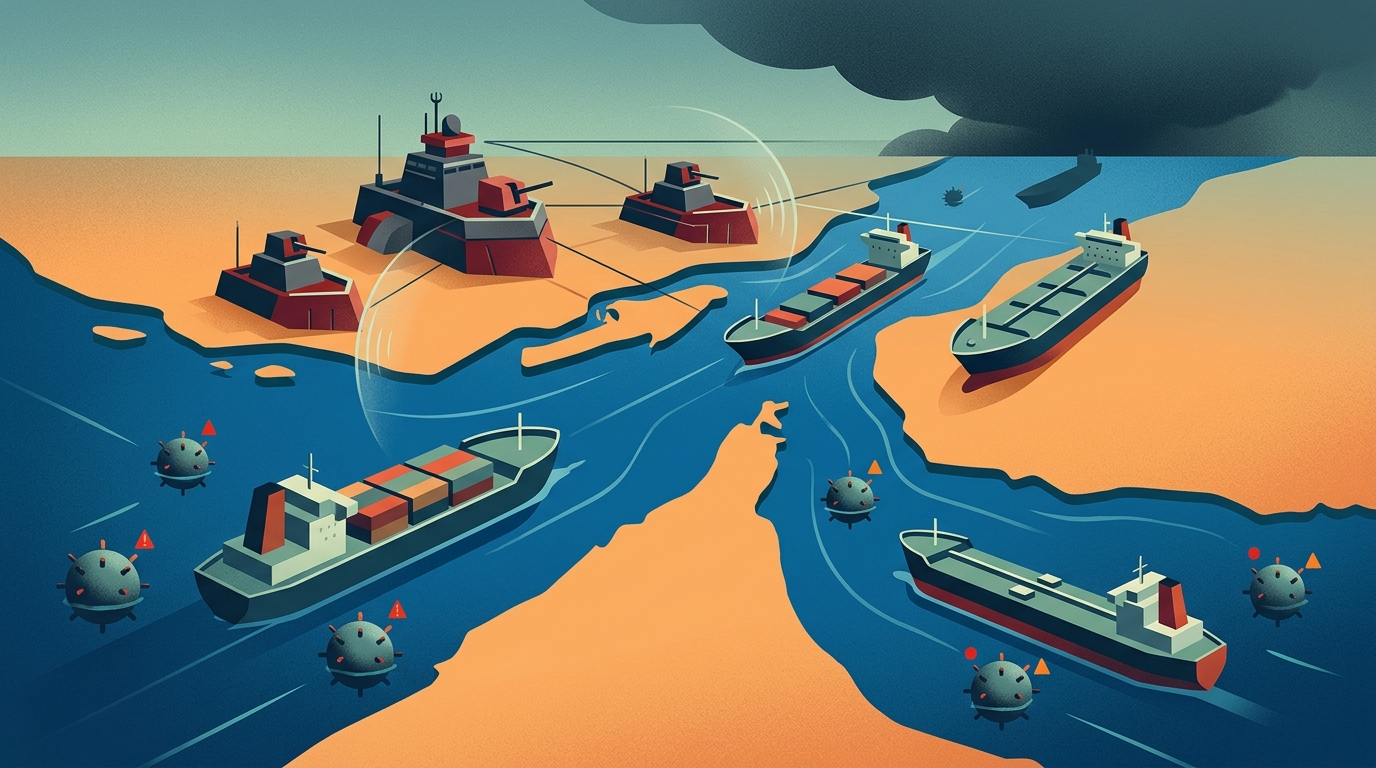
The collapse of the interim agreement to halt hostilities between the US and Iran led to a sharp decline in oil flows through the Strait of Hormuz, through which about 20% of global oil supplies passed before the war broke out.
The Strait of Hormuz was scheduled to be opened under the memorandum of understanding signed by Trump with Iran a month ago, but the agreement collapsed amid new Iranian attacks targeting navigation in an effort to obstruct US efforts to secure the passage of ships through the strait off the coast of Oman.
Original source: Asharq News




Comments (0)
Be the first to comment.