Rare agreement between Trump and Sanders: America needs a sovereign wealth fund

Over the past few years, Western countries that were previously hesitant to own stakes in their national companies or invest in them have adopted a tool traditionally associated with oil states and export-dependent economies: sovereign wealth funds.
Canada, Ireland, Portugal, and Spain have recently announced the launch of new investment funds aimed at boosting domestic manufacturing and accelerating progress in fields such as artificial intelligence and clean energy, hoping to deploy the returns for the benefit of their citizens.
Mon, 03 2025
The idea of a sovereign wealth fund is making its way to America
Remarkably, these funds enjoy broad support even amid rising political polarization. Ashby Monk, executive director of the Stanford Research Initiative on Long-Term Investing, said, "This tool is now everywhere and brings together left- and right-wing currents," adding, "The state's role is no longer limited to regulation, borrowing, and spending; it has also become an owner, investor, and guide for capital allocation."
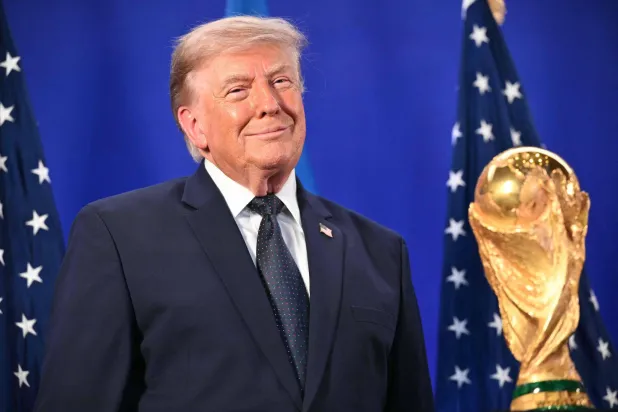
The United States is the latest country to move toward the idea of creating a sovereign wealth fund, but, as usual, it has not yet finalized the project's details. In February 2025, President Donald Trump issued an executive order calling for the creation of a sovereign wealth fund "to maximize the management of our national wealth for the exclusive benefit of American citizens." However, the order lacked essential details, most notably who will manage the fund and, more importantly, the source of funding.
Since then, the government has poured investments into chip manufacturing companies, rare earth mineral projects, and quantum computing firms, but the structures of these deals have lacked much consistency.
Attempts to turn these scattered investments into the nucleus of a sovereign wealth fund have been accompanied by proposals that seemed unrealistic for funding it, such as using proceeds from the sale of TikTok's US operations from its Chinese parent ByteDance, or using tariff revenues. However, neither of these proposals materialized.
Wed, 25 2026
Will the government become a partner in AI companies?
One of the newest and most interesting proposals enjoys support not only from the US administration but also from one of its most prominent critics, Senator Bernie Sanders of Vermont. It calls for creating a fund based on equity stakes in AI companies such as OpenAI and Anthropic.
It seems logical that all Americans should benefit from the AI boom, rather than its gains being limited to the tech elite. Even AI companies themselves seem open to this idea.
OpenAI CEO Sam Altman has proposed giving the US government 5% of his company, according to the Financial Times, saying that would allow Americans to share in the gains while also providing them protection against the potential fallout of the AI revolution on the job market.
Image(1)
Tue, 18 2025
Saudi Arabia's investment fund is a model that catches America's eye
The rising interest in sovereign wealth funds is due to several factors. Both Saudi Arabia's Public Investment Fund, with assets exceeding $900 billion, and Singapore's Temasek Holdings, which manages over $500 billion in assets, have achieved strong returns since their inception, along with contributing to economic development and perhaps also diversifying their countries' economies.
Sovereign wealth funds could also provide a fair way to compensate taxpayers when governments are forced to bail out important companies during crises, as happened with US banks deemed too big to fail during the 2008 global financial crisis, or when they intervene to support vital supply chains, as happened with the personal protective equipment sector during the COVID-19 pandemic.
Imagine if Americans today owned stakes in M3, the producer of N95 surgical masks, along with stakes in companies like Ford, Citigroup, and JPMorgan Chase.
Mon, 19 2026
Government stakes in AI companies: opportunity or risk?
In a New York Times article, Bernie Sanders argues that advanced AI models were built on our collective knowledge, so citizens should have a share of the returns they generate. He proposes creating a US sovereign wealth fund that would own up to 50% stakes in major AI companies, distributing annual dividends equivalent to 5% directly to citizens.
However, there are several reasons for America to approach this idea with caution. Government ownership of such large stakes would be a major shift from America's traditional approach of minimal intervention in the economy, and might deter other investors from investing in those companies.
Another issue is that if the government invests in tech companies, lawmakers may become less willing to impose strict regulations that could limit their growth, even when it is in the public interest. This may partly explain the enthusiasm of Anthropic CEO Dario Amodei and other industry leaders for the idea of giving the government stakes in their companies.
Mon, 28 2025
Will political polarization abort the US sovereign wealth fund?
Any fund of this type requires professional and experienced management, free from interference by government officials—something that has become rare in America these days—along with complete independence from shifting political winds, regardless of direction.
Take, for example, the experience of public pension funds in California and Texas, which found themselves forced to adopt investment criteria based on environmental, social, and governance (ESG) principles, then abandon them as the momentum for socially responsible investing waned.
Michael Maduell, founder of the Sovereign Wealth Fund Institute, said, "The idea is good, but I don't know if it will be suitable for this country, given this level of political division."
This division is clearly evident in the US debate over creating a sovereign wealth fund. Politicians from both parties agree on the idea's viability in principle, but they differ on how to fund the fund, its management mechanism, and who should benefit from its returns.
In a project of this scale, a clear strategic vision from the outset is a fundamental condition for its success. Therefore, the question may not be whether America should have a sovereign wealth fund, but whether the country has enough discipline to deserve owning one.
Original source: Aleqtisadiah





Comments (0)
Be the first to comment.