Egyptians Await 'Fuel Shock'... Will Gasoline and Diesel Prices Rise?
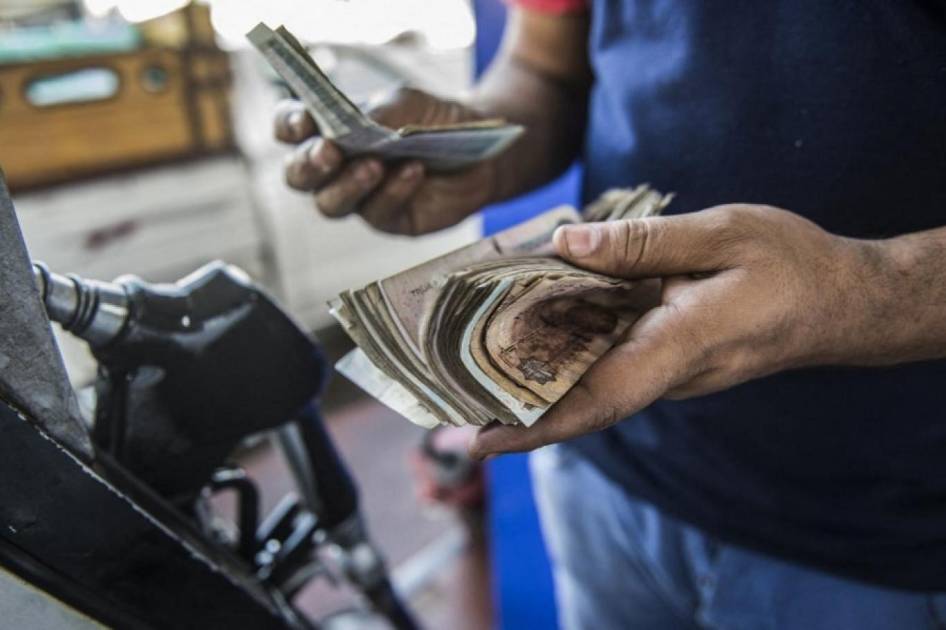
Summary: Despite the Egyptian government's promise at the end of last year to freeze fuel prices through 2026, the war conditions in the Gulf region and the subsequent energy crises prompted it to abandon that promise.
The Egyptian public is eagerly awaiting the meeting of the Automatic Fuel Pricing Committee in the coming days to review prices of gasoline, diesel, and all fuels for the next three months, amid a global energy crisis that makes it unlikely to see lower fuel prices at Egyptian gas stations in the foreseeable future.
Faced with looming fears of an increase, Mahmoud al-Malwani, a taxi driver, seems more accepting of the shock than before. However, unlike other drivers, al-Malwani hopes to quickly calculate the cost of the 'school run'—through which he transports six students to and from school—adding the new fuel prices, before the start of the new academic year next September.
Passing the cost to passengers
Speaking to 'Indy Arab', the taxi driver, who uses his car to transport students to schools in the Hadayek al-Qubba neighborhood in central Cairo, said that the cost of transporting one student last year was around 2,000 Egyptian pounds ($40.30), and this cost will increase with the rise in fuel prices in the new academic year. He hopes to calculate that cost before the start of the school year.
He indicates that he does not prefer to adjust that cost every time fuel prices rise during the academic year in its two semesters, but he will have to hedge against future increases during the year to avoid doing so during the school months.
Although he passes on the fuel price increase to passengers, Mahmoud acknowledges his own suffering as the head of a family of five, especially since the rise in energy prices quickly translates into a wave of inflation affecting everything from food to medicine and services.
Rising inflation rate
The annual inflation rate in Egyptian cities recorded 14.3 percent in June, compared to 14.6 percent in May, according to data from the Central Agency for Public Mobilization and Statistics released last week.
In the face of such suffering, Egyptians receive news of fuel price adjustments in their country with great resentment. Although the Egyptian government had previously promised at the end of last year to freeze fuel prices through 2026, the war conditions in the Gulf region and subsequent energy crises prompted it to abandon that promise.
In March, Egypt raised fuel and gas prices by between 14 and 30 percent, the third increase in the last 12 months, according to a statement issued then by the Ministry of Petroleum and Mineral Resources.
Price increases
The price of diesel, one of the most widely used fuels in Egypt, rose by three pounds to 20.50 pounds ($0.3887), up from 17.50 pounds ($0.35).
Gasoline prices rose by up to 16.9 percent, depending on the type. The price of 80-octane gasoline reached 20.75 pounds ($0.42), 92-octane rose to 22.25 pounds ($0.45), and 95-octane to 24 pounds ($0.48).
Days ago, Prime Minister Mostafa Madbouly announced the return of the Automatic Petroleum Products Pricing Committee to work again, starting from the first quarter of the current fiscal year.
In a press conference, Madbouly responded to talk about the need to reduce petroleum product prices, saying that the Petroleum Products Pricing Committee will determine, according to its mechanisms, equations, and studies, whether to lower or keep the current prices.
Scenario of reducing petroleum product prices
He affirmed then that the government does not want to impose any burdens on citizens, but the recent war caused oil prices to rise significantly, which prompted the increase in petroleum product prices at that time.
Gasoline prices rose by up to 16.9 percent, depending on the type (AFP)
Energy experts rule out a scenario of reducing petroleum product prices in Egypt in the coming weeks, in light of global energy price fluctuations, the return of geopolitical tensions, and other technical factors governing the decision of the Automatic Fuel Pricing Committee.
Professor of Petroleum and Energy Engineering Gamal al-Qulyoubi does not view the recent drop in global oil prices to levels below $75 per barrel as an indicator necessarily leading to a reduction in petroleum product prices in Egypt, as this decline is not sustainable but is more related to temporary factors.
Oil price in the budget
Al-Qulyoubi adds that the general budget in Egypt for the current fiscal year was set based on an average oil price of $75 per barrel, and that every $1 increase above this level burdens the public treasury with financial costs ranging between 2.5 and 3 billion pounds ($0.050 and $0.060 billion).
Read more
"High prices" fix fuel prices in Egypt until end of year
Fuel price increases in Egypt... Citizens resist inflation shock with alternatives
Fuel price adjustments in Egypt by over 12 percent
Al-Qulyoubi points out that the Automatic Fuel Pricing Committee takes into account, when making decisions on petroleum product prices, a number of key indicators, including global oil market reports, supply and demand levels, producer countries' policies, as well as recommendations from international economic institutions, noting that the committee will continue to monitor all global economic variables in the coming period before issuing its decisions.
As for former Egyptian Minister of Petroleum Osama Kamal, he believes that the government’s caution before making new pricing decisions is optimal at present in light of global energy price fluctuations, pointing out that the decline in oil prices in recent weeks does not mean a reduction in petroleum product prices in Egypt.
Reducing fuel subsidies
Kamal believes that the average oil price in the second quarter of the year is $90, a figure higher than what the Egyptian Ministry of Finance set when it estimated the average at about $75 per barrel in this year's budget, which excludes the scenario of the government fuel pricing committee reducing gasoline and diesel prices at this time.
The subsidy for petroleum products in the draft general state budget for fiscal year 2026-2027 declined to about 15.840 billion pounds ($0.32 billion) compared to 75.033 billion pounds ($1.51 billion) in the 2025-2026 budget, a decrease of about 59.193 billion pounds ($1.19 billion) or 78.9 percent.
Reducing fuel subsidies in Egypt is a key demand of the International Monetary Fund, which has had a financing program with Cairo since March 2024 worth $8 billion.
Most likely, the decision of the Automatic Fuel Pricing Committee in the coming days will be limited to either adjusting gasoline and diesel prices or, at best, keeping them unchanged, amid widespread hopes at both official and public levels to leave the circle of financial and economic crises in the coming period.
Original source: Independent Arabia




Comments (0)
Be the first to comment.