The Theft That Changed Its History: How the Italian Sculpture Became a Global Icon?

The article details the history and significance of the FIFA World Cup trophy, including its design, weight, the theft of the earlier Jules Rimet trophy, and its status as a global sports icon.
The value of the World Cup trophy goes beyond being the most prestigious prize in football; since its first appearance in 1974, it has become one of the most famous sports symbols in the world.
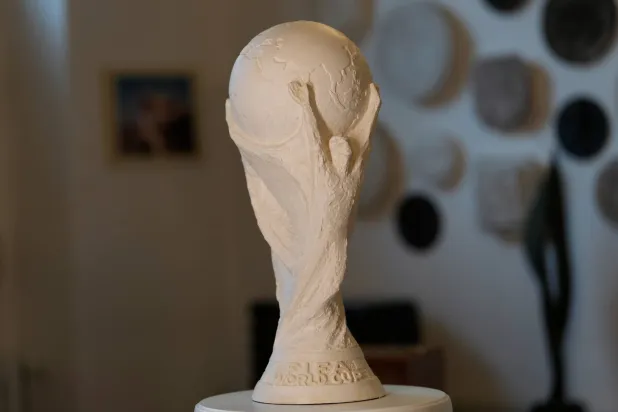
According to the FIFA website, the trophy weighs 6.142 kilograms, stands 36 centimeters tall, and contains 5.092 kilograms of 18-carat gold.
Italian design
The trophy was designed by Italian sculptor Silvio Gazzaniga in Milan, after FIFA decided to replace the Jules Rimet Trophy, which was given to Brazil to keep permanently after they won the World Cup for the third time in 1970.
FIFA chose Gazzaniga's design from 53 proposals submitted by sculptors from 7 countries, making the new design the official prize for the tournament starting with the 1974 edition in West Germany.
The design shows two figures holding up the Earth, an image through which the sculptor intended to express the struggle for victory, the joy of the fans, and the moment of triumph, while the trophy rests on a base of green malachite stone.
The theft of the trophy
The current World Cup trophy is not the first in the tournament's history. The early editions featured the Jules Rimet Trophy, which was stolen twice. The first time was in England in 1966 before the tournament began, before it was found by a dog named Pickles wrapped in a newspaper in a garden.
The second theft occurred in Brazil in 1983, after the Brazilian Football Confederation kept it following their third title win in 1970, and it has not been found since, believed to have been melted down after the theft.
After Brazil permanently kept the trophy, FIFA adopted the current trophy, which entered service starting with the 1974 edition.
A copy for the champion
The original trophy remains the property of FIFA, and the winning team does not get permanent ownership.
The world champions receive the original trophy during the award ceremony, before it is returned to FIFA, and the winning team later receives a gold-plated replica to keep.
The original trophy is displayed among the exhibits at the FIFA Museum in Zurich, Switzerland.
A symbol beyond gold
Despite its material value, the trophy derives its essential importance from its symbolic status, becoming a symbol of the dream that national teams compete for every 4 years.
While the champion's name changes from edition to edition, the golden trophy remains a constant symbol of the highest achievement in football, and one of the most prominent sports symbols in the world.
Original source: Aleqtisadiah


Comments (0)
Be the first to comment.