Oil Pauses Gains as Immediate Supply Risks Assessed

Hormuz transit drops to seven ships, and markets tighten caution.
Oil pauses gains as immediate supply risks assessed.
Oil prices edged lower on Thursday after three consecutive days of gains, as investors assessed the impact of continued US military operations against Iran and the potential for ongoing shipping disruptions through the Strait of Hormuz.
Brent crude futures fell 58 cents, or 0.68%, to $84.37 a barrel by 08:08 GMT, while US West Texas Intermediate crude futures fell 18 cents, or 0.23%, to $79.42 a barrel. Brent had risen nearly a dollar earlier in the session, and both contracts remain near one-month highs.
Ole Hvalbye, market analyst at SEB Research, said: 'The market is still reacting with remarkable calm.' It seems plausible that prices will continue to rise towards $90-95, and possibly back to $100, due to repeated disruptions in the Strait of Hormuz, creating uncertainty about oil flows from the Gulf.
The United States launched attacks on Iranian coastal defenses and missile sites on Wednesday after reimposing a naval blockade on its ports, while Tehran threatened to cut more regional energy exports, saying it is waging an 'existential war' with America. The renewed conflict has dissipated much of the optimism that followed the temporary easing of tensions last month.
This escalation follows the collapse of a fragile ceasefire reached in June, reviving fears of a return to full-scale conflict and disruption of energy flows through the Strait of Hormuz, through which about a fifth of the world's daily oil and liquefied natural gas trade passed before the war began.
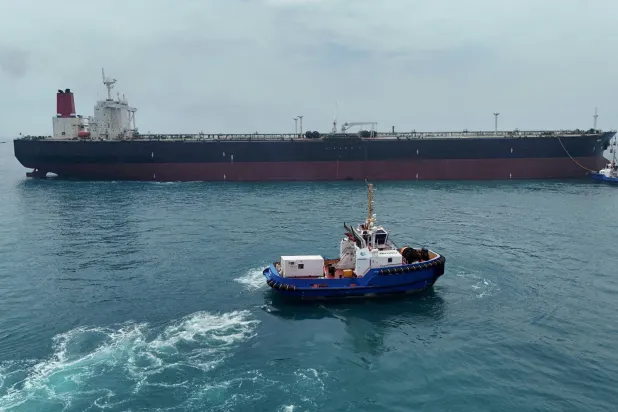
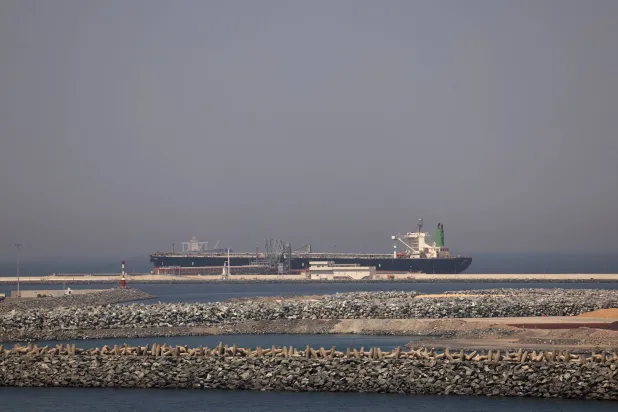
Ship traffic through the strait declined on Wednesday, the first day after the US reimposed its naval blockade on Iran. Only seven ships passed on Wednesday, compared to 13 the previous day.
Wael Makarem, senior financial markets strategist at Exness, said: 'Markets may remain cautious as they assess immediate supply risks. So far, despite escalating military tensions, oil tankers are still crossing the Strait of Hormuz, albeit in limited numbers.'
Iran said on Thursday that the strait represents a 'red line' that cannot be violated, warning that if US President Donald Trump carries out his threat to attack Iranian infrastructure, it will strike all infrastructure in the Gulf region.
Analysts say Iran has hinted that it may use its Houthi allies in Yemen to close the Bab el-Mandeb passage on the Red Sea, opening a new front against Washington and jeopardizing the world's second most important energy artery.
Both benchmark Brent and US crude had risen nearly 10% to one-month highs earlier in the week as the Iran conflict reignited. Markets remain focused on the security of the Strait of Hormuz, through which about a fifth of global oil and LNG shipments normally pass.
The latest gains followed a new wave of US strikes on Wednesday targeting Iranian military sites linked to attacks on commercial vessels. Washington said the operation aims to weaken Iran's ability to threaten maritime navigation in the Gulf.
ING bank analysts said in a note: 'The concern is that renewed oil supply disruptions come amid significant inventory draws in the second quarter, making the market more vulnerable.'
The analysts added: 'Furthermore, releases from global strategic petroleum reserves, which have helped the market in recent months, are scheduled to end in the next few weeks.'
Jefferies analysts said they expect the current phase of escalation to continue for several weeks, even if it does not develop into all-out war, noting that this will likely disrupt navigation through the Strait of Hormuz and maintain upward pressure on oil prices.
In related news, the US Energy Information Administration reported on Wednesday that crude oil inventories fell by 1.7 million barrels in the week ending July 10, largely in line with expectations.
Gasoline inventories fell by 1.5 million barrels as driving demand remained strong during the peak summer season. In contrast, distillate inventories rose unexpectedly by 4.6 million barrels.
The International Energy Agency noted in its July oil market report that although oil flows through the strait partially recovered in June, the renewed hostilities this month have cast a shadow over the outlook and could hinder achieving a surplus in 2027.
Original source: Al-Riyadh


Comments (0)
Be the first to comment.