US inflation slows more than expected in June, registering 3.5%

Inflation rates in the United States recorded a sudden and sharp decline during last June, the largest monthly drop in the consumer price index since April 2020...
Consumer inflation in the United States slowed at a faster pace than expected last June, but that may not be enough to reassure households or rule out the possibility of an interest rate hike by the Federal Reserve (the US central bank) this year, amid continued uncertainty related to the conflict in the Middle East.
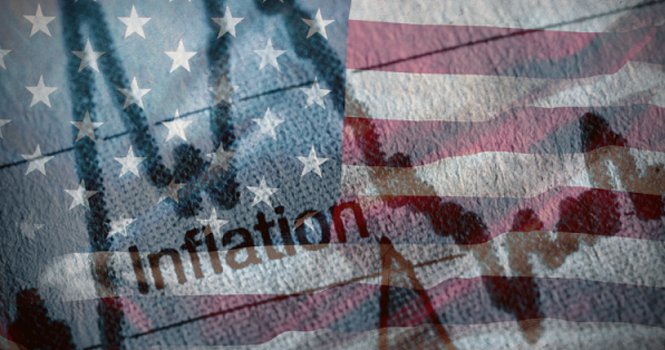
Data released by the Bureau of Labor Statistics of the US Department of Labor on Tuesday showed the consumer price index rose 3.5% in the 12 months ending last June, compared to an increase of 4.2% in the preceding May, which was the highest annual increase since April 2023.
On a monthly basis, the index fell 0.4% after rising 0.5% in the previous month. Economists polled by Reuters had expected annual inflation to rise 3.8% and the monthly index to drop only 0.1%.
The decline in the consumer price index is mainly due to a drop in gasoline prices from their high levels, following a fragile ceasefire between the United States and Iran last month. However, that agreement collapsed last week after commercial oil tankers were targeted in the Strait of Hormuz, leading to renewed military confrontations between the two sides.
The escalation of tensions reversed the trend in fuel prices, as the average gasoline price in the United States rose to $3.86 per gallon on Tuesday, compared to $3.79 a week earlier, according to data from the American Automobile Association. Upward pressures on prices are expected to continue, after oil prices reached their highest levels in 4 weeks, following the United States re-imposing a naval blockade on Iran.
Excluding volatile food and energy prices, the core consumer price index rose 2.6% annually last June, compared to a 2.9% increase in May, while the core index stabilized on a monthly basis after rising 0.2% in the previous month.
The Federal Reserve monitors personal consumption expenditure price indices as its preferred measure for inflation, targeting a rate of 2%. Inflation last fell below this level in early 2021.
Minutes of the Federal Reserve’s meeting held on June 16-17, which were released last week, showed growing concerns among policymakers about the inflation path. The central bank kept the key interest rate unchanged at a range of 3.50% to 3.75% during its June meeting, although its new projections indicated higher chances of a rate increase in 2026.
Before the inflation data release, financial markets placed a probability of the Federal Reserve raising interest rates at its meeting scheduled for September 15-16 at around 51.9%, according to the FedWatch tool of the Chicago Mercantile Exchange.
Original source: Asharq Al-Awsat


Comments (0)
Be the first to comment.