"Wing Struggle" Confuses Democrats' Calculations Before Midterm Elections

In a time when US President Donald Trump and Republicans face increasing pressure due to rising costs of groceries, fuel, housing, and healthcare, Democrats expected to invest the summer in building momentum ahead of the midterm elections.
But that is not happening. Instead of building an overwhelming electoral force, ongoing disputes between Democratic Party wings, from Maine to Colorado, threaten to weaken its political message and undermine its chances of success in November, including its bid to regain a majority in the US Senate, according to Bloomberg.
This crisis currently manifests in Maine, where Senate candidate Graham Blattner seeks to have a say in the mechanism for replacing him on the ballot after being accused of sexual assault, allegations he has repeatedly denied.
Blattner said Wednesday that he would suspend his campaign and begin withdrawal procedures. He added that his team won the primary "the right way," but hinted that he was a victim of efforts to remove him from the ballot, asserting that voters who gave him their votes deserve a role in choosing his successor in the race.
Blattner said in an 11-minute video posted on X: "The ball is now in the Democratic establishment's court. My name may still be on the ballot, but this seat on the ballot belongs to the people of Maine."
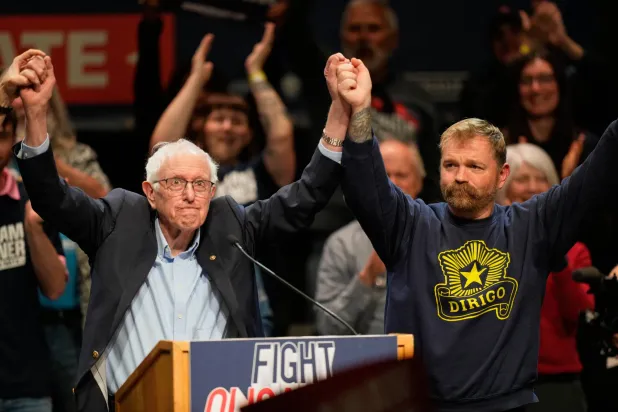
Blattner's rise was supported by the progressive wing of the party, which admired his character, in a challenge to incumbent Republican Senator Susan Collins.
As the Democratic Party in Maine began outlining a "transparent" process to select an alternative candidate, Blattner's campaign team sought to rally his supporters to ensure a more moderate candidate was not chosen to replace him. Democratic strategist Cornell Belcher said: "What's happening in Maine is chaos."
Lingering Division
But the lines of division are not limited to Maine. Over the past month, tensions between the progressive and traditional wings of the Democratic Party escalated after candidates backed by Democratic Socialists won a series of primaries.
David Axelrod, a senior adviser to former President Barack Obama, said: "There is a strong anti-establishment, reformist, and populist trend in the country, and I don't think it's limited to Democrats; I also see it among independents. It's not just about Trump, but about a system that people feel has failed them, and a traditional policy inadequate for the current situation."
This anti-establishment trend was evident in recent Democratic primaries in Colorado, where Melato Quiros, a first-time candidate backed by the Democratic Socialists of America, defeated veteran Representative Diana DeGette in an electoral surprise.
This trend also appears in Michigan, a swing state that Trump won in the 2016 and 2024 elections. Representative Haley Stevens, backed by Senate Minority Leader Chuck Schumer, is running for a Senate seat against former public health official Abdul El-Sayed, who is supported by New York Representative Alexandria Ocasio-Cortez and a number of progressives.
Stevens and El-Sayed will face off in a primary debate on Tuesday, where they will discuss US relations with Israel and the future of the Department of Homeland Security—issues that have become defining tests among Democratic Party wings.
The two candidates are competing to keep the seat currently held by retiring Senator Gary Peters in Democratic hands. Holding this seat is essential if the party wants to maintain any chance of regaining control of the Senate. Meanwhile, Republicans have largely rallied behind Representative Mike Rogers, known for his expertise in national security issues.
In this race, as across the United States, the traditional wing of the Democratic Party fears that more left-leaning candidates who win primaries may not be acceptable to the broader swath of voters who participate in general elections.
US President Donald Trump and Republican officials have already begun describing these candidates as "Communists" posing a threat to the United States.
Matt Bennett, an executive at the centrist think tank Third Way, said: "It's healthy for parties to have such debates. But we are concerned that the Democratic Socialists of America are not only trying to push the party leftward, but have become a faction, similar to the Tea Party movement, which fundamentally changed the nature of the Republican Party. This could be a long-term problem for Democrats."
Although polls still show voters' continued dissatisfaction with Trump's handling of the economy and the Iran war, Democrats still have some strengths.
Ghost of July 2024
Despite a year that saw redistricting and Supreme Court rulings on voting laws that generally favored Republicans, Democrats remain the favorites to regain control of the House of Representatives in November.
As for the Senate, where Democrats need a net gain of four seats, it has always been a tougher battle for them. However, almost any path to regaining a majority goes through winning the Senate seat in Maine.
Over Maine, and the entire Democratic Party, looms the ghost of events in July 2024, when party leadership and top donors pushed former President Joe Biden to drop out of the presidential race after his poor performance in a debate with Trump, before controversially selecting Vice President Kamala Harris to replace him on the ticket without voters having a say in the process. Progressives in Maine do not want that scenario repeated.
Adam Green, co-founder of the Progressive Change Campaign Committee, told Bloomberg: "I appreciate the Maine Democratic Party's stated goals of an open, transparent, and legitimate process, and I'm glad they're making arrangements to prepare a plan, but I wonder why this plan was kept secret until Blattner's withdrawal."
The party said Wednesday that more than 100 members of the state committee "voted to hold a nominating convention to select a new candidate." Under Maine law, the party must choose a replacement for Blattner by July 27.
Democratic strategist Belcher considered that the left in Maine has focused too much on searching for a "perfect candidate" to counter Trump and his decade-long appeal among working-class voters.
He added that Harris's victory in Maine by seven percentage points in the 2024 presidential election shows that the party needs a candidate "simply capable of motivating and rallying voters and winning a majority of the moderates who gave Harris the victory in 2024."
Original source: Asharq News



Comments (0)
Be the first to comment.