Bank of Canada holds rate, warns of war repercussions and US trade policies
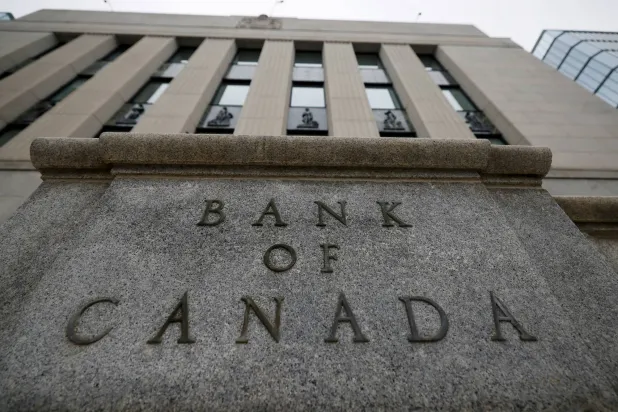
The Bank of Canada kept its benchmark interest rate unchanged at 2.25 percent for the sixth consecutive time, striking a delicate balance between signs of domestic economic recovery and escalating global geopolitical risks.
The bank's Governing Council explained in its statement on Wednesday that the current interest rate remains appropriate to sustain the economic recovery and ensure inflation returns to the target range of 2 percent, noting that the hold decision also included keeping the bank rate at 2.5 percent and the deposit rate at 2.20 percent.
The move comes as policymakers see clear signs of improvement in Canadian economic performance, alongside accelerating growth and expectations of a gradual decline in inflation, although the economic outlook remains hostage to volatile developments in the Middle East and uncertainty surrounding trade policies with the United States.
The central bank noted that global economic data have shown notable divergence since the Monetary Policy Report of last April, with expectations negatively affected by higher oil prices resulting from the ongoing conflict in the Middle East, while economic activity in several countries received strong support from the investment boom in artificial intelligence.
In this context, the bank expects global GDP growth to slow to 2.75 percent this year due to the repercussions of geopolitical tensions, before recovering to around 3.25 percent in 2027 and 2028, driven by solid growth in the United States at 2.5 percent thanks to strong consumption, and robust expansion of the Chinese economy supported by exports, as well as an expected improvement in the euro area in the second half of the year provided current energy prices decline.
On the domestic Canadian front, the statement confirmed that the economy began to regain growth momentum in the second quarter of this year with an estimated increase of 2.5 percent, after a period of volatility and relative slowdown resulting from markets adapting to new tariffs and declining population growth rates. Despite continued weakness in the labor market, reflected by unemployment data stable at 6.5 percent in last June, within the range prevailing since late 2024, growth sources have begun to broaden to include continued solid consumer spending, stability in housing activity, and resumption of export growth. The bank also expects a gradual recovery in business investment, supported in the near term by the oil and gas sector, along with government spending, raising GDP growth from 0.7 percent this year to 1.8 percent in 2027 and 2028.
Regarding inflation, the Bank of Canada explained that the consumer price index accelerated to 3.2 percent in last May, driven mainly by a jump in gasoline prices linked to the Middle East war, while core inflation excluding fuel stabilized near 2 percent. While the bank expects inflation pressures to persist in June readings, it projects them to gradually ease in the coming months and settle at the target of 2 percent in early 2027.
The bank concluded by stressing that the divergence between high US bond yields and stable Canadian yields contributed to the decline in the Canadian dollar, emphasizing its full readiness to adjust monetary policy as needed to address any trade or oil shocks that may arise from the turbulent international situation.
Original source: Asharq Al-Awsat






Comments (0)
Be the first to comment.