Bank of England Official: Slowing Growth and Weak Labor Market Limit Likelihood of Rate Hike
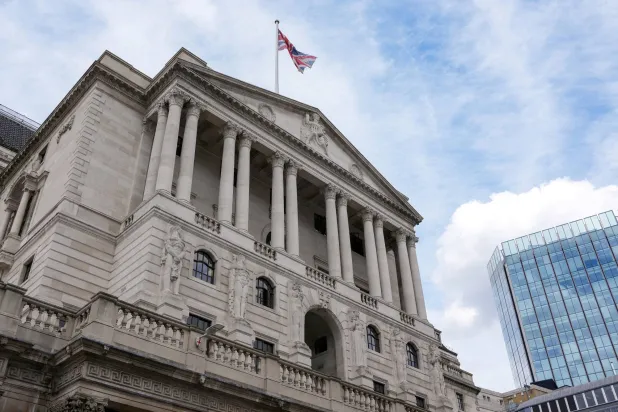
Sarah Breeden, a Bank of England monetary policy official, said Thursday that the slowing British economy and weak labor market reduce the likelihood of the bank having to raise interest rates to counter inflationary fallout from the Iranian war.
Breeden added in an interview with Bloomberg: 'We have weak economic forecasts and are witnessing a recession in the labor market.'
She continued: 'These two factors make it unlikely that this shock will become a sustained factor leading to inflationary dynamics that might require us to intervene to contain it.'
Breeden, who voted last month to keep interest rates unchanged alongside the majority of Monetary Policy Committee members in a 7-2 vote, confirmed that she would support raising borrowing costs if signs of a feedback loop between prices and wages emerged.
Sterling Hovers Near Two-Month High
The pound sterling steadied near its highest level in more than two months against the dollar, while edging lower against the euro, as concerns over Britain's financial situation receded.
Data showed the British economy recorded slight growth in May, driven by expansion in the services sector, while other sectors contracted, reflecting persistent weak business confidence.
The US dollar saw little change against major currencies, as the impact of slowing inflation on US interest rate expectations balanced concerns over rising oil prices.
The pound sterling fell 0.05 percent to $1.3533, after jumping 1.13 percent in the previous session to $1.3556, its highest level since May 12.
Andy Burnham is expected to be officially sworn in as Prime Minister on July 20. The UK's Office for Budget Responsibility warned last week that the country may need additional tax increases or spending cuts to avoid a sharp rise in government debt at current levels.
Andrew Wishart, a British economist at Berenberg, said: 'Strong productivity growth will allow the economy to expand at a faster pace before inflationary pressures return, and will also help generate sufficient tax revenue to fund public spending.'
He added: 'We do not believe that the policies proposed by new Prime Minister Andy Burnham so far will significantly change the UK's long-term growth outlook, but conditions may be favorable for him.'
Wishart explained that the British economy has not fully overcome the challenges yet, but a combination of strong growth and stable employment levels indicates continued improvement in productivity growth that began in 2025 during 2026.
The euro rose 0.13 percent to 84.79 pence, after falling 0.72 percent on Wednesday to 84.55 pence, its lowest level since June 10.
Original source: Asharq Al-Awsat





Comments (0)
Be the first to comment.