Business Z: A Market Born from Hardship That Changed the World

Business Z: A Market Born from Hardship That Changed the World
Centuries ago, farmers feared price collapses at harvest time, while merchants dreaded price spikes before the crops arrived.
A shared dilemma, yet from two different perspectives; so how was it resolved?
The solution was quite simple: 'agree on a price today and deliver the goods later.' This small agreement changed the history of trade and subsequently reshaped financial markets.
The idea began with agricultural commodities, transitioned into organized markets in Japan, and later evolved in Chicago alongside the expansion of global trade.
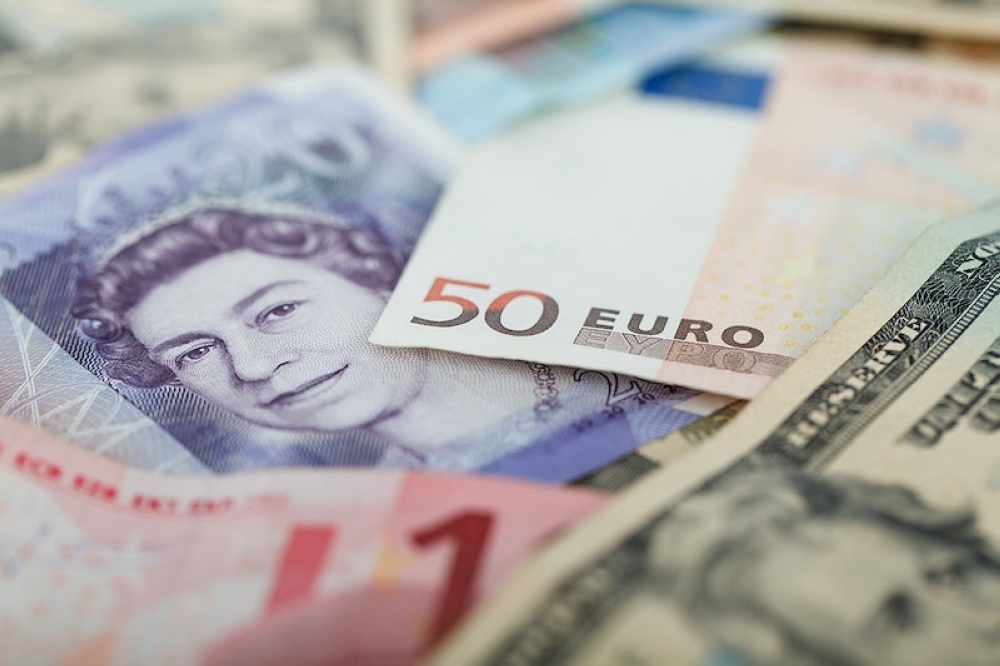
Thereafter, futures markets were no longer limited to rice or wheat; they expanded to gold, silver, and oil, then to currencies, interest rates, and even stock indices.
But how does this market work? And why does everyone prefer it?
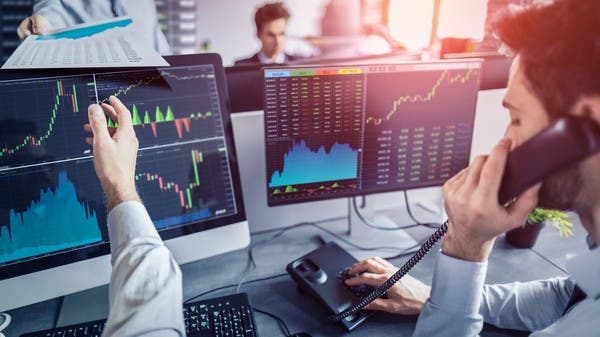
Today, these contracts are traded on electronic exchanges that connect traders around the world for nearly 24 hours a day, with millions of contracts executed, valued at hundreds of billions of dollars daily.
Most importantly, their prices have become the benchmark relied upon by governments, companies, banks, and the media when discussing oil, gold, or silver prices.
Origins and Development
- Definition of a Futures Contract: A standardized agreement traded on an exchange to buy or sell a specific quantity of a commodity (oil, gold, etc.) at a fixed price on a future date.
- Reason for creation: Established to enable producers (farmers, miners) and consumers (mill owners, jewelers) to hedge against the risks of price volatility.
- Early examples: The Dojima Rice Exchange (Osaka, 1697), the first futures exchange, and the Chicago Board of Trade (1848) for U.S. grain trading.
- Over time, futures for metals (such as gold and silver) and oil (WTI in 1983 and Brent in 1988) were added as commodities became globalized.
- Futures contracts became essential because they aggregate global supply and demand, providing a continuous price signal for both commodity producers and consumers.
Commodity Futures Understanding Guide
Comparison Point | Oil (Brent) | Oil (NYMEX) | Gold | Silver
Exchange | Intercontinental Exchange (ICE) is the reference market; CME provides Brent financial contracts based on ICE pricing | New York Mercantile Exchange (NYMEX/CME) | COMEX (CME) | COMEX (CME)
City | London | New York | Chicago | Chicago
Contract Size | 1000 barrels | 1000 barrels | 100 troy ounces (99.5% purity) | 5000 troy ounces (99.9% purity)
Currency | USD/barrel | USD/barrel | USD/ounce | USD/ounce
Tick Value | Cents per barrel ($10 per contract) | Cents per barrel ($10 per contract) | 10 cents per ounce ($10 per contract) | Half a cent per ounce ($25 per contract)
Listed Trading Months | Covers many years ahead | Up to over 10 years for oil contracts
Symbol | At CME, the contract symbol consists of: Commodity code + Delivery month code + Last digit of expiration year
Contract Symbol | Month Code (F-G-H-J-K-M-N-Q-U-V-X-Z), where (F= January and Z= December)
Example (Most active contract per CME) | BZU6 (September 2026 delivery) | CLQ6 (August delivery) | GCQ6 (August delivery) | SIU6 (September delivery)
Trading Hours | 23 hours a day from Sunday evening to Friday evening
Settlement | Physical delivery for ICE contracts; CME Brent contracts are cash-settled | Physical delivery | Physical delivery | Physical delivery
Delivery Location | Specific points in the North Sea | Cushing Hub, Oklahoma | Designated warehouses (e.g., Salt Lake City, New York) | COMEX-approved warehouses
Benchmark Status | Global benchmark for light sweet crude (approx. 78% of global oil trade is priced based on ICE) | Global benchmark for light sweet crude | Global benchmark for gold | Global benchmark for silver
How does the market work?
- Opening a position: To enter a trade, the trader deposits a margin with the broker and commits to receiving the commodity at the contract's expiry date; the seller commits to delivering the commodity.
- Margin and Leverage: Since only a margin deposit is required (usually between 3% and 15% of the contract value), futures are characterized by high leverage = contract value / margin.
- For example, the nominal value of one WTI futures contract (at $70/barrel) is $70,000; if the initial margin is $7,000, the leverage is 10:1.
- Variation Margin: Profits and losses are settled daily via the variation margin, where profit is added to the account or loss is deducted. If the balance falls below the maintenance margin, the broker issues a 'Margin Call'.
- Before expiration, traders usually close their positions with an offsetting trade (selling if they bought, or buying if they sold); only a small fraction (1-5%) of contracts are held until delivery.
- If a trader holds the contract until expiration, it will be settled either by physical delivery (for physically settled contracts) or cash settlement (for cash-settled contracts, such as financial Brent futures).
For further understanding:
- Suppose a trader bought one WTI futures contract at $70 and later sold it at $75 before the expiration date.
- Profit = ($75 - $70) × 1000 = $5,000. Conversely, the sell side in the same example would lose the same amount.
- As for the initial margin, if it is 5% and the nominal value of the WTI futures contract is $70,000, the margin is approximately $3,500.
- In this example, if the price drops by 10% (a loss of $7,000), it would theoretically wipe out the capital, but practically, the broker would issue a margin call long before that.
- Rolling: Traders can roll over their positions by closing the near-month contract and opening another for a later date to maintain their exposure beyond the expiration date; this incurs transaction costs but avoids physical delivery.
How is trading conducted?
- Commodity futures are traded in three overlapping global sessions.
- Asian Session (Tokyo/Singapore): From 11:00 PM to 07:00 AM GMT. Liquidity is at its lowest during this session.
- Volatility and trading volume usually tend to decline during this time, but its impact is growing, as the Asian session's share of commodity futures trading volume rose from 10% in 2012 to 17% in 2022, according to CME.
- European Session: From 07:00 AM to 03:00 PM GMT. Liquidity increases with the opening of London markets, where European banks, commodity firms, and OPEC traders become active.
- Precious metals (gold and silver) usually see higher trading volumes during daylight hours in London (due to arbitrage operations), and geopolitical news or economic data may increase activity.
Original source: Argaam


Comments (0)
Be the first to comment.