China and US Discuss Tariff Reduction Arrangements
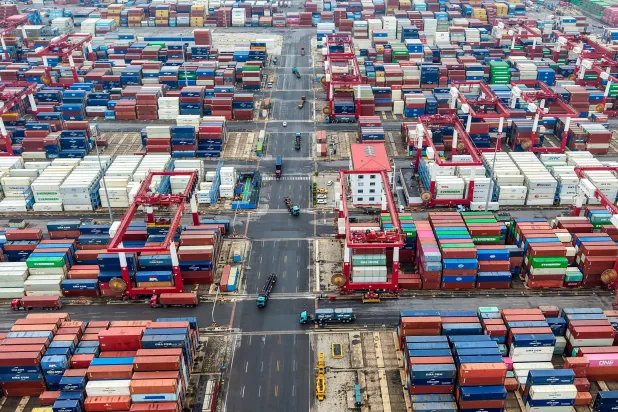
Beijing and Washington continue close coordination on executive arrangements for establishing a joint trade council
Communications between China and the United States have accelerated to finalize a new mechanism for reducing tariffs, a step that reflects the continued efforts of the world's two largest economies to solidify the trade truce and transform it into long-term institutional cooperation, after years of confrontation that strained global trade and supply chains.
China's Ministry of Commerce announced on Thursday that Beijing and Washington continue to closely coordinate on the executive arrangements for establishing a joint trade council, which will lead the tariff reduction process on goods worth about $30 billion in trade, under the agreements reached by the two sides this year.
An official from the ministry said during a press conference that working groups from both countries are discussing technical details regarding the council's structure, functions, and working mechanism, along with arrangements for implementing the tariff reduction framework, to ensure the acceleration of the agreements and the expansion of bilateral trade.
This step comes as a continuation of the trade truce reached by the two sides late last year, which halted a new round of tariff war and paved the way for launching a more stable dialogue on removing some trade restrictions imposed by both sides over the past years.
According to China's Ministry of Commerce, Beijing has already begun surveying local companies, business associations, local governments, as well as American business associations, regarding products and sectors that could benefit from tariff reductions.
In turn, the United States is conducting similar consultations with companies and public opinion to identify its priorities within the agreement. Meng Huating, an official at the Ministry of Commerce, said that the two sides are working to reach specific arrangements as soon as possible, accelerating their implementation to enhance trade and investment between the two countries.
• New Approach
This approach indicates that Beijing and Washington seek to involve the private sector in shaping the new phase of trade relations, rather than limiting it to government negotiations, which may help identify products most affected by tariffs and most important for supply chains in both countries.
China's Ministry of Commerce announced in May that agricultural products would be among the first sectors included in the tariff reduction framework, reflecting the importance of this sector in bilateral trade relations, as it has been one of the most sensitive issues in the trade dispute between the two countries for years.
The establishment of the trade council is seen as an attempt to create a permanent institutional channel for addressing trade disputes, rather than relying on intermittent negotiation rounds or unilateral actions. The council is expected to follow up on the implementation of agreements, examine areas where tariff reduction can be expanded in the future, and address obstacles facing companies in both markets. Although the initial value of goods covered, about $30 billion, represents a limited portion of the annual trade volume between China and the United States, it carries significant political and economic implications, reflecting the willingness of both sides to take practical steps to rebuild trust after years of tension.
These developments also come at a time when the Chinese economy seeks to support its exports and stimulate external demand, while American companies face increasing pressure from rising import costs due to tariffs. Any new reductions would help lower production costs, ease inflationary pressures, and improve the flow of goods between the world's two largest economies.
• Complex Issues
However, the more complex trade issues, such as advanced technology, semiconductors, and investment restrictions, remain outside the scope of this framework for now, meaning the trade council will start by addressing less sensitive issues before moving on to more complex strategic files.
Thus, the ongoing communications between Beijing and Washington represent more than just negotiation over tariffs; they reflect an attempt to establish a permanent mechanism for managing the economic relationship between the two countries and reduce the likelihood of a return to trade confrontations that have cast a shadow over the global economy in recent years.
Original source: Asharq Al-Awsat

Comments (0)
Be the first to comment.