Delta CEO to Asharq Al-Awsat: Saudi Arabia is one of our most important strategic markets
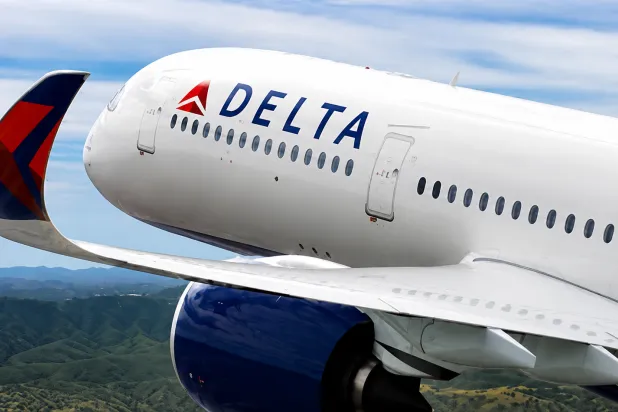
Delta Air Lines CEO Peter Carter affirmed that Saudi Arabia represents one of the most prominent strategic growth opportunities for the company in the region, amid the economic transformations the Kingdom is witnessing.
The American carrier Delta Air Lines sees that the rapid economic transformations underway in Saudi Arabia, under Vision 2030, have made the Kingdom one of the most attractive aviation markets in the region. As it prepares to launch the first direct flight by an American carrier to Saudi Arabia in more than two decades, the company affirms that its entry into the Saudi market represents a long-term investment, supported by economic openness and the expansion of the technology, artificial intelligence, and tourism sectors.
In his interview with Asharq Al-Awsat, Delta Air Lines CEO Peter Carter confirmed that the company views Saudi Arabia as one of the most prominent strategic growth opportunities in the region, given the economic transformations the Kingdom is witnessing and its openness to foreign investment.
He said the company sees the Saudi market as 'open for business and welcoming to foreign investment,' noting that the economic diversification path under Vision 2030 is an inspiration for global companies wishing to participate in these transformations.
He added that the growing relations between Saudi Arabia and the United States, both economically and through family and social ties, provide a strong base for growth in travel between the two countries, along with expected demand from business, premium tourism, and visiting friends and relatives sectors.
First American carrier
Delta Air Lines is preparing to launch direct flights between Atlanta and Riyadh starting October 23, becoming the first American carrier to operate direct flights to Saudi Arabia in more than two decades, a step Carter described as 'historic.'
In this regard, Carter said: 'We recognize the importance of being the first U.S. airline to offer direct flights to Saudi Arabia in more than 20 years. After assessing market transformations and regional dynamics, we became convinced that now is the most appropriate time to enter the market.'
He explained that the changes Saudi Arabia has undergone in recent years, and the accelerated investments in new economic sectors, strengthened the company's decision, adding: 'We are convinced that this is just the beginning for a unique country focused on investing in the fastest-growing sectors, such as artificial intelligence, technology, tourism, entertainment, and green energy.'
Airbus A350 aircraft
Delta will operate the Riyadh-Atlanta route with Airbus A350 aircraft, which is the main long-haul aircraft in its fleet, given that it has not received Boeing 787s in the near term and the Boeing 767 is not suitable for the required range on this route.
Carter noted that the aircraft will offer the company's premium products, including Delta One suites and premium economy seats, along with free internet service and entertainment systems in all seats.
He added that the aircraft used are 20 to 25 percent more fuel-efficient than the aircraft they replace, supporting operational efficiency and reducing energy consumption.
He affirmed that the flights will include Arabic-speaking cabin crew, saying the company has ensured it retains Arabic-speaking employees to guarantee a suitable experience for travelers from Saudi Arabia.
Peter Carter, President of Delta Air Lines
215 destinations via Atlanta
Carter bets on Atlanta Airport as one of the world's largest air hubs, explaining that travelers arriving from Riyadh will be able to reach about 215 destinations within and outside the United States through it.
He said Delta's network will allow Saudi travelers to reach many cities in North America, Canada, Mexico, and South America, including destinations that are hard to reach directly from the region.
He added: 'Atlanta is not just a destination, but a connecting hub that provides easy access to hundreds of cities. This is an important factor for Saudi travelers, whether for business or tourism purposes.'
Carter believes the new route will also help introduce more Americans to Saudi Arabia, connect businesses operating between the two countries, and open new opportunities for investors and entrepreneurs.
Partnerships with Saudia and Riyadh Air
The Delta Air Lines CEO revealed the company's aspiration to strengthen its partnerships with both Saudia and Riyadh Air, supporting the integration of flight networks within and outside the Kingdom.
He explained that cooperation with the two carriers will allow Delta passengers arriving in Riyadh to continue their journeys via the networks of Saudia and Riyadh Air, and reach the destinations served by the two companies.
In return, customers of the two Saudi carriers will be able to use Delta's network to reach various destinations in the United States, North America, Canada, Mexico, and South America.
He said that Delta shares with Riyadh Air a focus on providing a distinctive travel experience, while Saudia has an established position as a high-quality carrier with an extensive international network.
He added: 'We are skilled at building partnerships with other airlines, and we are very excited to cooperate with both Riyadh Air and Saudia.'
A 5-year outlook
Regarding the company's assessment of market viability, Carter said that Delta does not make its decisions based on forecasts of six months or one year, but looks at markets with a five-year perspective.
He added that Saudi Arabia, with its population of about 35 million and economic leadership focused on investment, openness, and diversification of income sources, represents a great opportunity for the company to participate in the success of Vision 2030.
He continued: 'We do not evaluate the market based on short-term conditions, but look at long-term structural transformations. Saudi Arabia has all the elements that make it a promising market for international aviation.'
Owning a refinery and regional tensions
Regarding rising fuel prices, Carter explained that the company treats current developments as temporary and does not expect them to continue in the long term.
He noted that Delta's ownership of its own refinery provides it with some protection against price fluctuations and allows it to buy fuel at lower costs than some competitors, in addition to benefiting from a strong customer base and the ability to redeploy capacity to the most profitable routes.
He affirmed that fuel prices will not affect the launch date of the Riyadh flight, pointing out that the most important factor for any new route is safety and security.
He said: 'Safety is our first priority, and everything we see confirms the route is safe and operable, and we are excited to start flights on October 23.'
Carter acknowledged that regional tensions have temporarily impacted travel demand, but he expected the impact to be short-term, affirming that the company does not see it as a threat to the route's long-term viability.
He added: 'Demand may be slightly lower now due to the conflict in the Middle East, but we see this as a temporary matter and not a long-term factor.'
He also ruled out any delays in aircraft deliveries that would affect the operation of the route, affirming that the company is in constant contact with aircraft manufacturers and does not expect any delay that would affect the launch date.
Read also
Original source: Asharq Al-Awsat



Comments (0)
Be the first to comment.