Despite Regional Turmoil, Diplomacy Revives Turkish-Gulf Trade

The value of Turkish exports to Gulf Cooperation Council countries reached $826 million in June 2026
Istanbul / Mujahid Anas Suing / Anadolu
- Exports rebounded, supported by intensive diplomatic activity that strengthened economic relations despite the geopolitical tensions the region has witnessed.
** Head of the Turkish Business Council for the Middle East and Gulf Khalid Aqr to Anadolu:
- The intensive diplomatic activity of the recent period has begun to reflect positively on trade movement.
- The close political dialogue that Turkey maintains with the Gulf countries has provided a more favorable environment for private sector initiatives.
- Evaluation of relations with Gulf countries is no longer limited to export figures, but now also includes investment partnerships, cooperation in production, and development of new logistical corridors.
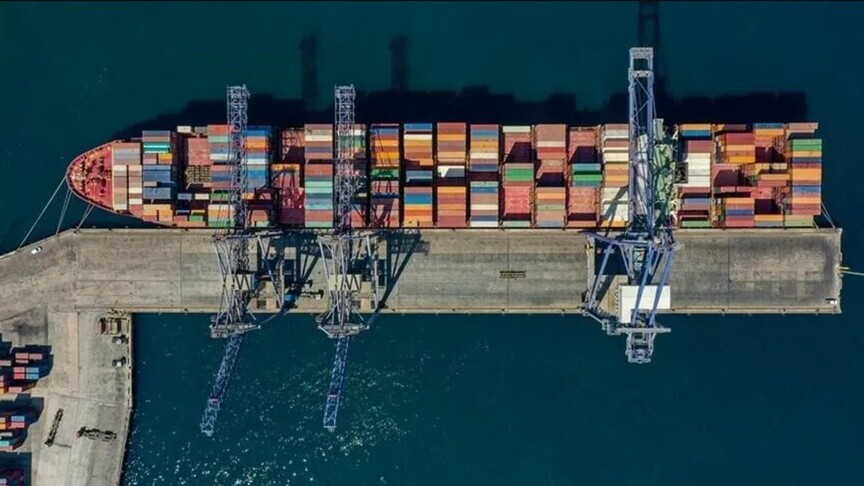
In an indication of the recovery of trade exchange between Turkey and the Gulf Cooperation Council countries, the value of Turkish exports to the GCC countries exceeded $826 million in June 2026, supported by intensive diplomatic activity that strengthened economic relations despite the geopolitical tensions the region witnessed.
Turkey continues to strengthen its relations with the Gulf Cooperation Council countries, which include Saudi Arabia, Kuwait, the UAE, Qatar, Bahrain, and Oman, within the framework of its policy aimed at expanding its diplomatic and economic relations network with neighboring countries and various regions.
According to data from the Turkish Exporters' Assembly, which Anadolu reviewed, total Turkish exports in June reached $24.9403 billion, an increase of 21.8 percent compared to the same month last year.
When exports are distributed by country, the increase in Turkish exports to the Gulf countries stood out, despite the repercussions of the war between the United States, Israel, and Iran on the region.
In January of this year, the value of Turkish exports to the Gulf countries was $621 million, before rising to $814 million in February.
However, the escalation of the repercussions of the conflict between the United States, Israel, and Iran during March negatively affected trade movement, causing exports to the six GCC countries to drop to $353.6 million.
Nevertheless, communications and efforts to maintain the flow of trade contributed to the recovery of exports again, reaching $838.5 million in April, then $646 million in May.
On June 18, 2026, Washington and Tehran signed a memorandum of understanding that included a ceasefire, and began negotiations mediated by Pakistan and Qatar to end the war launched by the United States and Israel against Iran on February 28 of the same year.
However, US President Donald Trump announced on July 8, 2026, the end of the ceasefire due to renewed escalation, after Iran attacked three ships the day before while they were transiting the Strait of Hormuz, claiming they did not comply with the navigation route it had set, prompting Washington to launch attacks on sites inside Iran.
Washington supports the passage of commercial ships through the Strait of Hormuz along a route different from the one set by Iran, which Tehran rejects, asserting that it targets any ship that does not coordinate with it before crossing the strategic strait for global energy supplies.
** $4.1 billion in the first half of the year
In June, Turkish exports to the Gulf countries showed an upward trend, rising by 35.7 percent compared to the same month of 2025, reaching $826.8 million, compared to $609.2 million.
The value of Turkish exports to the Gulf Cooperation Council countries during the first six months of the year amounted to approximately $4.1 billion.
Saudi Arabia topped the list of largest Gulf markets for Turkish exports in June, importing goods worth $425.2 million, followed by the UAE with $295.6 million, then Kuwait with $34.7 million, Qatar with $34.2 million, Oman with $29.1 million, and Bahrain with about $8 million.
** Saudi Arabia leads growth of Turkish exports to the Gulf
On an annual basis, Saudi Arabia recorded the largest increase in the value of its imports from Turkey in June compared to the same month of 2025, rising by about $229.8 million.
Oman came in second place with an increase of $13.5 million, followed by Kuwait with an increase of $8.2 million, then Qatar with about $7.4 million.
In contrast, Turkish exports to Bahrain decreased by $567,000, and to the UAE by about $40.8 million during the same period.
By sector, the jewelry sector topped the list of Turkish exports to the Gulf countries in June with a value of $105.6 million, followed by chemicals and chemical products with $69 million, then grains, pulses, oilseeds, and their products with $59.2 million, and the electrical and electronics sector with $47.9 million.
While the machinery and parts sector came in fifth place with $29 million.
** Expectations of accelerating exports in the second half of the year
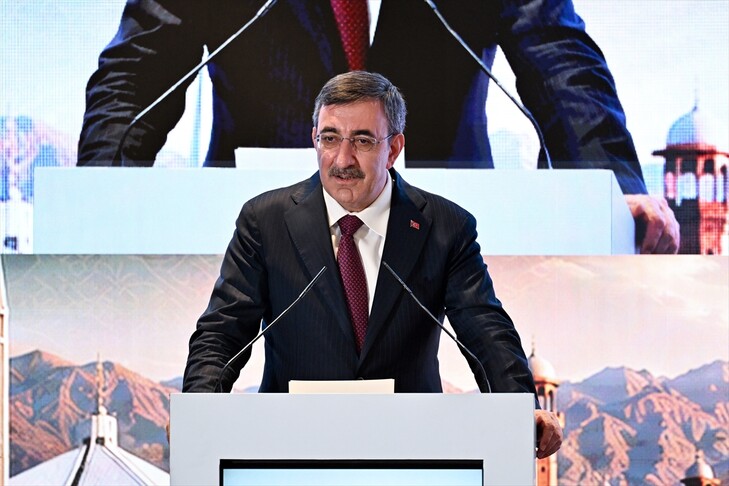
In his assessment of these figures, Head of the Turkish Business Council for the Middle East and Gulf at the Foreign Economic Relations Board of Turkey (DEIK), Khalid Aqr, said that the growth of exports to the Gulf countries, despite the geopolitical developments in the region, reflects the solidification of economic relations between Turkey and the Gulf countries and their stability on more sustainable foundations.
Aqr explained, in statements to Anadolu, that the intensive diplomatic activity of the recent period has begun to reflect positively on trade movement.
He pointed out that the close political dialogue that Turkey maintains with the Gulf countries, including Iraq, has provided a more favorable environment for private sector initiatives.
He stressed that trust is no less important than economic indicators in ensuring the sustainability of trade relations.
He continued: "Regarding our expectations for the second half of the year, two main scenarios emerge. If the security situation in the region improves further, we expect delayed investments to regain momentum, which will be reflected in accelerated exports, especially in the sectors of construction materials, machinery and electrical equipment, health, food, and logistics services."
He added that the continuation of geopolitical risks at manageable levels will not prevent the continuation of government investments in the Gulf countries, thanks to the strength of their financial positions, which will support the continued growth of trade volume.
He stressed that Saudi Arabia has become the largest Gulf market for Turkish exports, and also recorded the highest growth rate, attributing this to the development of economic relations between the two countries, in addition to the "Saudi Vision 2030" program, which is leading a broad economic transformation in the Kingdom.
He explained that some mega projects in Saudi Arabia have recently witnessed reviews related to budgets, sizes, or implementation timelines, but that does not mean a halt to investments, but rather a reordering of priorities and an improvement in resource use efficiency.
He affirmed that the sectors of industry, logistics services, tourism, energy, housing, and infrastructure will remain among the Kingdom's priorities, providing promising opportunities for Turkish companies in the medium and long term.
** UAE, Kuwait, and Oman offer new opportunities
Aqr said that the UAE maintained its position as the second largest Gulf market for Turkish exports in June, with a value of $295.6 million.
Original source: Anadolu Agency



Comments (0)
Be the first to comment.