The Gulf and the Bet on Strategic Cohesion
Strategic communication is no longer merely a media function; it has become an integral part of the national security system, a tool of soft power, and a means of managing regional and international relations. The higher the level of coordination in this field, the greater the ability of states to protect their interests, enhance their presence, and manage their image before the world.
In politics, moments are measured not only by what happens, but by the trends they reveal. Our region today is not just experiencing a series of events; it stands before strategic transformations accelerating at an unprecedented pace, redrawing the balance of power, changing the nature of threats, and forcing states to redefine their tools for managing security and interests. What was sufficient a decade ago is no longer enough to face the complexities of the current stage, where geographical borders are no longer the only arena for competition; conflict has extended to economics, technology, energy, information, and public opinion.
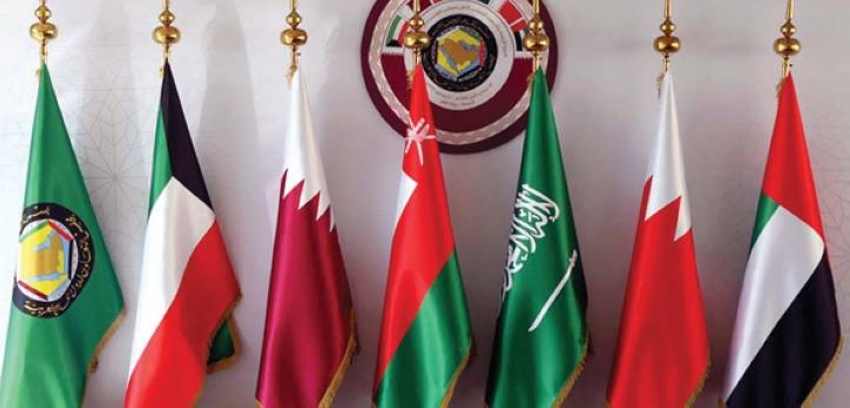
Amid this scene, the Gulf Cooperation Council states emerge as one of the most mature and stable regional experiments in the Arab world. Yet, at the same time, they face a different test: new challenges no longer test the strength of each state individually, but test the ability of the entire Gulf system to function as a cohesive strategic bloc, possessing a shared vision that goes beyond reactions to shaping the future.
Recent history has proven that Gulf cohesion was never a political luxury, nor a circumstantial choice imposed by transient crises, but always a strategic necessity dictated by geography, cemented by interests, and confirmed by experience. Since the founding of the GCC, the core idea has been that Gulf security is indivisible, and that the stability of any member state directly affects the stability of the others.
Today, this truth is clearer than ever. The regional landscape is witnessing rapid changes: prolonged conflicts, shifts in centers of international influence, a global race for resources and technologies, in addition to challenges of cyber security, food security, supply chains, and major economic transformations accompanying the reshaping of the global economy.
In this environment, the real question is not: Do the Gulf states need more cooperation? Rather: How can this cooperation evolve to keep pace with the nature of new challenges? The answer lies in moving from the concept of traditional coordination to that of strategic integration. The world today measures the strength of states not only by their resources or military capabilities, but by their ability to build regional systems capable of unifying positions, coordinating policies, and creating influence in their regional and international surroundings.
Perhaps what distinguishes the Gulf experience is that it is no longer merely a political framework, but has become a model for economic integration, security coordination, development partnerships, and openness to the future. However, maintaining this model requires constantly developing its tools, because the nature of risks has changed, becoming more complex and less clear. But the strength of any regional bloc is not built by agreements alone, however important, nor by the number of meetings and joint statements, but primarily by mutual trust, shared strategic vision, and the ability to turn convergent interests into long-term policies. Trust is the real capital of any successful alliance.
When trust is present, coordination becomes faster, decisions more effective, and crisis management more efficient. As for shared vision, it gives collective action sustainability, because it moves relationships from managing the moment to shaping the future.
Hence, one of the most important upcoming challenges relates not only to enhancing political or economic cooperation, but to developing the intellectual foundation upon which this cooperation rests, so that it becomes part of institutional culture and decision-making, not merely a response to changes.
International experiences have shown that the most successful blocs are those that managed to build a shared narrative about their future and made strategic communication a tool for enhancing internal understanding, cementing trust among institutions, and delivering unified messages to the world. In the Gulf case, the importance of strategic communication increases in a digital media environment characterized by rapid impact, the spread of misinformation, and rising attempts to influence public opinion. It is no longer sufficient for states to have convergent positions; they must also possess a coherent strategic discourse that reflects unity of vision and enhances its credibility.
Strategic communication is no longer merely a media function; it has become an integral part of the national security system, a tool of soft power, and a means of managing regional and international relations. The higher the level of coordination in this field, the greater the ability of states to protect their interests, enhance their presence, and manage their image before the world.
The coming phase will not be an extension of what came before; it will be more sensitive and complex, more dependent on speed of response, quality of coordination, and clarity of vision. Therefore, the future of the Gulf will not be shaped only by managing crises when they occur, but by building a strategic system capable of anticipating them before they form. Perhaps the real bet today lies in moving from the concept of 'cooperation when needed' to the concept of 'sustainable partnership,' and from managing shared files to building a shared future. History does not preserve blocs that came together under the pressure of circumstances as much as it immortalizes those that had the will to evolve, invested in trust, and entrenched a culture of collective action.
The Gulf states possess the political, economic, and human resources that qualify them to be a more influential regional model in the coming decades. But maintaining this position requires deepening strategic communication tools among institutions and states, developing mechanisms for knowledge exchange and crafting shared messages, so that coordination becomes a permanent approach, not a temporary response. In a world of accelerating transformations, the future will not belong to those who merely manage crises, but to those who excel at building trust, formulating vision, and fostering cohesion before circumstances impose it.
Original source: Al-Riyadh



Comments (0)
Be the first to comment.