Egypt: Confusion 'Strikes' Small Investors After Turmoil in Gold, Dollar, and Real Estate
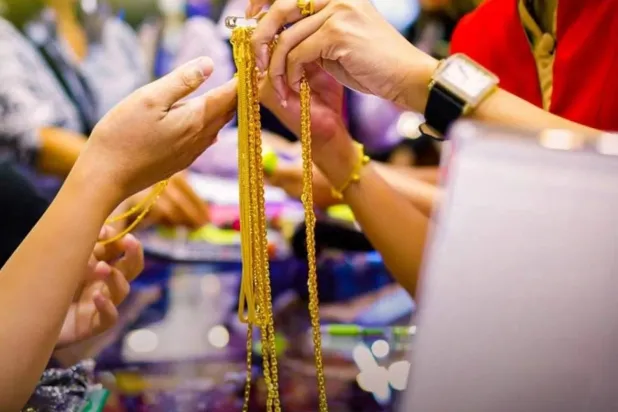
Egypt is going through a rare situation in which some well-off people find themselves confused by the question: 'Where do I put my savings?'
Upon returning from the United States for a short vacation in his hometown in Menoufia Governorate (Nile Delta), confusion struck Egyptian Mohamed Taha; as he wanted to invest his money, he turned to relatives and friends for advice, asking: 'How do I invest my money?' He found their answers muddled between the dollar, gold, and real estate — the vehicles Egyptians prefer to preserve the value of their savings from depreciation.
Between warnings to avoid the dollar because it is 'unstable,' fear of gold 'because it has reached its lowest price,' and advice to take time with real estate 'with its currently very high prices,' confusion grew in the mind of the forty-year-old, who told Asharq Al-Awsat: 'The picture is not clear for making the right decision.'
Egypt is going through a rare situation, where some well-off people find themselves confused by the question 'Where do I put my savings?' The answer has seemed difficult in recent months because the three paths that small investors in Egypt used to turn to have been dominated by turmoil, and the outlook has become cloudy.
Amid political tensions and economic changes in recent months, with the US and Israel war on Iran, the three paths are in a state of confusion, which has affected the investment security that the Egyptian citizen seeks.
Egyptians in front of a currency exchange office in Cairo (archive - AP)
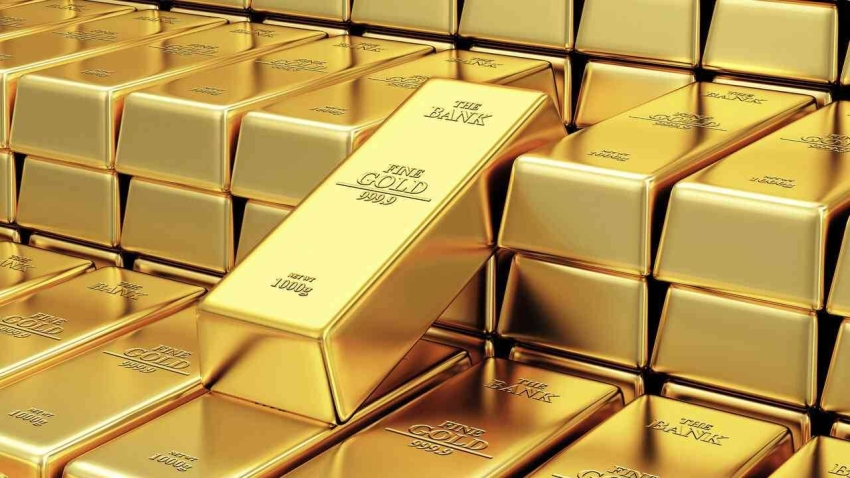
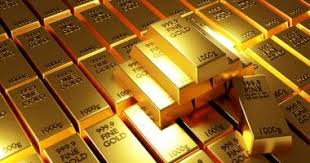
Gold prices in the local market saw a sharp decline last June, after a significant acceleration in March, when it reached its highest levels, with the price of a gram of 21-carat yellow metal (the most traded) reaching 7,660 pounds (the dollar is worth 50.5 pounds), before market trends changed with developments and rising oil prices, which boosted demand for the dollar, reaching 50.50 pounds on Saturday.
Since the outbreak of the war, the dollar price has recorded record levels in Egypt exceeding 54 pounds, after being traded at 47 pounds before the war, and over the past two months it was traded at 49 pounds, before surpassing the 50-pound barrier in recent days.
As for real estate, its prices have risen, which sector experts do not attribute to increased demand, but to the rise in construction and building costs due to the war, amid talk ranging from confirmation to denial about the existence of a 'real estate bubble.'
With what the three paths are witnessing, it is no longer strange that 'Taha's' confusion is repeated among dozens of others. Not a day passes without social media users in Egypt asking the usual question about which is best now, as 'supporters' of each path offer their advice and criticisms. Those who favor gold bet that it 'has doubled real estate in the last 20 years,' while critics say it is 'up and down' (volatile). Supporters of real estate see it as 'a strong fortress that preserves the value of savings,' while those leaning toward the dollar believe it remains a strong hedging tool.
This is a situation that economic expert Dr. Ashraf Ghraib considers 'normal' as a result of current geopolitical tensions and upheavals, stressing 'that the state of confusion dominating small investors in Egypt is temporary and does not reflect a permanent structural change in the market.'
Ghraib told Asharq Al-Awsat that the three paths — 'gold, the dollar, and real estate — have either become closed, or the outlook on them is currently unclear, and this is due to fluctuations in global gold prices, measures to regulate the exchange market locally, and rising real estate prices and construction costs.'
He points out that gold is experiencing sharp volatility globally and locally due to US Federal Reserve policies and geopolitical tensions, in addition to its link to the exchange rate in Egypt. As for the dollar, after unifying the exchange rate and its availability in banks, speculation on it has become difficult, as the Central Bank of Egypt aims to stabilize the market and prevent the large jumps that used to attract citizens to invest in it.
Ghraib explains that real estate is no longer a quick-return investment as it used to be, but has turned into mere 'value storage.' The rise in building material prices has made apartments much more expensive, while the return on them is weak. Added to that is an increase in supply and a decline in actual demand, which has slowed the pace of buying and selling.
Real estate in Egypt has seen recent price increases due to rising construction costs (Egyptian Ministry of Housing)
For his part, financial and economic expert Dr. Yasser Hussein told Asharq Al-Awsat that inflation has eroded the savings of many Egyptians, necessitating redirecting them toward investment instead of letting their value decline, noting that 'the solution to what the markets are witnessing lies in diversifying investment, even if it is simple or limited, to ensure financial safety and hedge against market fluctuations in the short, medium, and long term.'
Inflation rates in Egypt recorded a slowdown for the third consecutive month in June, with the annual inflation rate in cities reaching 14.3 percent compared to 14.6 percent in the previous month, according to official data.
The financial expert added that the well-known rule 'Don't put all your eggs in one basket' should be the compass at this stage, pointing out that the most prominent investment opportunities in the coming period 'lie in the Egyptian stock market, which is witnessing increasing activity with the expected entry of new companies, in addition to bank investment certificates that offer high returns in both local and foreign currency, as well as the possibility of investing in sukuk and bonds as relatively safe instruments.'
In contrast, Hussein warned against investing in foreign currencies, explaining that 'the liberalization of the exchange rate and the elimination of the black market for currency have made this investment high-risk.'
Original source: Asharq Al-Awsat


Comments (0)
Be the first to comment.