Egypt narrows balance of payments deficit to $1.8 billion with support from foreign investment and remittances
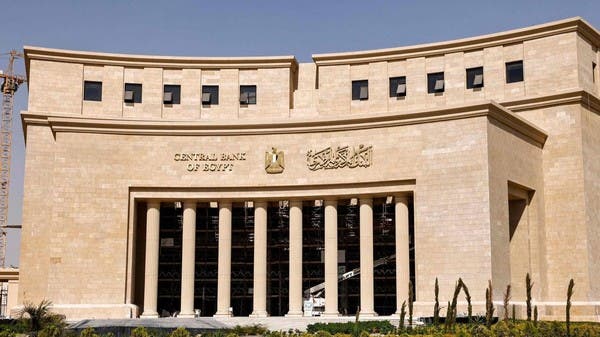
Data from the Central Bank of Egypt showed on Sunday that the Egyptian economy's transactions with the outside world during the period July/March of the fiscal year 2025/2026 (9 months) improved the overall deficit of the balance of payments by 2.9%, limiting it to about $1.8 billion (compared to about $1.9 billion during the same period of the previous fiscal year).
Capital and financial transactions resulted in a rise in net inflow to about $9.9 billion during the period, driven by foreign direct investment in Egypt achieving a net inflow of about $13 billion (including about $3.5 billion in inflows during the period October/December 2025 as part of the Ras El Hekma deal), while investments in the Egyptian securities portfolio achieved a net outflow of about $4.4 billion (since the period coinciding with the outbreak of the conflict in the region - the period January/March 2026 - saw investments in the securities portfolio achieve a net outflow of about $9.5 billion), according to a bank statement.
Current account transactions
On the other hand, the current account recorded a deficit of about $14.6 billion due to a rise in the deficit of the merchandise trade balance by 24.6% to about $47.8 billion, while net current transfers without compensation rose by 31.1% to about $34.7 billion, mainly due to the increase in remittances of Egyptians working abroad, and the surplus in the services balance rose by 19.2% to about $12.9 billion due to an increase in both tourism revenues and Suez Canal transit fees, which have started to recover some of their previous levels.
Several factors contributed to the rise in the current account deficit, including an increase in the non-oil trade balance deficit by about $6.7 billion, or 23.8%, to about $34.7 billion compared to about $28 billion, mainly due to a larger increase in non-oil imports than in non-oil exports.
Payments for non-oil merchandise imports rose by about $8.3 billion, or 15.6%, to about $61.9 billion compared to about $53.6 billion, and the increase was concentrated in imports of intermediate goods, accounting for 44.3% of the total increase in non-oil imports. This is important for the production process, contributing to higher economic growth rates, according to the Central Bank of Egypt statement.
Meanwhile, non-oil merchandise export proceeds rose by about $1.7 billion, or 6.6%, to about $27.3 billion compared to about $25.6 billion, and the increase was concentrated in exports of fresh, chilled, and cooked vegetables, electrical appliances for domestic use, ready-made garments, and fresh and dried fruits.
The oil trade balance deficit rose by about $2.8 billion, or 26.8%, to about $13.1 billion compared to about $10.3 billion, mainly due to an increase in oil imports.
Oil imports rose by about $2.8 billion, or 19.5%, to about $17.3 billion compared to about $14.5 billion, due to higher imports of both natural gas by about $2.6 billion and crude oil by $831.1 million, driven by an increase in imported quantities of both, while imports of petroleum products decreased by $603.2 million due to a decline in imported quantities.
Meanwhile, oil exports rose slightly by about $550 million to about $4.2 billion, due to an increase in exports of both natural gas by $234.1 million and petroleum products by $151.1 million, driven by a rise in exported quantities of both, and a decrease in exports of crude oil by $330.2 million due to a decline in exported quantities.
The investment income balance deficit rose by 18.2% to about $14.4 billion compared to about $12.2 billion, as a result of an increase in investment income payments by about $2.3 billion to about $16.4 billion, while investment income receipts rose by $103.1 million to about $2 billion.
Remittances, tourism, and the Suez Canal
Several factors mitigated the rise in the current account deficit, including an increase in remittances of Egyptians working abroad by 32% to about $34.9 billion compared to about $26.4 billion.
As well as an increase in tourism revenues by 14.9% to about $14.4 billion compared to about $12.5 billion.
Suez Canal transit fee revenues rose by 22.1% to about $3.2 billion compared to about $2.6 billion, due to an increase in both net tonnage by 18.5% to 426.9 million tons and the number of transiting ships by 7.6% to about 10.0 thousand ships.
Capital and financial account transactions
Capital and financial transactions resulted in a net inflow of about $9.9 billion during the period, compared to a net inflow of about $7.7 billion during the same period of the previous fiscal year.
Foreign direct investment in Egypt recorded a net inflow of about $13.0 billion compared to about $9.8 billion, with foreign direct investment inflows to non-oil economic sectors resulting in a net inflow of about $13.5 billion.
Inflows for establishing new companies or increasing the capital of existing companies recorded a net inflow of about $7.2 billion, mainly due to inflows during the period October/December 2025 as part of implementing the Alam el-Roum deal, worth about $3.5 billion, compared to about $4.3 billion.
Reinvested earnings of the period recorded a net inflow of about $4.5 billion compared to about $3.1 billion.
Inflows for real estate purchases by non-residents stabilized at about $1.6 billion. Meanwhile, proceeds from the sale of companies and productive assets to non-residents recorded a net inflow of $430.9 million compared to $396.1 million.
Foreign direct investment in the petroleum sector
Foreign direct investment in the petroleum and mineral wealth sector recorded a net outflow of $482.4 million compared to a net inflow of $669.6 million, as a result of a decline in inflows to the sector, representing new investments by foreign companies, to about $4.3 billion compared to about $5 billion, and an increase in outward transfers, representing cost recovery borne by foreign partners in previous periods for exploration, development, and operations, to about $4.8 billion compared to about $4.3 billion.
Investments in the Egyptian securities portfolio recorded a net outflow of about $4.4 billion compared to a net inflow of about $2.1 billion, mainly due to the period January/March 2026 achieving a net outflow of about $9.5 billion coinciding with the outbreak of the conflict in the Middle East.
The change in banks' foreign assets and the central bank's non-reserve assets showed an improvement in the net outflow (representing an increase in assets) to about $3.4 billion compared to only $156.2 million.
Original source: Al Arabiya


Comments (0)
Be the first to comment.