Egypt: Parliament Approves Draft Law to Restructure 'Egypt's Future Agency'
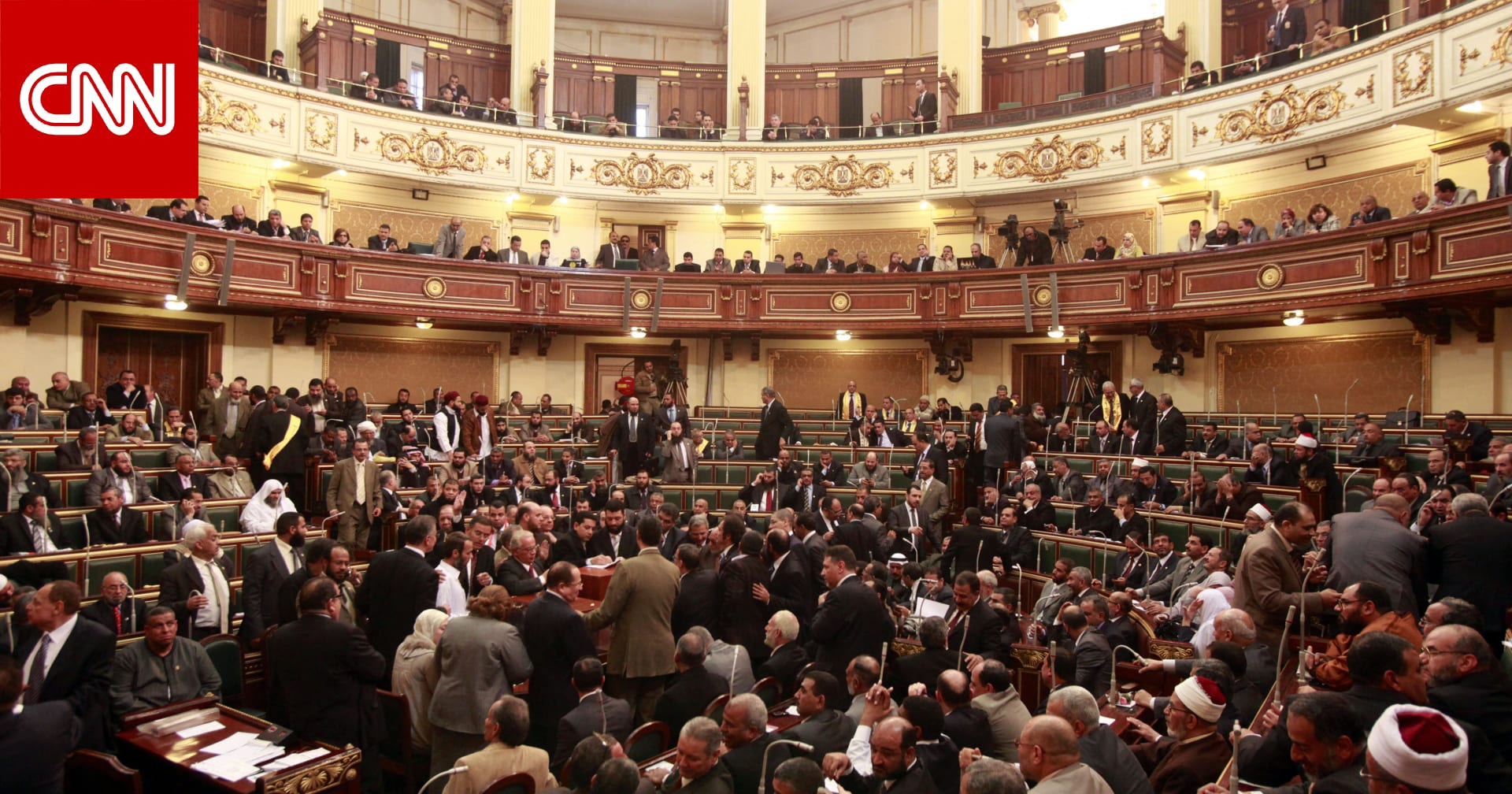
Credit: ASMAA WAGUIH/POOL/AFP via Getty Images
(CNN)-- The Egyptian House of Representatives has finally approved a draft law to restructure 'Egypt's Future Agency', in a step the government says aims to give the agency a legislative framework that regulates its competencies and expands its capacity to implement development projects and attract investments, while subjecting it to oversight and legislative mechanisms.
The law comes at a time when the state is expanding the role of 'Egypt's Future Agency', which was established by a republican decree in 2022, to undertake projects in the fields of food security, development and asset management, while the government sees its legislative restructuring as a response to the requirements of a new stage of development.
In recent years, 'Egypt's Future Agency' has expanded in implementing a number of national projects, before the government submitted a draft law to restructure it, with the aim of defining its competencies, organizing its administrative and financial structure, and establishing a legal framework for its work commensurate with the expansion of its responsibilities.
The general sessions of the House of Representatives witnessed, over two days, discussions on the articles of the draft, in the presence of the Minister of Parliamentary Affairs, Counselor Hani Hanna, and the Executive Director of the Agency, Dr. Bahaa El-Ghannam, before the council approved the draft finally.
The Minister of Parliamentary Affairs, Counselor Hani Hanna, said that 'the draft law comes to keep pace with the expansion of the role of Egypt's Future Agency, after it proved its ability to implement national projects and support the state's targets', explaining that 'the developments witnessed in the agency's work necessitated the establishment of a legislative framework that regulates its competencies and management mechanisms, and grants it the necessary flexibility while adhering to the principles of governance, transparency and oversight'.
He added that 'the law regulates the management of the agency and its financial system, establishes a framework for sustainable development zones, and allows for the creation of a sovereign fund and a service fund to maximize the benefit from state assets and attract investments, while preserving the competencies of state institutions', noting that 'the project does not create a parallel entity, but rather enhances integration between the agency and government bodies to serve the goals of sustainable development and food and economic security'.
For his part, the Executive Director of the 'Egypt's Future Agency for Sustainable Development', Bahaa El-Ghannam, said that 'the draft law represents a new step in the institutional development of the state, and keeps pace with the expansion of the agency's role and responsibilities in supporting development efforts', adding that 'the agency was not working outside a legal framework, as it was established by a republican decree, but the developments witnessed in its activity necessitated the existence of a law that regulates its work more comprehensively, especially since the philosophy of the project is based on linking what has been achieved over the past years with the requirements of the next stage, ensuring the continuity of institutional building and its development'.
On the parliamentary side, Member of the House of Representatives, Diaa El-Din Daoud, said that 'the discussion of the draft law to restructure the Egypt's Future Agency for Sustainable Development witnessed substantial amendments introduced by a number of opposition deputies, which contributed to enhancing oversight of the agency and improving the legal drafting of the draft law', noting that these amendments came despite them being a minority within the council.
Daoud added, in exclusive statements to CNN in Arabic, that among the most prominent amendments is subjecting the agency to the oversight of the Central Auditing Organization, so that it submits its reports to the House of Representatives, with the obligation to present its financial statements periodically, and subjecting any financial commitments or loans to constitutional procedures and controls, thereby enhancing parliamentary oversight of its work.
He pointed out that the deputies also succeeded in subjecting the agency to the applicable tax system, in addition to obligating it to pay its insurance obligations as an employer, instead of burdening the public treasury with these obligations, noting that payment of arrears in installments over four years without interest was allowed.
Daoud explained that the discussions also addressed the issue of competitive neutrality, in light of the expansion of the agency's competencies, adding that the deputies sought to achieve a balance between granting the agency the necessary flexibility to implement development projects, and ensuring no harm to competition rules or the rights of other economic entities.
He believed that transforming the agency into an entity regulated by law and subject to parliamentary oversight represents an important development, explaining that any problems that may arise in the future can be addressed through legislative amendments approved by the House of Representatives.
Regarding the impact of the law, Daoud said its success will be measured by its ability to achieve real and sustainable development, especially since granting the agency more flexibility must be coupled with adherence to governance and transparency rules, and taking into account the economic and social dimensions, to ensure preserving the rights of future generations and achieving sustainable development goals.
The draft law includes restructuring the Egypt's Future Agency for Sustainable Development by defining its legal nature and competencies, and establishing an administrative and organizational structure that specifies the competencies of the board of directors and decision-making mechanisms, along with regulating its financial system and oversight mechanisms for its work.
The law also regulates the management of some unutilized state assets, and establishes a legal framework for sustainable development zones with the aim of simplifying procedures and creating an attractive environment for investment, along with establishing a sovereign fund named 'Pyramids of the Nile' and a service fund to maximize returns from assets and provide resources for development projects.
The law also aims to expand private sector participation in designing, financing, implementing, and managing projects, while regulating the relationship between the agency and various government entities, ensuring integration of competencies and data exchange, in addition to obligating the agency to governance, disclosure, and risk management rules.
Original source: CNN Arabic





Comments (0)
Be the first to comment.