Energy, Industry, and Mining.. and Prince Abdulaziz bin Salman - Dr. Talal Al-Harbi

When a royal order was issued appointing His Royal Highness Prince Abdulaziz bin Salman as Minister of Industry and Mineral Resources, in addition to continuing as Minister of Energy, a careful reading of this decision goes beyond a traditional ministerial appointment, touching on a deep administrative and economic philosophy pursued by the Kingdom of Saudi Arabia in engineering its economic institutions. The decision is not merely a redistribution of ministerial portfolios but rather a redefinition of the structural relationship between three sectors that together form the backbone of the national economy: energy, industry, and mineral resources.
Geographical references
Prince Abdulaziz bin Salman is rightly considered one of the most prominent decision-makers in global energy markets. He led the Kingdom's oil policy during a period that witnessed sharp fluctuations not seen in decades: from a global pandemic that crushed demand, to geopolitical upheavals that disrupted supply chains, to major shifts in the international energy map.
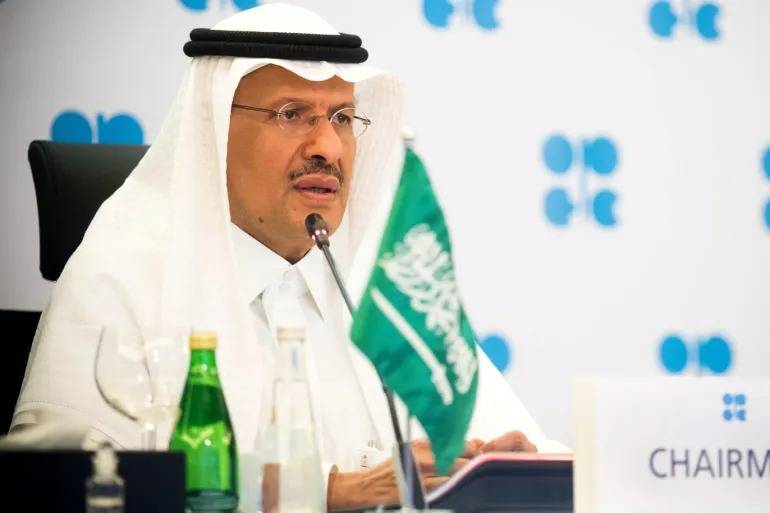
In the midst of these storms, His Highness played a pivotal role in the OPEC+ alliance, demonstrating exceptional ability to manage delicate balances among producers, protect market stability, and safeguard supreme national interests, until his name became associated in global economic literature with prudence, negotiating toughness, and forward-looking vision. This is an experience accumulated over nearly four decades that His Highness spent in the energy sector, advancing through various positions and responsibilities, intimately familiar with its fine details and well-versed in its local and international complexities.
This decision embodies the logic of integration that the Kingdom now adeptly manages. Modern industry cannot thrive in isolation from energy, and energy does not achieve its maximum value unless it transforms from a commodity exported raw into a production input that feeds integrated industrial value chains. Mineral resources, estimated at unprecedented numbers beneath Saudi soil, remain latent unless there is an industrial system capable of extracting, processing, and converting them into high-value-added products.
Combining these three sectors under one leadership means unifying vision, accelerating decision-making, and removing bureaucratic barriers between systems that operated side by side rather than in an integrated manner. This enables the Kingdom to build a competitive industrial economy based on its comparative advantages in both energy and minerals.
This step comes at a pivotal moment in the journey of the National Industrial Strategy, which aims to transform the Kingdom into a global industrial power and increase the industrial sector's contribution to GDP to 895 billion riyals by 2030. The Kingdom also seeks to increase its non-oil exports to more than 550 billion riyals by the same year, equivalent to about three times the levels recorded in 2020. These are ambitious targets by any measure, but ambition in the Kingdom is no longer a rhetorical luxury; it is a work methodology supported by firm political will, massive resources, and national competencies that have proven their worth in the most complex files.
It is no secret to observers that Prince Abdulaziz bin Salman is among the men of the vision of His Royal Highness Prince Mohammed bin Salman bin Abdulaziz, Crown Prince and Prime Minister; those men whom the leadership has selected to carry the heaviest and most sensitive portfolios, due to their combination of depth of knowledge, firmness of stance, and speed of achievement. Saudi Vision 2030 was never a theoretical document, but a state project led by men who firmly believe in it and translate it on the ground into achievements that follow one after another year after year. Entrusting His Highness with this dual responsibility is a high royal vote of confidence and an expression of the leadership's recognition that the next phase of economic transformation requires leadership that combines global expertise in energy with the ability to convert that expertise into a comprehensive industrial and mining lever.
An observer of successful international experiences realizes that countries achieved their industrial renaissance only when they skillfully linked their natural resources with their processing capabilities, and when they entrusted this linkage to leaders who possess both vision and tools. The Kingdom today, with its largest global energy reserves, promising mineral wealth, rapidly growing industrial infrastructure, and giant economic cities, is qualified to write a new chapter in its economic history, moving from the position of the world's top energy exporter to the position of an integrated industrial power that manufactures, exports, and competes in global markets.
In conclusion, the appointment of Prince Abdulaziz bin Salman as Minister of Industry and Mineral Resources alongside the Energy portfolio is not a transient administrative decision, but a clear strategic message: that the Kingdom is proceeding with the integration of its major economic sectors under exceptional leadership, that the transformation journey launched by Vision 2030 is gaining increasing strength and stability, and that the Saudi economy is preparing for a new phase characterized by advanced industry, promising mining, and sustainable energy, all within a single system led by a competence that has proven to the world that it is of a unique caliber.
Original source: Al-Jazirah



Comments (0)
Be the first to comment.