Environment / Qard Flowering Season in Najran: Environmental and Economic Value Supporting Beekeepers and Boosting Local Income
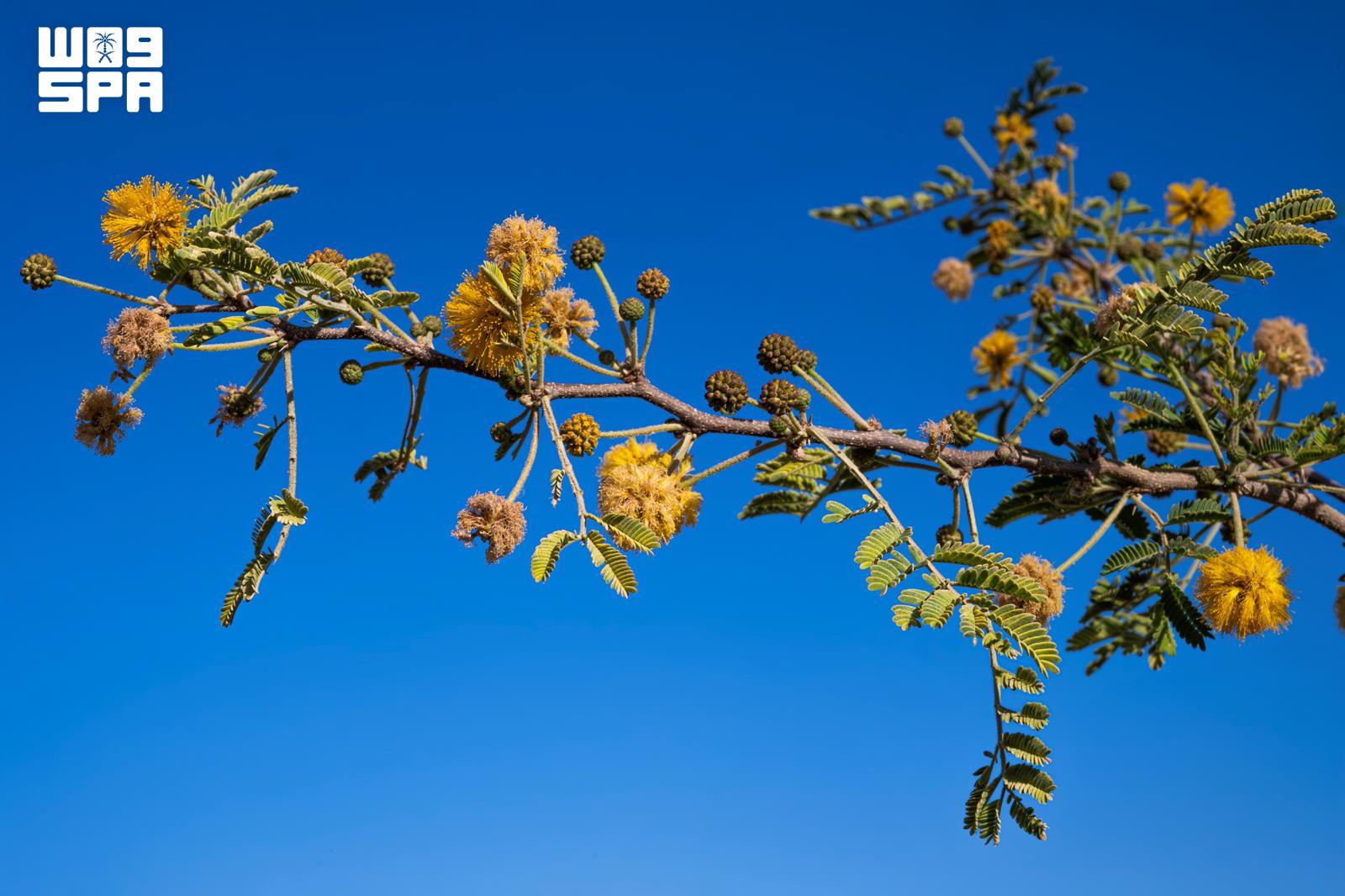
Najran, Safar 01, 1448 AH, corresponding to July 15, 2026, SPA — The flowering season of qard trees in the Najran region is one of the most prominent environmental and economic seasons for beekeepers, as the fragrant blossoms and nutrient-rich fruits are collected, contributing to supporting bee strains and increasing local income. Qard trees bloom in summer until mid-autumn, producing round yellow crystals, and grow on mountain slopes and along valley banks at altitudes between 800 and 1,500 meters. They are drought- and salt-tolerant and rely primarily on rainwater, reaching heights of 5 to 8 meters. They are an important source of grazing for camels and livestock, increasing their environmental and economic value. Qard honey is very popular due to its quality and nutritional and health benefits, attracting beekeepers to Badr al-Janub Governorate in Najran during flowering seasons to collect nectar. Additionally, parts of the tree are used in traditional and industrial applications; they are used in tanning processes, and their roots are boiled for purification and aroma improvement, as well as for personal health care. Environmental NGOs in the region, in coordination with the Ministry of Environment, are working to reintroduce and cultivate the qard tree to enhance vegetation cover and combat desertification. The Najran Green Association has succeeded in planting more than 125,000 qard trees in recent years, aiming to plant 200,000 trees by 2030 in cooperation with government and private entities. // End // 15:02 TM 0093
Original source: SPA


Comments (0)
Be the first to comment.