Foreign Law Firms Begin Practicing in Saudi Arabia
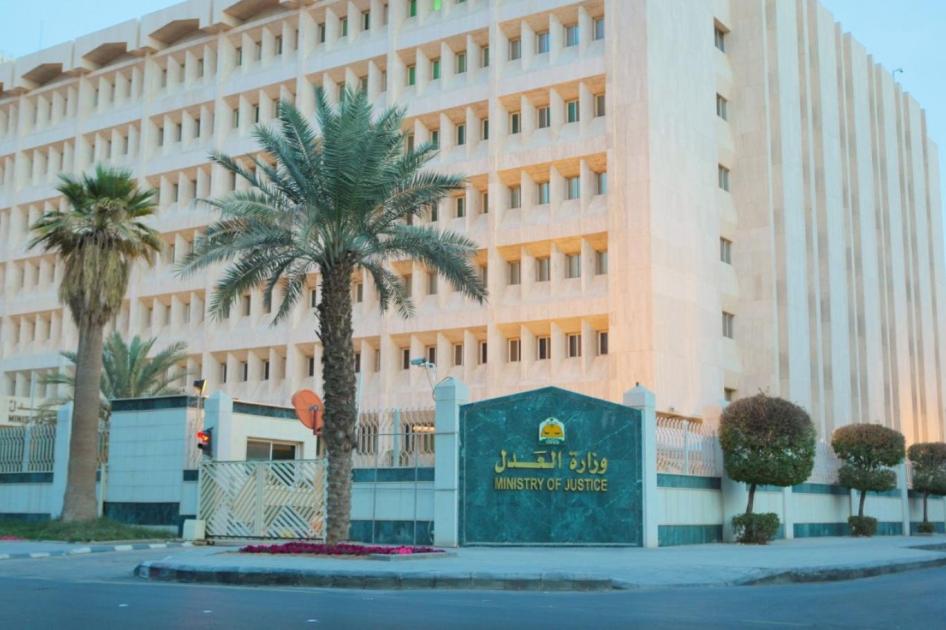
Quinn Emanuel Urquhart & Sullivan said Thursday it obtained a license, while Morgan Lewis & Bockius announced through a spokesperson that it is preparing to open an office in Riyadh.
); googletag.cmd.push(function() { onDvtagReady(function () { googletag.display('div-gpt-ad-3341368-3'); }); }); }
Summary
Quinn Emanuel Urquhart & Sullivan said Thursday it obtained a license, while Morgan Lewis & Bockius announced through a spokesperson that it is preparing to open an office in Riyadh.
With the decision to stop contracting with any foreign commercial company or institution that has a regional headquarters in the region outside Saudi Arabia taking effect on January 1, it has become common lately to hear news of a company opening a headquarters inside the country, as the race of global companies towards the oil state intensifies, considering it one of the desired destinations in regional competition. The latest are two American law firms.
The two firms plan to open offices in the capital Riyadh following amendments to the rules regulating the work of foreign lawyers in the country under the legal profession law issued nearly 20 years ago.
The amendment came after the Saudi Cabinet approved allowing foreigners to practice the legal profession, whereas the previous system only allowed law firms to hire foreign lawyers as legal consultants. Under the reform, foreign lawyers living and working in Saudi Arabia can now represent third parties before courts, the Board of Grievances, and other committees.
Quinn Emanuel Urquhart & Sullivan said Thursday it obtained the license, while Morgan Lewis & Bockius announced through a spokesperson that it is preparing to open its office in Riyadh.
6 American and international law firms
Quinn Emanuel founder John Quinn said in a statement that the firm, which has 1,000 lawyers, 'focuses primarily on Saudi Arabia, which has invested billions to diversify its economy and encourage international investment.' Both firms, each with more than 2,000 lawyers and staff according to their websites, have offices in Dubai and Abu Dhabi.
According to Reuters, six American and international law firms have opened offices in Saudi Arabia or obtained licenses to operate.
New legal profession law
The details of the new legal profession law state that if a professional firm is established with one or more Saudi partner lawyers, it will provide legal consultations and all work related to the practice, with representation of third parties before authorities limited to Saudi lawyers. However, if a foreign company takes a branch in Saudi Arabia, its scope is limited to consultations related to international law and non-Saudi systems provided through a special lawyer offering systemic consultations related to it, as well as arbitration, mediation, conciliation services, and advanced consultations for qualitative and specialized projects or studies in legislation.
Saudi Arabia stipulated in its new system for law offices that the office must have an outstanding international reputation in the legal field, hold a valid practicing license in its main headquarters, have at least 10 consecutive years of experience in the legal field, and have representation and partnerships in at least three different countries or five states in one country if the legislative systems of the states are different.
Read more
This section contains related articles placed in the (Related Nodes field)
Concern
The entry of foreign lawyers into the Saudi market has begun to cause concern among Saudi lawyers about foreign dominance in this field, as is the case in some Saudi professions, especially with the high confidence of clients in foreign labor.
Lawyer Khaled Al-Yousef reassured Saudis that the work of foreign offices complements local lawyers. Representation of third parties is limited to licensed Saudi lawyers, and the new system restricts foreign companies' work to providing consultations on international law and local consultations provided through a licensed lawyer, arbitration and mediation services that by nature allow foreign arbitrators to enter under a condition or arbitration agreement per the arbitration law, and providing consultations for qualitative or specialized projects or studies in legislation, to fill the gap facing rapid development and openness to diverse investments that require complex contracts.
Al-Yousef pointed to the government procurement and competitions system, noting that priority in government content will be for the local competitor.
Competition
In turn, lawyer Mohammed Al-Azzi pointed out that competition in the field will be for specialized firms, while considering that the entry of international law firms will create a new trend and pattern in the legal market. 'There will be great competition between local and foreign firms, and in my view, the advantage will be for firms specialized in specific areas and for firms with multiple branches, which makes it easier for the beneficiary to ensure accuracy of procedure on one hand, and confidence if the case is related to another country where the firm has a branch.'
Transfer of expertise
Lawyer Khaled Al-Youssef added: 'There is no way to develop and achieve growth in any field except through systematic transfer of expertise, especially in modern Saudi fields.' He stressed that in recent years, Saudis have been looking to expert houses that can participate in raising the efficiency of administrative organization and work methods in law offices. With the precise requirements in the system, the goal will be achieved without harming the Saudi competitor.
In March, Saudi Minister of Justice Walid Al-Samaani and Minister of Investment Engineer Khalid Al-Falih handed foreign law firms their licenses to practice. The licenses were granted to Herbert Smith Freehills, Latham & Watkins, and Clifford Chance. The issued licenses are the first for global law offices.
According to Saudi official data, Riyadh has obligated licensed foreign law offices to achieve Saudization percentages to be announced later to transfer knowledge to Saudi lawyers.
"); googletag.cmd.push(function() { onDvtagReady(function () { googletag.display('div-gpt-ad-3341368-4'); }); }); }
More about: Law Saudi Arabia Foreign Investment Riyadh
Original source: Independent Arabia





Comments (0)
Be the first to comment.