Foreign Ownership of Real Estate and Economic Diversification..
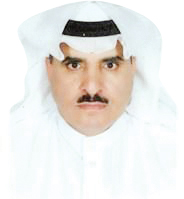
Aql Al-Aql
Foreign Ownership of Real Estate and Economic Diversification..
July 5, 2026 - 00:03 | Last updated July 5, 2026 - 00:03
Follow Okaz channel on WhatsApp
One of the most important goals of Saudi Vision 2030 is to diversify the sources of the Saudi national economy away from reliance on oil and its price and supply fluctuations, which the recent US-Iran war crisis revealed the danger of this singular dependence on the energy sector in general. Imagine Gulf countries being drawn into a violent conflict that could threaten their oil fields and facilities—a scenario we saw the beginning of when those plants were struck and oil supplies were halted due to Iran's closure of the Strait of Hormuz.
Since the inception of this strong economically-oriented vision, the Kingdom has been working to diversify its economy by investing in new service sectors, such as tourism and entertainment, for example. These sectors require a qualitative leap and massive investment. The state has launched huge entertainment and tourism projects and opened these sectors to foreign investment. In my view, the latest important decision in the economic diversification system is the work to prepare the legislative and regulatory environment for non-Saudis to own property in specific areas and cities. The Council of Ministers, in its last session, approved the executive regulations for the decision allowing non-Saudis to own real estate in our country, with very reasonable conditions set for this project, which will have positive effects on the macroeconomy as well as socially. We live in a country that ranks among the top in many indicators that attract people to live here, foremost among them the high level of security and stability, in addition to the Kingdom's geographical diversity. These are important pull factors, and there are dozens of such factors that make the Kingdom preferred by foreign investors to enter the Saudi real estate market. There is a committee of several bodies working on this important file, and I hope it keeps pace with the rapid changes in the national real estate market after this decision, whether in terms of expanding the geographical areas for property ownership rights in major cities or increasing the number of cities included in this project. Many countries around the world are visited by Saudi investors who buy properties in cities and neighborhoods of those countries without any restrictions, yet real estate prices only rise in capitals like London or Paris, while in small and medium cities prices remain reasonable, and the entry of foreigners has not affected property prices in those cities. Some people fear and have high sensitivity to this issue, but this decision may encourage developers and construction companies to enter into qualitative investment in the areas where non-citizens are allowed to own property. In other words, the impact will be quantitative and qualitative. There are millions of residents who have lived in our country for decades; imagine if they owned a home and lived with their family, how their psychological and social relationship with the country as a whole would be. In our modern time, the place where we own a home is the true homeland. Fear of inflation in real estate prices is not a justification for apprehension about the decision allowing non-Saudis to own property, especially since His Highness the Crown Prince made important decisions more than a year ago, called the Crown Prince's decision for real estate balance in the city of Riyadh, and we saw how it curbed the insane rises in land prices. Another decision regulated the residential and commercial real estate rental sector without harming landlords and tenants.
A quick look at the geographical areas where non-Saudis are allowed to own property shows a focus on entertainment projects in Riyadh and NEOM projects in the northwest of the Kingdom. This will push investors in these fields to own and develop there. Additionally, in the capital Riyadh and Jeddah, the old popular neighborhoods are allowed for ownership, which is an important boost to exploit those integrated-service neighborhoods, which are teeming with labor, to become desirable areas for investors, especially individuals. Overall, the project is a qualitative leap in the real estate sector in terms of investment and an important tributary to the national economy.
Original source: Okaz




Comments (0)
Be the first to comment.