From the Strait of Hormuz to the Red Sea... Is the Era of Gulf Energy Transport Flexibility Beginning?
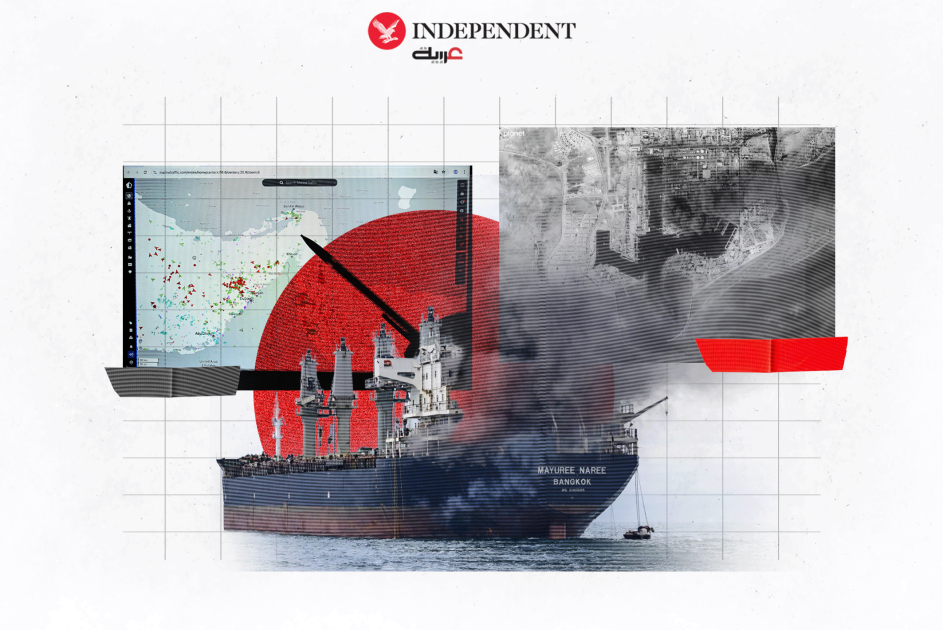
The Saudi East-West pipeline, linking eastern production areas to the Red Sea coast, is no longer seen merely as a domestic route to ease export pressure via the Gulf, but as a strategic tool giving Saudi Arabia an outlet away from the Strait of Hormuz, and opening the door to building a more flexible Gulf network during crises.
On the back of the recent Iranian war, the strength of the Gulf region in the energy market is no longer measured solely by the volume of oil and gas it produces, but by its ability to deliver these supplies to markets in times of disruption of sea lanes.
A barrel of oil stuck behind a chokepoint loses part of its strategic value, so alternative pipelines and ports have moved from a supporting infrastructure role to a main tool in economic and geopolitical security calculations.
In this context, the Saudi East-West pipeline has returned to the forefront of discussion. The line linking production areas in eastern Saudi Arabia to the Red Sea coast is no longer seen merely as a domestic route to ease export pressure via the Gulf, but as a strategic tool that gives Saudi Arabia an outlet away from the Strait of Hormuz, and at the same time opens the door to the possibility of building a more flexible Gulf network in times of crisis.
Main Artery for Energy Markets
Data from the International Energy Agency shows that in 2025, the Strait of Hormuz remained a passage for about 20 million barrels per day of crude oil and products, equivalent to about 25 percent of global seaborne oil trade, with about 80 percent of these volumes heading to Asia.
During the same year, about 15 million barrels per day of crude and condensates passed through the strait, i.e., about 34 percent of global crude trade, in addition to about 5 million barrels per day of petroleum products. These figures reveal that the strait is not just a regional corridor, but a main artery in the balance of global energy markets.
The scene becomes more sensitive with liquefied natural gas (LNG). In 2025, more than 112 billion cubic meters of LNG passed through the Strait of Hormuz, equivalent to about 20 percent of global LNG trade.
About 93 percent of Qatar's LNG exports and 96 percent of the UAE's exports passed through it, while about 90 percent of these volumes headed to Asia.
Thus, any disruption in the strait affects electricity and industrial markets in Asia, not just the oil market alone.
The IEA indicates that the available capacity to bypass Hormuz is still limited, as only Saudi Arabia and the UAE have operational routes capable of diverting part of the flows away from the strait, with an estimated available capacity ranging between 3.5 and 5.5 million barrels per day.
The agency notes that the Abu Dhabi-Fujairah line has a capacity close to 1.8 million barrels per day, while the capacity of the Saudi East-West line has risen to 7 million barrels per day, with the actual available export capacity depending on operating conditions and the loading capacity of the western coast.
These figures lead to a clear conclusion: pipelines do not eliminate the importance of Hormuz in the near term, but they reduce exposure to it. The gap between about 20 million barrels per day passing through the strait in 2025 and the 3.5 to 5.5 million barrels per day of available alternative capacity reveals that current alternatives do not fully replace the strait, but they give producers more room to maneuver when risks rise.
The East-West Line Opens the Door
Historically, the East-West line served a direct Saudi goal: linking production areas in eastern Saudi Arabia to the Yanbu port on the Red Sea. But recent tensions have broadened the perspective on the line, making it part of a regional discussion about the Gulf states' ability to reduce their dependence on a single sea lane by expanding existing capacities and linking them to new facilities, ports, and storage tanks.
This discussion gained momentum in July, following media reports that Saudi Arabia is studying increasing the capacity of the East-West line to the Red Sea by up to 2 million barrels per day, while exploring the possibility of neighboring Gulf states such as Kuwait, Bahrain, and Qatar benefiting from any future expansion.
These discussions reflect not just a desire to increase the capacity of an existing line, but a test of the idea of a 'shared Gulf capacity' in the face of a single geopolitical chokepoint.
The distance between idea and implementation remains long and complex. Linking Gulf states to a Saudi line to the Red Sea means agreeing on transit fees, priority of use during crises, the nature of crude oils, storage locations and port capacities, blending, shipping, and insurance mechanisms, as well as long-term export commitments.
Hence, the real value of the East-West line appears to be that it opens the door for joint Gulf thinking, not that it alone provides a complete solution to the Strait of Hormuz dilemma.
Multiple Export Routes
Economists told Independent Arabia that the Saudi East-West line opens a broader discussion about the future of energy security in the Gulf. The issue is no longer just about countries' ability to produce, but about possessing multiple export routes, ports, storage tanks, and operational agreements that reduce exposure to the Strait of Hormuz.
They pointed out that building a more flexible Gulf network requires huge investments and political and commercial coordination, but it could give the region greater ability to protect its exports and reduce the cost of risks on shipping and insurance.
They explained that the next phase may shift the Gulf from the concept of production security to export flexibility, so that the reliability of supply delivery to buyers becomes an essential part of the value of energy itself.
A New Standard for Energy Value
For his part, oil and economic affairs researcher Tariq Al-Wazzan said that the recent tensions in the Strait of Hormuz not only revealed the fragility of one of the world's most important sea lanes, but also redefined the concept of energy security.
Al-Wazzan explained that in 2024, about 20 million barrels per day of crude oil, condensates, and petroleum products passed through the strait, amounting to about 20 percent of global petroleum liquids consumption, confirming that the strategic value of energy is no longer measured only by reserves or production capacity.
Al-Wazzan added that geopolitical crises have shifted the discussion from production security to energy export flexibility, as a country's ability to deliver its supplies to markets in a stable and reliable manner has become a strategic asset in itself.
Al-Wazzan considered that the continuity of export flow has become a factor influencing the assessment of supplier reliability, especially in a region where a large part of its oil and gas trade depends on sensitive sea lanes.
Al-Wazzan explained that export flexibility means a state's ability to maintain the flow of its exports through diversification of routes, efficiency of infrastructure, readiness of ports and strategic storage tanks, and speed of operational response during crises.
Al-Wazzan considered that these elements are no longer just technical advantages, but economic factors that reduce risks, enhance market confidence, and increase the attractiveness of the supplier to investors and financiers.
Al-Wazzan pointed out that the assets developed by Gulf states, such as the Saudi East-West line and the UAE's Habshan-Fujairah line, have proven that investment in export flexibility is an investment in market stability.
Original source: Independent Arabia



Comments (0)
Be the first to comment.