How did China's electric vehicle boom spiral out of control?

The rise of Chinese companies resulted from competition among local governments more than central government support.
Local governments' pursuit of establishing car companies led to inflated production capacity.
The production surplus pushed Chinese companies to expand in Europe, escalating trade tensions with the European Union.
The difficulty of merging companies or exiting the market stems from local governments' insistence on retaining them to protect jobs and local economies.
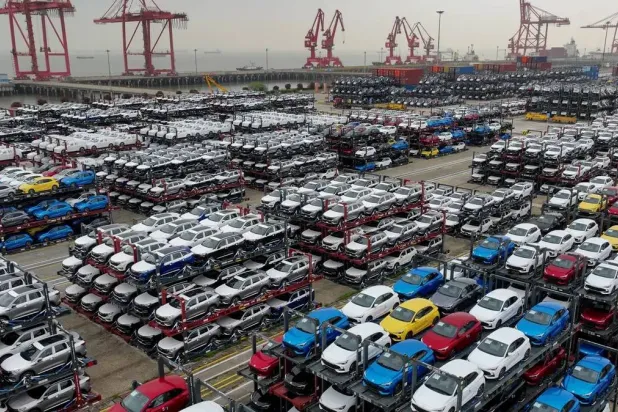
China has more than 140 brands producing clean energy vehicles.
Conclusion
China's dominance in electric vehicles did not arise solely from government support, but from competition among local governments, which created a production surplus that threatens to ignite trade disputes with Europe.
China's electric vehicle sector is often portrayed as evidence of the central government's success in building leading global companies thanks to generous government support. But in reality, giants like BYD, Zhejiang Geely Holding Group, and Chery Automobile achieved their major successes only after years of decentralized experimentation and fierce competition.
This path has led to a highly fragmented market, comprising a large number of companies producing too many cars, a dilemma that will not be easy to resolve. This is evident in the relationship between Beijing and Brussels. After a year of victory in the tariff war with the United States, China now stands on the brink of a similar trade confrontation with the European Union.
Beijing sought to compensate for weak domestic demand by expanding into foreign markets, sparking tensions with Europe. The European trade deficit with China has exceeded $1 billion per day, raising concerns about long-term industrial decline.
In May, Chinese car sales surpassed Japanese ones in Europe for the first time, despite tariffs imposed by the European Union two years ago. Both sides have given themselves until October to agree on a joint plan to address this trade imbalance.
How did local governments fuel the electric vehicle boom?
Understanding how China's electric vehicle sector reached this state explains why there are no easy solutions. First, it should be noted that central authorities did not originally intend to foster such a large number of car manufacturers. According to AlixPartners, there are now more than 140 brands producing clean energy vehicles, including battery electric cars and hybrids.
However, a study published this month in the academic journal The China Journal challenges the prevailing assumption that top-down industrial policies were the main driver of China's electric vehicle boom. Researchers Fengming Lu and Xiao Ma pointed out that reform policies starting in the 1980s tended to support major state-owned car companies.
At the time, there were nine major companies, including China FAW Group and SAIC Motor, which were lavished with preferential treatment including government credit and subsidized loans, as well as priority in selecting partners when foreign car companies entered China to establish joint ventures in exchange for a foothold in the emerging Chinese market.
Although Beijing imposed strict restrictions on new entrants into the sector, local governments, driven by a desire to create jobs, increase tax revenues, and enhance their status, began to behave with a corporate mindset. They transformed into investors and promoters, and even owners in some cases, of local car companies.
While this approach was attractive to local governments, it ultimately led to a large overcapacity, which is now squeezing the profits of many global car manufacturers. Mercedes-Benz Group said last week that intense competition contributed to an 8% decline in its deliveries in the second quarter. BMW also lowered its profit expectations in June, and reports indicate that Volkswagen officials are increasingly worried about the company's long-term viability.
Local competition created giants and a supply surplus
Many of today's largest electric vehicle companies emerged after local governments circumvented restrictions by forming partnerships with private companies. Their start as fledgling competitors from a weaker position gave them greater flexibility than their state-owned counterparts, eventually enabling them to dominate the sector.
Chery, China's largest car exporter, was founded after the city of Wuhu in Anhui Province sold one of its cement companies and decided to enter the automotive industry. Geely, which competes with BYD for the top spot in electric vehicle sales, received support from the wealthy Zhejiang provincial government. In contrast, BYD, based in Shenzhen, cooperated with several local governments during its expansion.
This bottom-up model produced some of China's most successful companies. But it also encouraged local officials to support as many competing companies as possible, leading to overcapacity. While the real estate crisis that began five years ago reduced local government revenues from land sales, it conversely strengthened their incentives to develop industrial sectors that could boost their coffers.
Why is it difficult to reduce overcapacity in China?
This may explain why the number of car manufacturers in the new energy vehicle sector has not significantly declined, despite shrinking profit margins and falling profitability due to intense competition. Last year, 23 new brands entered the market, while only 9 exited.
Although a wave of mergers seems the most economically logical option, it often runs into political considerations. Local governments remain reluctant to allow companies headquartered in their cities to collapse, as they represent a potential source of job creation amid an economic slowdown. This equation poses a complex challenge for Beijing and its trading partners.
Europe should recognize that China's overcapacity is not merely a product of central planning or government subsidies, but also the result of years of competition among local governments, each seeking to build its own leading industrial companies. This legacy explains why there are no quick fixes.
Columnist on the Bloomberg Opinion Asia team, covering corporate strategy and management in the region. Former senior business editor for CNN Asia, and correspondent for BBC News and Reuters.
Special to Bloomberg Asharq
Original source: Aleqtisadiah



Comments (0)
Be the first to comment.