Iran War Pressures European Airlines and Opens Door to Restructuring
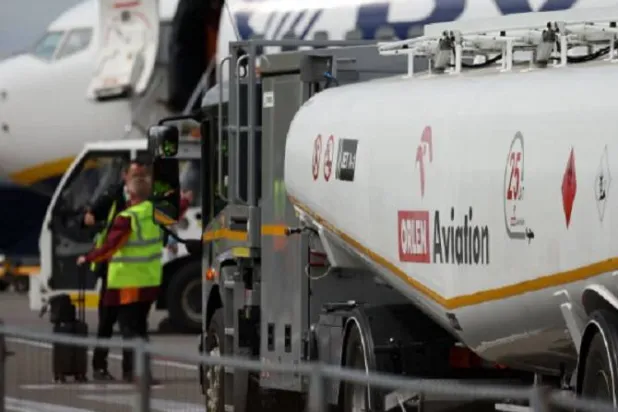
Investors and airline executives see growing signs that financially weaker European airlines are heading toward restructuring.
As the conflict between Iran and the US reignites and oil prices rise, investors and airline executives see increasing signs that financially weaker European airlines are moving toward restructuring.
British low-cost carrier easyJet is nearing an acquisition deal led by US parties, which would turn the company, founded 30 years ago, into a private firm at a valuation far below its pre-pandemic peak. Meanwhile, Latvian airline Air Baltic is seeking short-term financing to avoid defaulting on its obligations, while Norwegian carrier Norse Atlantic is conducting a strategic review of its operations.
Passengers boarding an easyJet plane at Berlin Brandenburg Airport in Schönefeld, Germany (Reuters)
Although most airlines improved their financial positions after the COVID-19 pandemic, rising fuel prices have weighed on their share prices and exposed the fragility of some companies' balance sheets, prompting them to consider options including restructuring, mergers, acquisitions, or even filing for bankruptcy protection.
Parima Bokum, head of Europe, Middle East and Africa at financial advisory firm Interpath, told Reuters: 'We are currently pitching to four or five large European airlines regarding restructuring options.'
Last month, the global aviation sector halved its 2026 profit forecast, citing the Middle East conflict for driving up fuel costs, disrupting key air corridors, and exposing the fragility of an industry operating on thin margins.
Bankers, investors and analysts said the ongoing Iran war, which triggered a sharp jump in fuel prices this year, has added to the pressures the sector has faced since the coronavirus pandemic.
Rob Morris, an aviation analyst in the UK, said: 'It feels like the cycle ended before it began.'
Airlines adopt a more cautious approach
Tough economic conditions have pushed airlines to scale back expansion plans. Airbus this month lowered its forecast for passenger aircraft demand over the next 20 years, as the impact of war and trade tensions dampen the strong post-pandemic recovery.
Bertrand Grabowski, an aviation consultant and former banker, said: 'Most airlines are maintaining very modest growth rates in the US, Europe and Southeast Asia.'
He added: 'With some exceptions, such as Turkish Airlines, airlines are being extremely cautious in increasing their capacity.'
The sharp increase in jet fuel prices, which can account for more than a third of an airline's total costs when high, has raised concerns about their financial positions this year.
Despite jet fuel prices stabilizing in recent weeks, renewed volatility in the Middle East has raised doubts about whether weaker European airlines can generate enough cash during the crucial summer season to get through the winter.
James Halstead, an aviation analyst in London, said: 'Smaller airlines are the most vulnerable,' adding that any downturn in travel during the summer season could be catastrophic for some companies in an industry heavily reliant on cash flow.
He noted that airlines might scrape through the summer but will face bigger challenges early next year, adding: 'Typically, airlines run out of cash in February.'
Two planes belonging to Air Baltic and Air Horizon at Riga International Airport, Latvia (Reuters)
Polish airline LOT has long been considered a potential merger target, while Air Baltic's bonds due in 2029 have seen their yields spike this year, reflecting the increasing risk investors anticipate. Shares of Norse have also fallen to near zero since their listing in 2021.
Polish Airlines confirmed that its performance in recent years reflects the strength of its business model and long-term strategy.
Signs of the end of the recovery wave
The aviation sector has long been noted for defying bankruptcy forecasts and showing great resilience to external shocks, bucking predictions of a wave of collapses.
However, some analysts see early signs of a slowdown in the momentum the sector has seen since the pandemic, driven by higher fuel prices.
Analysts are closely watching indicators such as capacity addition plans, used aircraft prices, and the number of bankruptcies for signs of a deceleration in the strong performance the sector has seen in recent years.
In the United States, rising costs for fuel, labor, maintenance and leasing have eroded the competitive advantage of low-cost carriers and contributed to the collapse of Spirit Airlines in May.
Analysts have warned of Wizz Air's fragile balance sheet, suggesting it could become a potential merger target. The airline insists it has sufficient liquidity, although its CEO, József Váradi, told journalists in April that he expects more bankruptcies in the sector by the end of summer due to weak advance bookings for the less profitable winter season. He added that Wizz Air could benefit from rivals' troubles by acquiring some of their routes, saying: 'We are still seizing opportunities.'
Original source: Asharq Al-Awsat






Comments (0)
Be the first to comment.