Iraq Seeks to Increase Its OPEC Quota Amid Revenue Pressures and New Investments

Iraq has the capacity to produce 4.9 million barrels per day
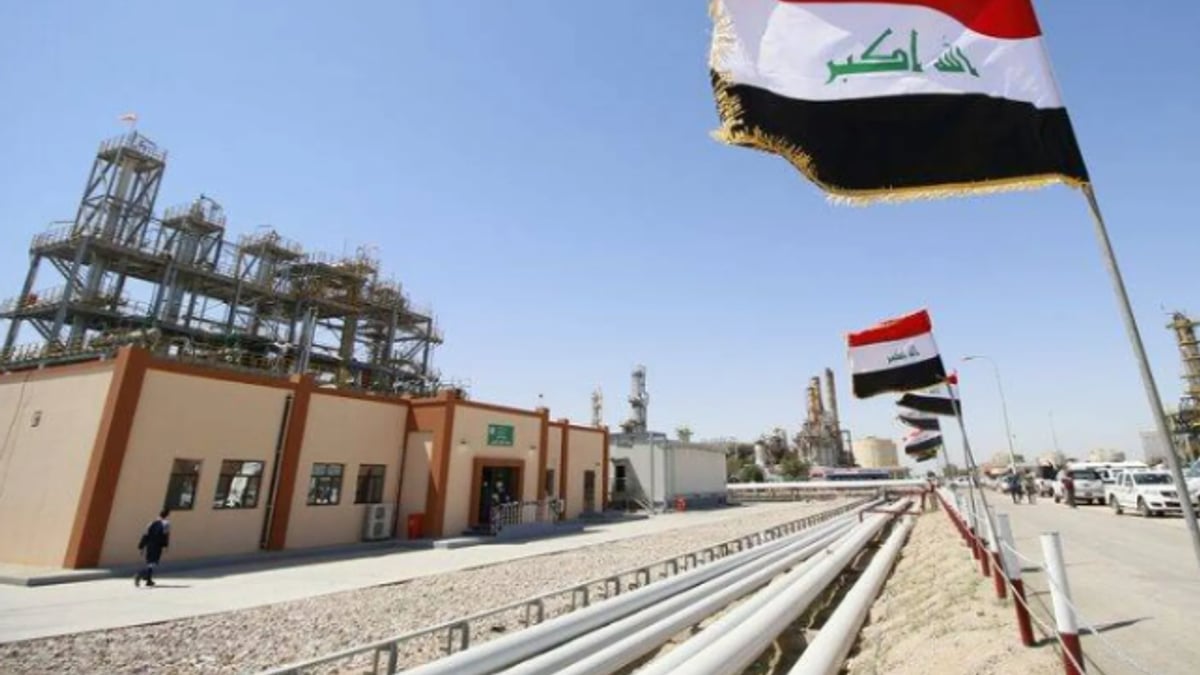
The economic crisis caused by the Iran war and the new influx of investments by major oil companies are driving Iraq to vigorously seek an increase in its OPEC production quota. Iraq, one of the five founding members of OPEC and its second-largest producer, has been dealt a severe economic blow as oil revenues, which constituted the bulk of state income, have dried up.
An Iraqi energy adviser said: 'Iraq's demand for a larger OPEC quota is primarily a response to growing economic pressures,' adding, 'Export disruptions and war-related losses have increased the need to boost production.'
With a fragile truce between the United States and Iran, which heralds the reopening of the Strait of Hormuz, Iraq is striving to bolster its reserves and is considering all available options if its OPEC quota is not significantly increased. Iraq's conviction that it must reap greater returns from its oil resources has been strengthened by a series of multibillion-dollar deals signed since early 2025 with major oil companies that had avoided Iraq for years due to its instability.
BP has earmarked up to $25 billion to redevelop four giant fields in Kirkuk, and TotalEnergies is carrying out a $10 billion project in Basra. ExxonMobil signed an agreement to develop the giant Majnoon field, while Chevron is considering returning to Iraq.
However, despite these commitments and the possibility of loosening quota restrictions, some experts question whether Iraq can overcome the enormous infrastructure requirements and remaining implementation risks to achieve its ambitions. Oil accounted for 88% of Iraqi government revenues last year, according to World Bank data, one of the highest percentages in OPEC.
The war's impact on Iraq has been exacerbated by its lack of an alternative to the Strait of Hormuz for large-scale oil exports. Iraq pumped 1.48 million barrels per day in May, according to OPEC data, down from about 4.2 million bpd in February before the strait's effective closure.
According to the International Energy Agency, Iraq has the capacity to produce 4.9 million bpd and could reach that level within 90 days. That is more than 500,000 bpd — worth nearly $36 million per day at current prices — above its scheduled OPEC quota of 4.378 million bpd in July. The Iraqi energy adviser added: 'From Baghdad's perspective, the message is clear: we need more barrels and more revenue.' Iraq's long-term plans to expand its production capacity will push its output above its current OPEC quota levels. Iraqi oil officials said Iraq targets output of 7 million bpd in the coming years. BP, TotalEnergies, ExxonMobil, and Chevron have publicly stated that their renewed interest in Iraq is a bet on long-term growth that gives them access to new resources. But experts believe the sector will need more investment to achieve its new goals. Prime Minister Al-Zaidi, who took office last month, indicated that rebuilding Iraq's economy and attracting foreign investment would be a central focus of his program, and that US companies interested in doing business in Iraq would receive top priority.
This is not the first time Baghdad has aspired to ambitious goals. Previous plans to increase production capacity have faced delays and obstacles. There are also skeptics of this plan. Mercedes McKay, senior analyst for upstream at Energy Aspects, said: 'Reaching 7 million bpd faces significant challenges and looks very optimistic,' pointing out that export infrastructure constraints will continue to limit the speed at which new production capacity can be brought online.
An earlier, more ambitious push to raise production capacity to 12 million bpd in 2012 was scaled back after international companies negotiated lower production targets, citing high natural decline rates, low recovery factors, and insufficient investment in infrastructure.
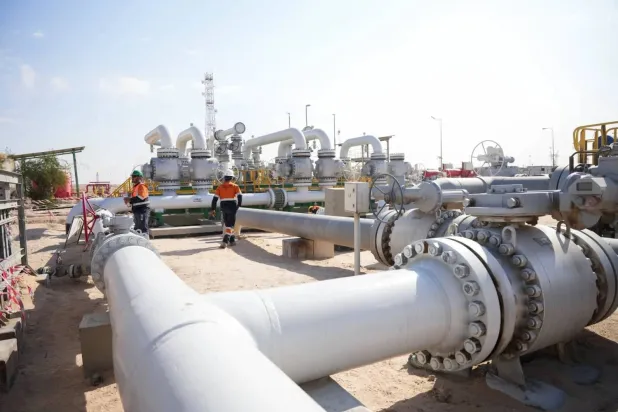
It will not be easy to attract the required investment levels to develop oil fields and address infrastructure bottlenecks that have prevented past production capacity gains from translating into sustained higher output. Iraq is still struggling to shed the image that made foreign companies wary in the past, said Mohammed Abbas, former director at the state-owned Basra Oil Company and current energy consultant. He added: 'The sector still faces regulatory instability, security challenges, political instability, and project implementation delays.'
In a related development, Iraq is preparing to export crude oil and naphtha through ports in Syria, after the Iran war cut off Iraq's main shipping routes in the Gulf. Iraq's Deputy Oil Minister for Exploration and Production announced that Iraq plans to gradually restore crude oil production to between 4.2 million and 4.3 million bpd. This step expands an agreement allowing Iraq to export fuel oil via the port of Baniyas on the Mediterranean, following the effective closure of the Strait of Hormuz, which severely curtailed Gulf export routes for OPEC's second-largest oil producer. Iraqi oil officials said plans to diversify crude oil and fuel export routes, including through Syria, will continue even after the Iran war ends and shipping through the Strait of Hormuz returns to normal, as part of a government-approved strategy to reduce Iraq's dependence on a single export corridor.
Salim Al-Rikabi, spokesman for the Iraqi Oil Ministry, said: 'The Iraqi government and Oil Ministry attach utmost importance to diversifying crude oil export routes, especially through Syrian territory.' Al-Rikabi added that the Oil Ministry, through the state-owned oil marketing company SOMO, is continuing discussions and cooperation with Syria to expand exports via its western neighbor.
Original source: Al-Riyadh
Comments (0)
Be the first to comment.