Israel Expresses Readiness to Rejoin Iran War 'If Trump's Position Changes'

Israel has expressed readiness to rejoin the war against Iran if the US position changes, while the United States is sending additional military assets to Israel amid escalating tensions. Prime Minister Netanyahu faces domestic pressure and political motives to resume fighting, but the US prefers to keep Israel out of the current escalation.
Israel is monitoring the escalation of the military confrontation between the United States and Iran, having remained outside the circle of direct clashes since the latest ceasefire, but it has expressed readiness to reengage in fighting 'if the US position,' which opposes this, changes, while the expanding scope of attacks in the region threatens a return to the path of 'comprehensive confrontation.'
For the first time since the conflict renewed, Israel on Sunday launched interceptor missiles after deeming that fragments of Iranian missiles fired toward the Jordanian city of Aqaba posed a potential threat to the city of Eilat.
Although Israel has not yet participated in the latest round of escalation and has not been directly targeted by Iran, Israeli Defense Minister Israel Katz vowed on Sunday to 'respond powerfully' to any Iranian attack.
Katz said in remarks reported by The Times of Israel that 'if Iran launches missiles at Israel, we will attack it with all our might,' adding that Tel Aviv is 'ready to take defensive and offensive measures if the American position changes.'
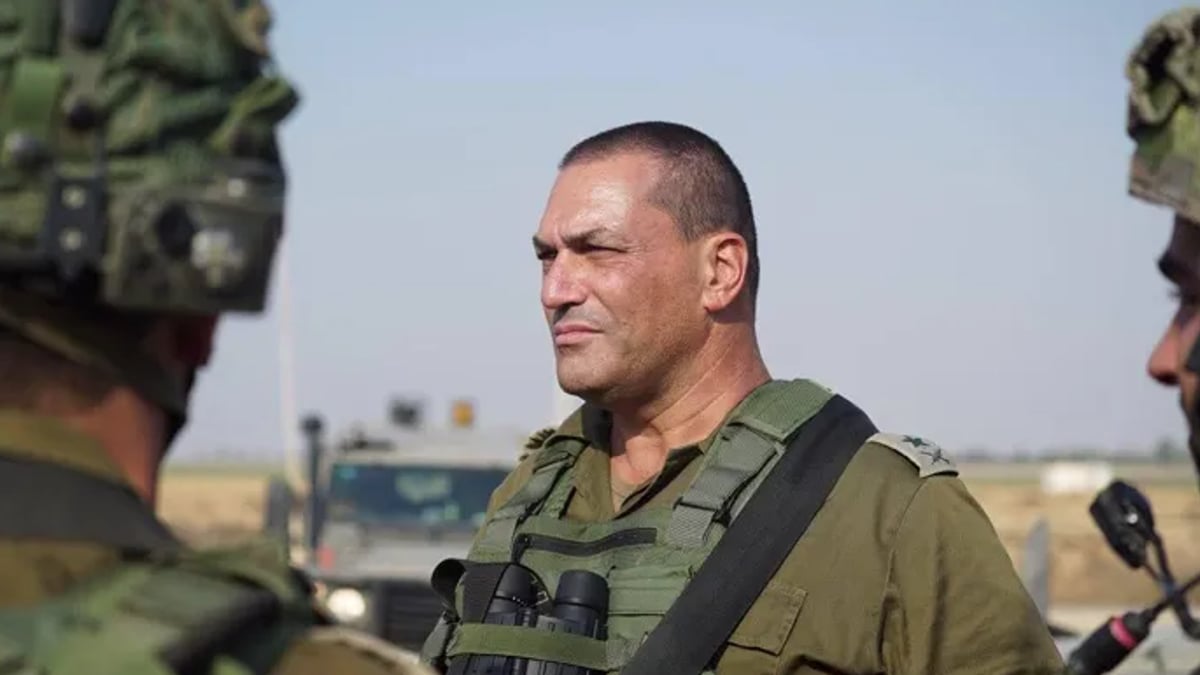
For his part, Israeli Chief of Staff Eyal Zamir said that 'the army is closely monitoring developments in Iran and maintaining a high level of readiness,' adding: 'We are ready to resume fighting immediately, and we will act with great force against anyone who attacks us.'
The United States had fought the war against Iran alongside Israel in late February, amid military coordination between the two countries.
However, this war, as it continued, revealed a growing divergence between US President Donald Trump and Israeli Prime Minister Benjamin Netanyahu on how to manage military operations, and even on the feasibility of continuing them.
This disagreement emerged last month when Israel and Iran exchanged attacks for the first time since the April truce. Trump called Netanyahu, demanding he de-escalate, saying that the United States was close to reaching an agreement with Iran, according to The New York Times on Sunday, citing officials familiar with the call.
Despite Israel's opposition, Trump later signed a 'memorandum of understanding' with Iran to halt fighting and start negotiations aimed at ending the conflict, but the ceasefire did not last long before Washington and Tehran resumed exchanging strikes. Since the breakdown of the truce, Iran has not launched direct attacks on Israel.
Netanyahu warned last week that Israel would inflict 'massive damage' on Iran if it is attacked.
Speaking at a conference in southern Israel, he said: 'I say to the leaders of Iran, do not bet on the calm continuing if you attack us,' adding that the Israeli response would be 'much stronger' than during the war earlier this year.
Netanyahu's motives for resuming the war
According to The New York Times, Netanyahu has political and personal motives to resume the war, as the general elections scheduled for October approach.
The Israeli prime minister faces domestic pressure, as many Israelis consider the war's outcomes limited or even disappointing, with declared goals such as eliminating Iran's nuclear program or creating conditions for the overthrow of the Iranian regime not achieved.
According to the American newspaper, the Iranian leadership emerged from the war 'still holding on to power,' while its nuclear program and ballistic missile system withstood US and Israeli strikes, and the agreement negotiated by Washington did not address Tehran's support for its allied groups in the region, such as Lebanese Hezbollah.
In contrast, Netanyahu faces a complex equation of maintaining his relationship with the US president, who has come to view the war as a growing political burden with no clear exit, as Israel's resumption of the war without Washington's approval could jeopardize its relations with its most important ally.
The Israeli Broadcasting Corporation quoted security officials, one Israeli and one American, saying that the United States informed Israel of its intention to escalate attacks on Iran in the coming days, while preferring at this stage to keep Israel out of the current escalation.
According to the officials, Washington and Tel Aviv discussed, within their consultations, the possibility that Iran might 'break the rules of engagement' by targeting Israel, which could prompt an Israeli response inside Iran. However, the United States does not want Israel to be involved in the escalation.
Additional US forces in Israel
The United States has transferred additional equipment and ammunition to Israel for US fighter jets in recent hours, as part of preemptive arrangements. Aerial refueling aircraft have also arrived in Israel.
An Israeli military official told Reuters on Sunday that Tel Aviv is preparing to receive more US aerial refueling aircraft.
The official added that the United States decided to adjust its force deployment in the region and bolster the fleet of aerial refueling aircraft already in Israel with additional planes.
Another senior Israeli official said dozens of US aerial refueling aircraft are expected to arrive in Israel.
The New York Times quoted US officials saying that the United States has begun sending more warplanes to the region. The reinforcements include F-16 fighters from the US Air Force coming from Germany, and F-35 stealth fighters coming from Britain, in addition to other aerial refueling aircraft.
The New York Times reported that the orders to redeploy the aircraft were issued before the Iranian attack that targeted US forces in Jordan on Friday, which killed two US Army soldiers, left a third service member missing, and injured others.
Since the outbreak of the conflict with US and Israeli strikes on Iran on February 28, the United States has deployed dozens of aerial refueling aircraft in Israel.
The Israeli military official, speaking to Reuters, pointed out that the United States chose to station some aircraft at Israeli Air Force bases as well as commercial airports, aiming to minimize disruption to civilian air traffic and based on operational and logistical considerations.
Axios had reported, citing US and Israeli officials, that the Trump administration informed Israel it would send dozens of additional aircraft ahead of a possible expansion of military operations against Iran.
In May, an official at the Israel Airports Authority said about 70% of activity at Ben Gurion Airport was affected by the space and resources occupied by US military activities.
According to a spokesperson for Israeli Transport Minister Miri Regev, the United States has since agreed to move some aircraft to military bases, while the number of US military aircraft in Israel reached 98 as of June 25.
Original source: Asharq News



Comments (0)
Be the first to comment.