Israeli Withdrawal Tops Lebanon's Priorities in Rome Negotiations

The sixth round of negotiations between Lebanon and Israel kicks off Tuesday in Rome, amid Lebanese political expectations that it will be an 'important milestone' to test Israel's seriousness in beginning to implement plans for a gradual withdrawal from southern Lebanon.
This round comes within the framework of understandings reached in Washington between Lebanon and Israel with American mediation.
Direct negotiations sessions continue for two days at the US Embassy in Rome, with the Lebanese delegation headed by negotiator Simon Karem, and participation of Lebanon's ambassador to Washington, Nada Hamadeh Mawad.
Tuesday's meeting is dedicated to discussing the items in the 'framework agreement' signed between Lebanon and Israel on June 26 last year, which stipulates the start of developing executive mechanisms for the agreement and forming specialized committees as needed.
The Lebanese delegation brings to the negotiating table a set of demands presented in previous rounds, most notably accelerating the withdrawal of Israeli forces from the two pilot zones, consolidating the ceasefire in the south, pressuring Israel to halt its military operations, and committing to the framework formula announced at the end of the tripartite negotiations in Washington.
Priorities of the Lebanese delegation in Rome negotiations
Accelerating the Israeli withdrawal from the two pilot zones.
Consolidating the ceasefire in southern Lebanon.
Pressuring Israel to halt its military operations and adhere to the framework agreement formula announced at the conclusion of the Lebanese-American-Israeli negotiations in Washington.
Halting the bombardment, demolition, and bulldozing operations carried out by Israeli forces in a number of towns and villages they occupy in southern Lebanon.
The Lebanese delegation also demands a halt to the bombardment, demolition, and bulldozing operations carried out by Israeli forces in a number of towns and villages they occupy in southern Lebanon.
Lebanese demands
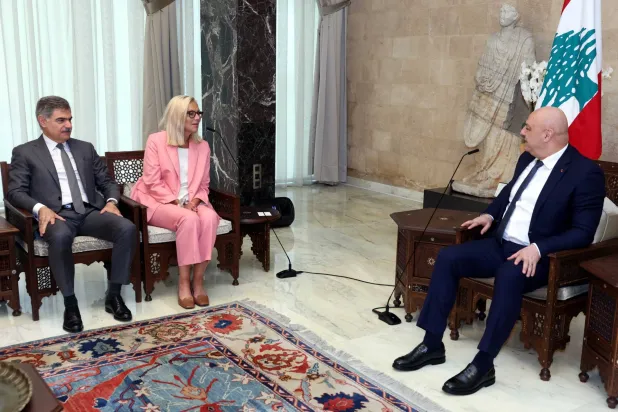
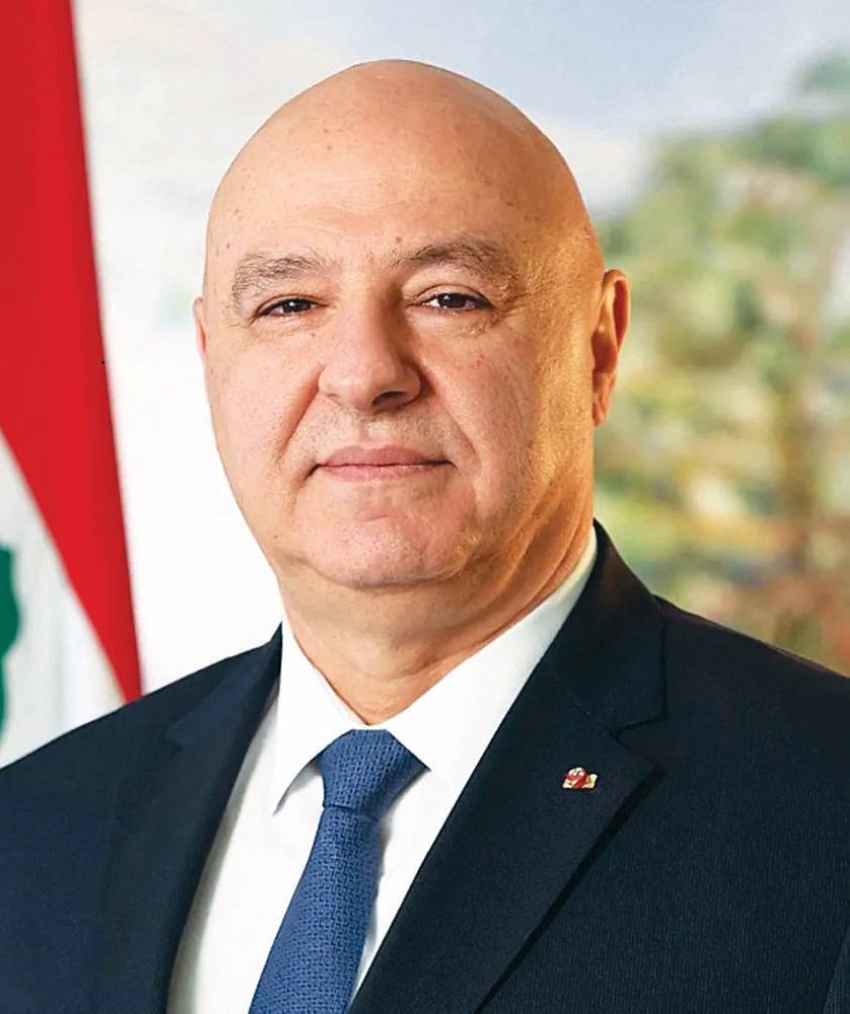
Lebanese President Joseph Aoun received Prime Minister Nawaf Salam on Monday and discussed with him the general situation in the country, especially in the south, in light of the ongoing Israeli attacks.
The meeting addressed the new round of Lebanese-American-Israeli negotiations scheduled for Tuesday and Wednesday in Rome, and the instructions given to the Lebanese delegation to demand the immediate start of the withdrawal of Israeli forces from the two pilot zones before entering into any other discussion.
The meeting also touched on Aoun's upcoming visit to the United States and his meeting with US President Donald Trump.
Aoun had expressed, during a reception for visitors at the Baabda Presidential Palace, his hope that the Rome negotiations would yield tangible and practical steps on the ground, beginning with the withdrawal of Israeli forces and the deployment of the Lebanese army in the areas being evacuated.
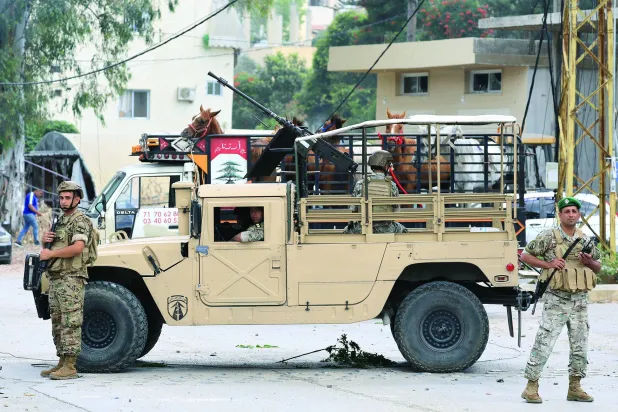
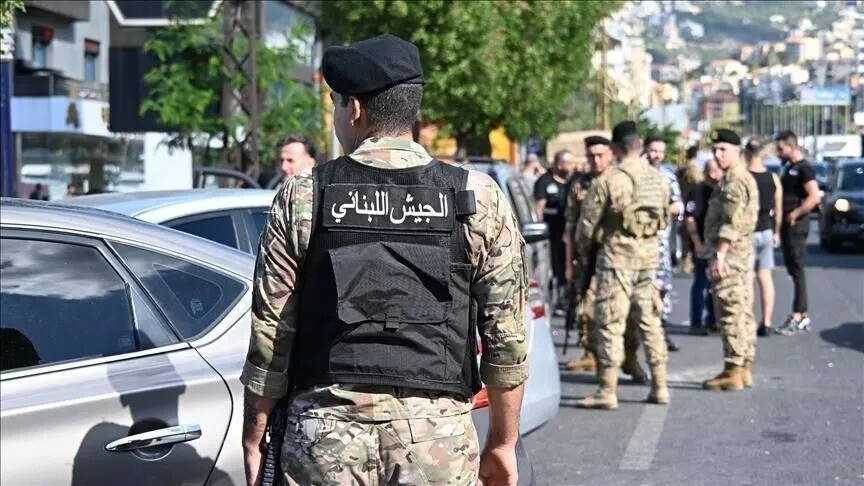
Aoun affirmed that 'the Lebanese army continues to perform its duties across all Lebanese territory, despite the difficult economic conditions faced by soldiers,' stressing 'the need to support it and provide necessary equipment.'
Aoun said that Israeli Prime Minister Benjamin Netanyahu must realize that 'war will not achieve security,' and that 'stability can only be reached through negotiation, and the recognition that continuing the war will only lead to more killing, destruction, and displacement.'
He added that 'the approach of aggression cannot continue alongside talk of peace and security,' noting that 'historical experiences show that wars and the use of force do not lead to peace and stability, nor do they eliminate non-state forces.'
Aoun called on Israel to 'change its approach if it truly seeks to achieve security and peace for its people and stability for the region.'
Aoun stressed that 'the army and the state are the two entities capable of protecting the Lebanese, not parties or sectarianism and confessionalism,' invoking Lebanon's experience since 1975 (the outbreak of the civil war).
The Lebanese president said that 'the people of the south have been exhausted by wars, and they deserve to live in safety and stability, instead of having their properties and lands destroyed and their children killed in every round of escalation.'
He pointed out that 'the goals agreed upon by the Lebanese are the Israeli withdrawal, the return of the displaced, the recovery of prisoners and remains, and reconstruction,' affirming 'the need to try the negotiating path after the failure of the war path.'
He continued: 'Based on my responsibilities as president of the republic of all Lebanon, I affirm that I will not compromise on the south or on Lebanon's rights,' stressing 'the necessity of Israel's withdrawal from all Lebanese territory and its signing of a pledge that it has no ambitions in Lebanon.'
Aoun and Trump meeting
Aoun explained that during his upcoming visit to Washington, he will explain to Trump the reality of the Lebanese situation and will ask him to exert necessary pressure on Israel to implement what was agreed upon in the framework formula and respond to Lebanese demands.
He also pointed to the need to benefit from what he described as 'the current US administration's desire to achieve peace in the region,' in a way that strengthens Lebanon's position in this path.
Amid the military escalation between the United States and Iran, Aoun condemned the repeated attacks on Arab Gulf states.
He noted that these hostile acts represent 'overt and multi-source attempts that not only target the security and sovereignty of states but systematically seek to undermine the stability of the Gulf region and keep the entire region in a perpetual state of tension and anxiety, serving schemes that do not wish well for the Arab peoples.'
Ongoing Israeli escalation
On the ground, the Israeli army continues its attacks on villages and towns in southern Lebanon, detonating a number of houses and infrastructure early Tuesday in the towns of Majdal Zoun and Hadatha in the districts of Tyre and Bint Jbeil, while the town of Biout al-Siyad was subjected to artillery shelling.
Israeli forces also fired heavy machine guns toward the towns of Majdal Zoun, al-Mansouri, and adjacent valleys, and carried out demolition operations in the valleys extending from Majdal Zoun to Wadi Hassan, in addition to explosions around the towns of al-Tiri and Kounin in the Bint Jbeil district around 1:30 a.m.
The Israeli army had carried out a large demolition operation Monday evening in the Safita area on the southern outskirts of the town of Yohmor al-Shaqif in Nabatieh, causing cracks and a large fissure in a mountain peak and a huge rumble that echoed in the southern areas, according to the National News Agency.
The Israeli army also carried out two consecutive demolition operations in the town of Kfar Tebnit, and machine-gun sweeping operations toward the town of Majdal Zoun in the Tyre district, concurrent with artillery shelling targeting Wadi Hassan.
Israeli forces also advanced into the outskirts of the town of Braashit in the Bint Jbeil district and detonated a number of houses, according to the National News Agency.
During the negotiations, the Lebanese delegation focuses on the need for an immediate Israeli withdrawal from the two pilot zones before discussing any other items, as Israeli military operations continue in southern Lebanon. This round gains special importance as it may pave the way for President Aoun's visit to the United States and his scheduled meeting with President Trump.
Original source: Asharq News

Comments (0)
Be the first to comment.