Japanese stock indices close mixed amid tech rebound and yen weakness
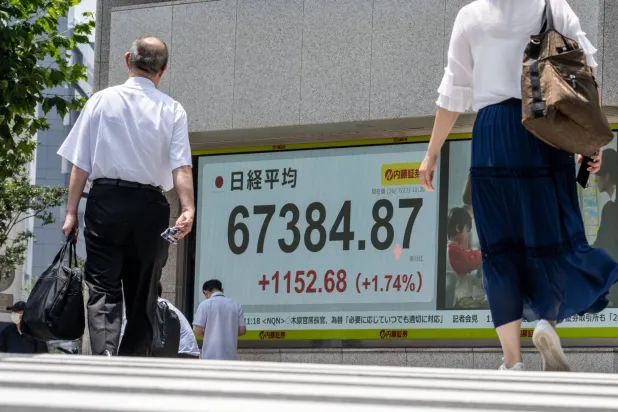
Japanese stocks closed mixed on Wednesday, with tech stocks rising ahead of expected earnings, while higher oil prices and a weaker yen weighed on the overall market.
The Topix index rose 0.45% to close at 4033.13 points. The Nikkei benchmark index rose as much as 2.05% before retreating in the afternoon session, closing down 0.18% at 66115.60 points. The Philadelphia Semiconductor Index jumped 5.2% overnight, despite escalating conflict in the Middle East, which pushed oil prices higher, and the US announcement of new tariffs.
Maki Sauda, a strategist at Nomura Securities, said investors are waiting for results from major technology companies to see how they are handling rising costs, while benefiting from the South Korean KOSPI index, which is mainly composed of tech companies.
Sauda added: 'If these indicators are positive, they could dispel these concerns and spur a rise in stock prices.' He continued: 'Concerns about the impact of rising costs on corporate earnings, partly due to higher crude oil futures prices, are casting a shadow over the entire stock market.'
The yen fell to a 40-year low of 163.24 yen per dollar, disrupting local markets, while Japan's imports surged to a record high in June, according to government data, as the currency weakened and oil prices rose.
Technology sector suppliers and chipmakers led gains on the Nikkei, which saw 122 stocks rise versus 102 fall. The biggest gainers on the index were Mitsui Kinzoku, up 7.38%, followed by Taiyo Yuden, up 6.73%, and Kioxia Holdings, up 5.26%.
The biggest losers were all in the consumer goods sector, with J. Front Retailing down 5.75%, followed by Shiseido down 5.38%, and Takashimaya down 4.91%.
Rising yields
Meanwhile, Japanese government bond yields rose on Wednesday amid growing concerns about inflation and public finances, overwhelming strong demand at an ultra-long-term bond auction.
The benchmark 10-year JGB yield rose 3 basis points to 2.750%, and the 5-year yield rose 2.5 basis points to 1.965%.
Yields move inversely to bond prices. JGB yields rose in line with a global rise after US Treasury yields hit their highest in two months, and eurozone yields edged up, as escalating tensions between the US and Iran pushed oil prices higher and revived inflation fears, driving up interest rates in major bond markets.
In an economic plan finalized on Tuesday, Prime Minister Sanay Takayachi's government announced it will work with the private sector to direct investments of over 370 trillion yen ($2.28 trillion) into targeted sectors through fiscal 2040.
Takayuki Miyaijima, chief economist at Sony Financial Group, said in a note: 'The rise in crude oil prices driven by escalating tensions in the Middle East is pushing inflation expectations higher... There is still a strong concern that the government's responsible and proactive fiscal policy will lead to increased JGB issuance and fiscal expansion in the future.'
The Ministry of Finance sold approximately 300 billion yen in 40-year JGBs on Wednesday. The bid-to-cover ratio, a measure of demand, rose to 2.82, the highest since March 2025.
Market participants remain focused on the Bank of Japan's next monetary policy meeting, with growing expectations that the central bank will keep interest rates unchanged next week, but may signal a faster pace of tightening as inflation risks persist. The 20-year JGB yield rose 3 basis points to 3.630%, the 30-year yield rose 0.5 basis point to 3.890%, and the 40-year JGB yield, the longest maturity in Japan, rose 1 basis point to 3.9%.
Original source: aawsat.com





Comments (0)
Be the first to comment.