Maradona's Prophecy: Football Turns into American Model and FIFA Revenue $15 Billion
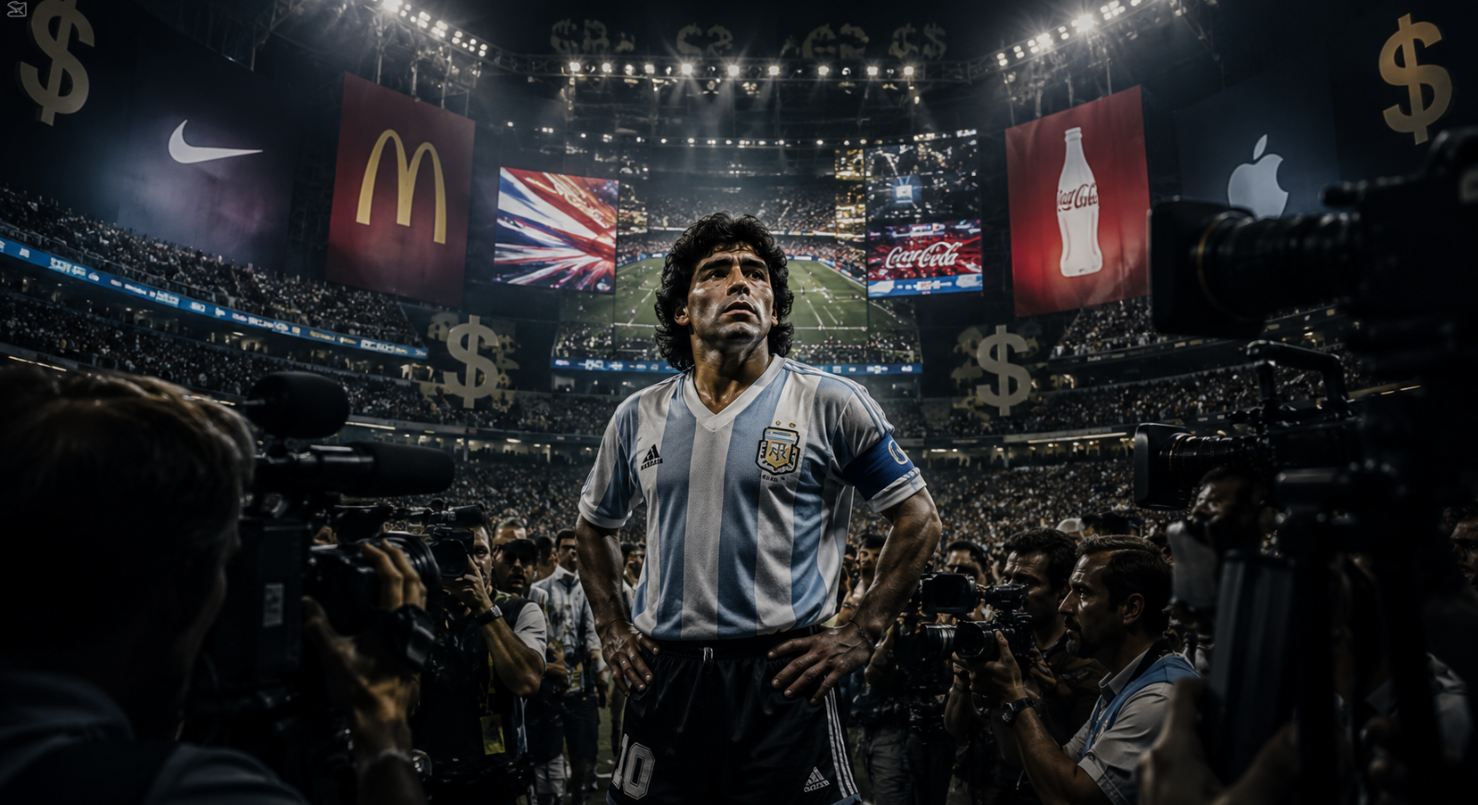
In 1994, after being expelled from the World Cup, Argentine legend Diego Maradona accused FIFA of conspiring against him. In 2018, he warned that commercial interests would turn football into a purely American event. Today, with the 2026 World Cup, his prophecy is coming true: record revenues and commercial breaks.
Maradona's prophecy of the Americanization of the poor man's game
In the heat of a June 1994 afternoon in Dallas, Texas, Diego Maradona looked into a TV camera just hours after FIFA's decision to exclude him from the World Cup for using ephedrine. The Argentine national team legend said in anger and sorrow: 'They cut off my legs and prevented me from defending myself. I never took any stimulants, and I don't know what happened. I swear I didn't take anything, but they seem indifferent.'
Maradona's criticisms were not limited to his personal case; he warned of the dominance of American commercial interests in football, which seems to be gradually coming true.
During the same tournament, Maradona accused FIFA of 'beating him mercilessly and forcing him to retire,' claiming that the international federation exploited his fame to attract crowds to American stadiums and then abandoned him.
These claims have not been proven, and then-FIFA President João Havelange stated that 'medical facts do not lie' and that anti-doping procedures leave little room for conspiracy.
But what can be verified is Maradona's broader criticism. In 2018, after the United States, Mexico, and Canada won the bid to host the 2026 World Cup, he warned that American commercial interests would reshape the game.
He said: 'They will divide the match into four quarters instead of two halves to show more advertisements. Compare that: you will see they have no passion for football. Americans want division for advertising purposes. They will play a full 100 minutes.'
Decades later, the 2026 World Cup has come to confirm his warnings, but it has also shown a fundamental change in the structure of the sport once known as 'the poor man's game.'
The World Cup business
- A Bloomberg analysis concluded that 'the United States changed the shape of the World Cup,' transforming it into a massive sporting event that matches the 'American sports model,' including halftime shows and dynamic pricing. - FIFA officially approved two mandatory water breaks in each match; these short minutes secured about $600 million in additional revenue for the American network Fox.
On July 18, FIFA President Gianni Infantino informed member associations that the revenue for the 2023-2026 cycle would exceed $15 billion, surpassing the original target of $11 billion.
FIFA revenues during World Cup cycles
Cycle
Total revenue
(billion USD)
Broadcast revenue
(billion USD)
Sponsorship and marketing
(billion USD)
2011-2014
4.80
2.4
1.6
2015-2018
6.42
3.1
1.67
2019-2022
7.57
3.43
1.8
2023-2026
+15.0
4.26
2.85
- The expansion of the tournament to 48 teams and 104 matches (compared to 64 matches in 2022) led to an increase in television broadcast slots, ticket numbers, and sponsorship opportunities.
- Hospitality and ticket sales were the biggest growth drivers, rising from about $950 million in 2022 to a projected $3.1 billion in 2026, with FIFA also receiving a 15% commission from both buyers and sellers in the official resale market.
- Infantino has already floated the idea of expanding the 2030 World Cup to 64 teams, to be held in Spain, Portugal, and Morocco, plus centenary matches in Uruguay, Paraguay, and Argentina.
- However, concerns about player safety are growing, with the International Federation of Professional Footballers warning that fatigue risks are 'increasing' given the packed schedule.
- Deloitte separately warned that cramming more matches into an already congested calendar could lead to 'stabilization' or even a decline in European club revenues in the 2025-26 and 2026-27 seasons.
Spectator attendance
- The 2026 World Cup attracted over 6.6 million spectators across 104 matches, with an average of approximately 65,400 spectators per match and a 99.7% occupancy rate, breaking the previous record. The final match had 80,700 spectators.
- For comparison, the 2022 tournament attracted about 3.4 million spectators with a 96% occupancy rate, and the 2018 tournament attracted about 3 million spectators with a 98.4% occupancy rate.
- The total global viewership in 2018 was about 3.572 billion viewers, of whom 1.12 billion watched the final, while the 2022 final recorded about 1.5 billion viewers.
- FIFA estimates that the viewership of the 2026 final exceeds 1.8 billion, bringing the tournament's total viewership to over 5 billion.
Jersey economy
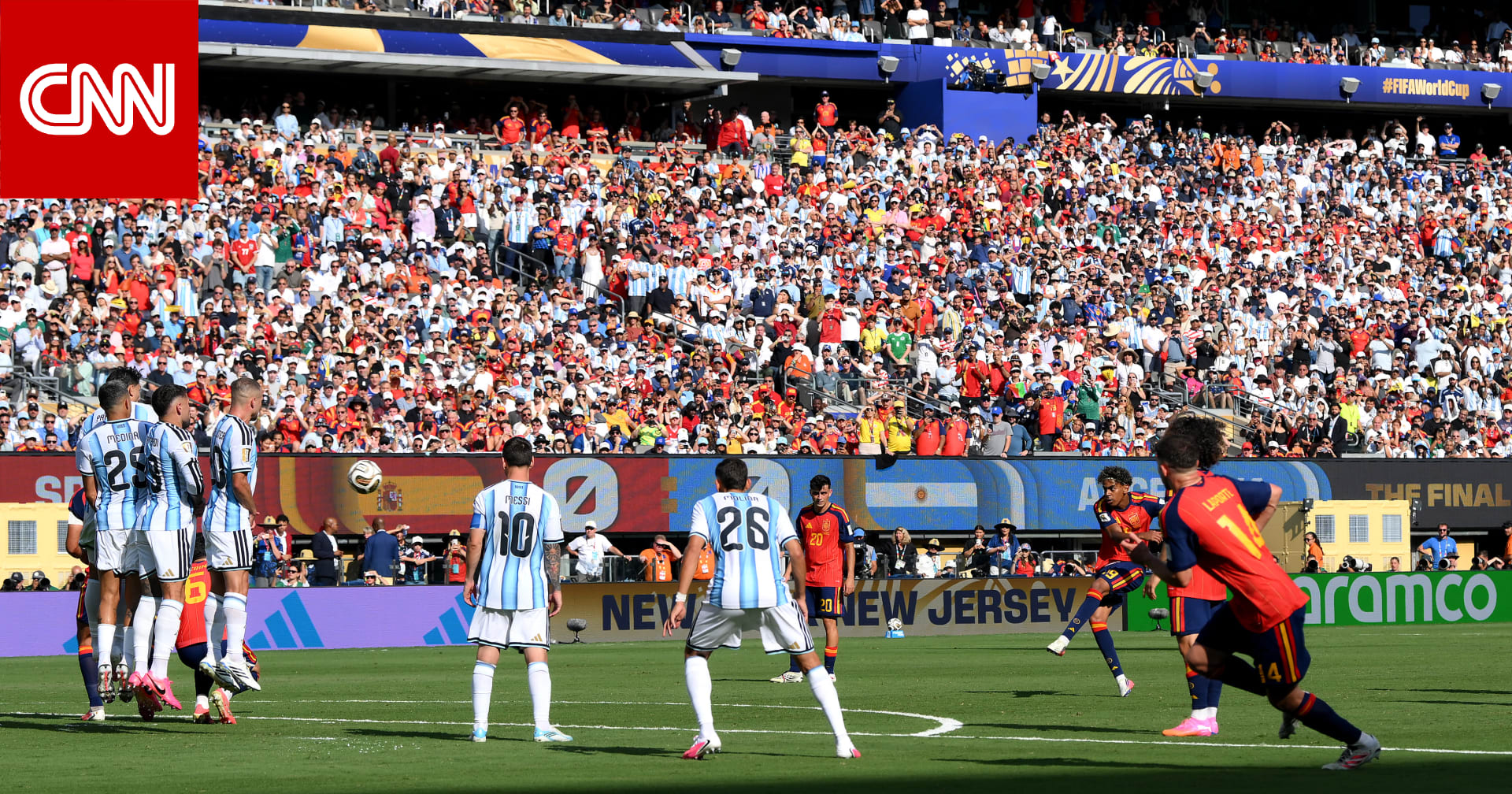
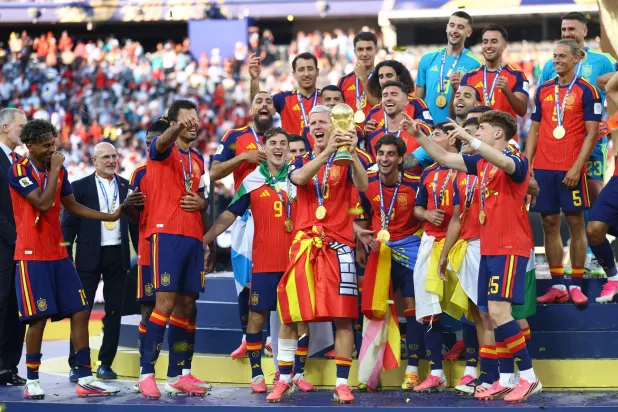
- With both finalists (Spain and Argentina) wearing Adidas jerseys, the German brand achieved a decisive commercial victory, plus selling four times as many jerseys and twice as many balls compared to the previous World Cup, raising event-related sales expectations to about €1.5 billion.
- Nike's global market share fell to 22.9% from 29.2% during the tournament, while visits to Adidas stores jumped 47% in the opening week.
- Adidas stock had already outperformed Nike before the final, and London Stock Exchange Group analysts expect Adidas revenue to grow by 6.8% during the event period compared to a 1.7% decline in Nike sales.
Inflation in football
- Inflation in football has increased significantly in recent years, and FIFA's revenues are just one form of capitalist encroachment into the world of the 'poor man's game,' driving up the price of everything.
- The cost of Maradona's transfer to Napoli in 1984 was about $12 million, a sum considered exorbitant at the time, while Neymar's transfer to Paris Saint-Germain in 2017 was €222 million, a figure still unbroken.
- FIFA is not the only beneficiary; European football revenues exceeded €40 billion in the 2024-2025 season, up from €38 billion the previous season, and the top five leagues alone generated €21.6 billion.
- Deloitte's Football Money League recorded clubs with revenues exceeding €12 billion for the first time, with Real Madrid becoming the first club to surpass €1 billion in a single season, and the club's value rising to $9.5 billion from $6.75 billion last year.
- The value of the domestic and international broadcast rights for the English Premier League for the 2025-2028 cycle is about £12.25 billion ($15.3 billion), an increase of 17% over the previous cycle.
Platforms fueling the bubble
- The passion (which borders on obsession in some cases), embodied in fan interactions with club and football federation pages, helps fuel this inflation as it reflects the huge popularity of the game, teams, and even players.
- FIFA reported that fan interactions on social media with the 2026 World Cup increased by 160%, post impressions by 130%, and video views by 485% compared to 2022.
Was the tournament rigged?
- Claims circulated on social media that FIFA's match schedule favors teams with high commercial value, and the federation's adjustments fueled conspiracy theories about a 'pre-determined final' and 'unfair competitiveness.'
Original source: Argaam

Comments (0)
Be the first to comment.