British retail sales unexpectedly rise in June as consumer spending increases
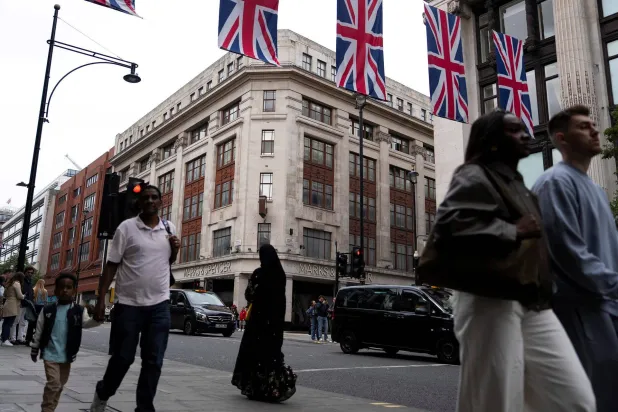
Official data released on Friday showed a surprise rise in British retail sales in June, as consumers boosted spending on air conditioners and clothing, in a new sign of improving economic activity driven by a heatwave and the World Cup football tournament.
The Office for National Statistics said retail sales volumes rose by 1 percent in June compared with the previous month, significantly exceeding economists' expectations in a Reuters poll who had predicted a decline of 0.3 percent.
Sales had grown by 1.2 percent in May, while the sharp decline recorded in April was revised from 1 percent to 0.7 percent.
The Office for National Statistics said the share of online sales rose to its highest level since April 2021, reaching 29.4 percent in the three months to June, as shoppers avoided visiting stores and high streets due to the heatwave.
Sales by retailers not linked to physical stores, including e-commerce platforms and market stall holders, jumped by 4.4 percent month-on-month, as households bought fans and cooling devices to cope with one of the hottest Junes on record.
Improved consumer sentiment
This data coincides with a survey by GfK showing an improvement in consumer sentiment, supported by hopes pinned on the new British Prime Minister Andy Burnham, despite ongoing concerns related to the war in Iran.
Burnham took office this week, putting alleviating cost-of-living pressures on households at the top of his government's agenda, which announced tax cuts on electricity bills and a reduction in the cap on bus ticket prices.
Inflation in Britain slowed in June, as fuel and food prices fell during a short ceasefire in the Iran war, while the labor market showed signs of gradual stabilization.
The British pound rose against the dollar following the data release.
Ruth Gregory, deputy chief British economist at Capital Economics, said: 'The rise in retail sales volumes in June suggests that consumers continued to spend despite higher energy costs since the outbreak of the war in Iran.'
She added: 'But with expected rising pressure on households' real income, we do not believe this resilience will continue.'
Consumers face greater test
Retail sales volumes rose in the second quarter by 0.6 percent compared to the previous three months, and by 4.2 percent year-on-year, exceeding economists' expectations of a 2.3 percent increase.
But Thomas Pugh, chief economist at RSM UK, said 'the bigger test for consumers is yet to come,' as energy prices rise again with escalating tensions in the Middle East conflict.
Pugh added: 'Inflation is likely to exceed 3.5 percent, increasing the chances of the Bank of England raising interest rates. This will put further pressure on household budgets and could negatively impact consumer spending.'
The Bank of England is expected to keep interest rates unchanged at 3.75 percent next week, as it assesses the repercussions of the ongoing war. However, investors had previously expected two 25-basis-point increases in borrowing costs before the end of the year.
Recent updates from major British retailers paint a more mixed picture of the strength of consumer demand.
Sainsbury's group reported that its third-quarter sales improved significantly, supported by the heatwave, while electrical appliance chain Currys recorded strong performance, with TV sales benefiting from the World Cup and increased demand for fans and air conditioning due to the hot weather.
In contrast, Sports Direct owner Frasers warned of continued impact from challenging market conditions, weak consumer confidence, and inventory build-up in the retail sector.
"); googletag.cmd.push(function() { onDvtagReady(function () { googletag.display('div-gpt-ad-3341368-4'); }); }); }
Original source: Asharq Al-Awsat





Comments (0)
Be the first to comment.