Britain confirms readiness of its armed forces after Iranian threats
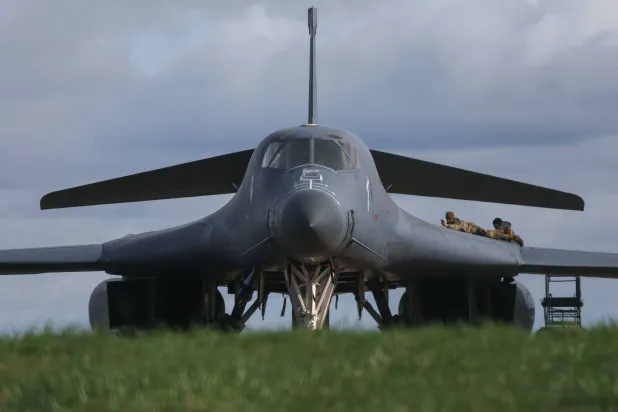
The British government affirmed the readiness of its armed forces to confront any attack targeting the United Kingdom, following threats from the Iranian Revolutionary Guard to target British bases after the United States used RAF Fairford in southwest England to carry out strikes against Iran.
A spokesperson for the British government said the armed forces are 'ready to maintain the security of the United Kingdom and protect it from any type of attack, whether on its territory or from abroad,' stressing that the country is 'on alert to defend itself around the clock.'
He added that Britain adopts a 'multi-layered approach' to air and missile defense, based on the capabilities of the Royal Navy, the British Army, and the Royal Air Force, and operates in coordination with London's allies in NATO.
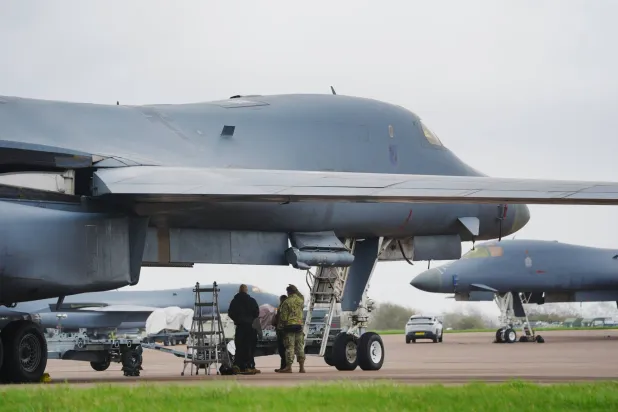
The British stance came after the Revolutionary Guard threatened in a statement on Thursday to target any base used to launch attacks on Iran, saying the United States used RAF Fairford for bombers that carried out strikes inside Iranian territory. London and Washington did not confirm this account, nor could it be independently verified.
British Prime Minister Andy Burnham had last week renewed his government's commitment to an existing defense agreement allowing the United States to use British bases in what London described as 'collective self-defense' in the region.
The British government confirmed on Wednesday that this arrangement includes US defensive operations aimed at neutralizing missile sites and capabilities used to attack ships transiting the Strait of Hormuz.
In response to Iranian threats, the spokesperson said the government's position 'has not changed,' and that Britain is committed to defending its people, interests, and allies in accordance with international law, while at the same time being careful to avoid being drawn into a wider regional conflict.
These statements come as the United States continues its strikes inside Iran for the thirteenth consecutive night, after the effective collapse of a temporary truce, while Tehran launched attacks towards Arab countries, including Bahrain, Jordan, and Kuwait.
Iranian Deputy Foreign Minister for Legal and International Affairs, Kazem Gharibabadi, had earlier warned European countries against allowing their territory or military bases to be used in any operations targeting Iran, saying that any country providing such facilities would be considered, from Tehran's perspective, a partner in aggression and would bear the consequences.
Strategic bombers B-52 of the US Air Force stand on the runway of RAF Fairford last April (AP)
In this context, the Iranian threat also came after the Bulgarian parliament approved allowing the US military to use the Bezmer air base to support its operations in the Middle East. However, the Bulgarian government quickly stressed that US aircraft would only carry out logistical missions, and that carrying out combat operations from Bulgarian territory is 'completely ruled out.'
Iranian attacks have previously targeted military installations linked to Britain. Reports in March indicated that Iran launched two ballistic missiles towards the US-British military base on Diego Garcia in the Indian Ocean, but they missed their target.
An Iranian-made Shahed drone caused minor damage on March 2 after hitting facilities at the British RAF Akrotiri base in southern Cyprus. London later said the base would not be included in the defense agreement allowing the United States to use British facilities to carry out operations in the region.
Experts believe that Iran may have a missile capable of reaching London in terms of range, but its likely lack of accuracy makes the level of direct risk low.
Relations between London and Tehran have been tense for months, with British authorities accusing Iran of being behind cyberattacks and using criminal networks and proxies to target opponents and interests inside the United Kingdom.
British security agencies said they uncovered 20 Iran-linked plots over the past year that could have resulted in deaths.
Britain also announced this month a ban on any support for the Revolutionary Guard under new security powers approved to counter what it described as Tehran's increasing use of proxies.
The move also came after a series of attacks targeting Jewish sites in London. The British government said the Revolutionary Guard is 'almost certainly' responsible for directing a group believed to be behind a number of those attacks.
In a related development, this month two Romanian nationals were sentenced to prison, with prosecutors saying they were working for Iran, after being convicted of involvement in stabbing a journalist working for a Persian-language media outlet in London.
In response, Tehran consistently denies involvement in such attacks and describes British accusations as 'baseless' and politically motivated.
Milband in Doha
On the political front, Qatari Prime Minister and Minister of Foreign Affairs Sheikh Mohammed bin Abdulrahman bin Jassim Al Thani received on Friday British Foreign Secretary Ed Miliband.
The two sides discussed cooperative relations between the two countries and ways to support and enhance them, and discussed the latest regional developments, especially diplomatic efforts to de-escalate and enhance security and stability in the region, according to the Qatar News Agency 'QNA.'
During the meeting, the Qatari Prime Minister and Minister of Foreign Affairs stressed the need for parties to adhere to dialogue and diplomacy, and to implement what was agreed upon under the memorandum of understanding between the United States and Iran, including ensuring freedom of navigation in the Strait of Hormuz, to maintain regional security, preserve achievements, and enhance regional stability.
He renewed Qatar's full support for all efforts aimed at defusing tensions and reaching a comprehensive agreement that achieves lasting peace in the region.
"); googletag.cmd.push(function() { onDvtagReady(function () { googletag.display('div-gpt-ad-3341368-4'); }); }); }
Original source: Asharq Al-Awsat



Comments (0)
Be the first to comment.