UK business activity records first growth in three months in July
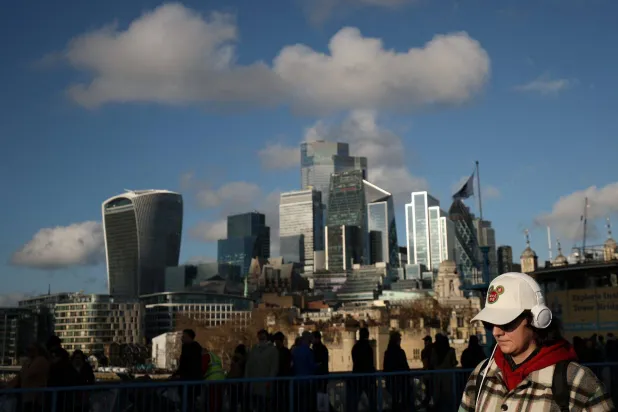
British companies recorded their first growth in three months in July, supported by a temporary improvement in geopolitical conditions and a reduction in tensions related to the Iran war; this boosted business optimism to its highest level since the outbreak of the conflict, according to a purchasing managers' survey that could give new Prime Minister Andy Burnham a positive boost.
The preliminary composite purchasing managers' index from S&P Global in the UK rose to 52.1 points in July, compared to 49.3 points in June, recording its highest level since February and surpassing all expectations in a Reuters poll that had indicated a limited rise to 49.7 points.
A reading above 50 points indicates economic activity growth, while a reading below this level reflects contraction.
The preliminary services PMI rose to 51.8 points from 48.8 points in June, recording its highest level since April, while the manufacturing index rose to 52.8 points from 52.5 points.
Chris Williamson, chief business economist at S&P Global Market Intelligence, said hospitality companies benefited from warm weather, the FIFA World Cup, and an increase in Britons taking holidays at home, while rising costs and uncertainty limited travel abroad.
Combined services and manufacturing companies recorded the slowest input cost inflation since February, driven by lower fuel and raw material prices, after a temporary easing of tensions in the Gulf led to a decline in oil prices before tensions escalated again.
Williamson said: 'Price pressures eased due to lower oil prices in the first half of the month, which may boost expectations that the Bank of England could delay an interest rate hike.'
The Bank of England is widely expected to keep interest rates at 3.75% at its meeting next week as it assesses the repercussions of the ongoing conflict.
Williamson added: 'Nevertheless, inflationary pressures remain clearly high, as the ongoing energy shock and supply disruptions resulting from the war in the Middle East exacerbate existing cost pressures on companies from previous government policies.'
The survey's employment index continued to indicate a decline since the first budget presented by former Finance Minister Rachel Reeves in 2024, which included an increase in social security contributions borne by employers.
Business confidence in the outlook for the next year rose to its highest level since February, with companies citing easing geopolitical tensions and lower oil prices in the first half of July.
However, S&P Global warned that renewed escalation of tensions could hinder the decline in cost pressures.
While some companies pointed to a rebound in investment spending related to artificial intelligence, other companies expressed concerns about the British economy's outlook and the continued uncertainty in the domestic business environment.
Since taking office as prime minister on Monday, Burnham announced a package of measures to support families and businesses, including cutting business taxes for a number of hospitality companies, capping bus fares, and abolishing tax on household electricity bills.
In a separate indicator, a consumer confidence survey from GfK on Friday showed that British consumers have become the most optimistic since January, with growing hopes of an economic recovery.
); googletag.cmd.push(function() { onDvtagReady(function () { googletag.display('div-gpt-ad-3341368-4'); }); }); }
Original source: Asharq Al-Awsat




Comments (0)
Be the first to comment.