Nikkei closes down more than 2% amid AI spending concerns
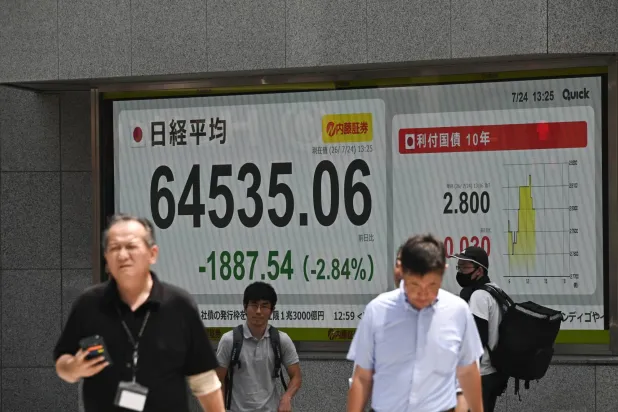
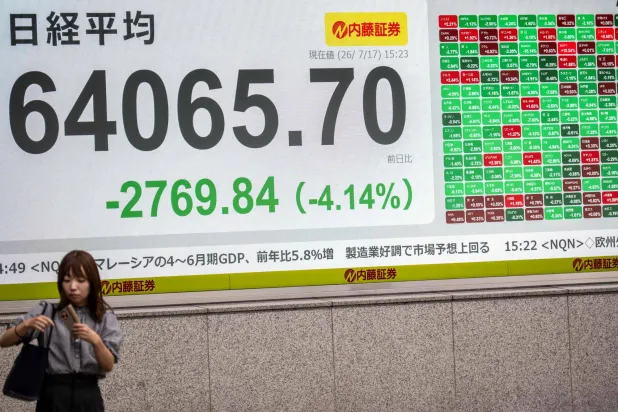
Japan's Nikkei index closed down more than 2% on Friday as a sharp decline in shares of Alphabet, Google's parent company, raised concerns about hefty spending on artificial intelligence.
Japan's Nikkei index closed down more than 2 percent on Friday, as a sharp decline in shares of Alphabet, Google's parent company, raised concerns about hefty spending on artificial intelligence.
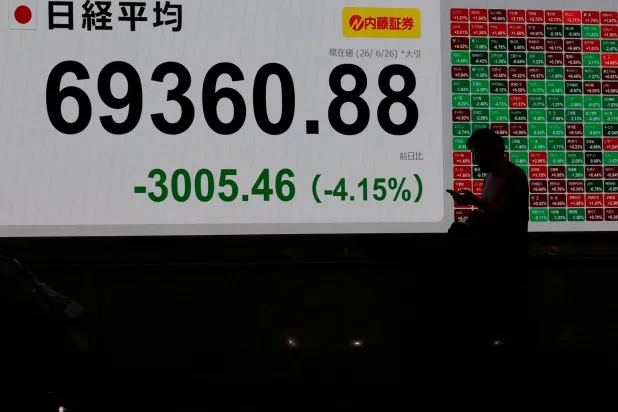
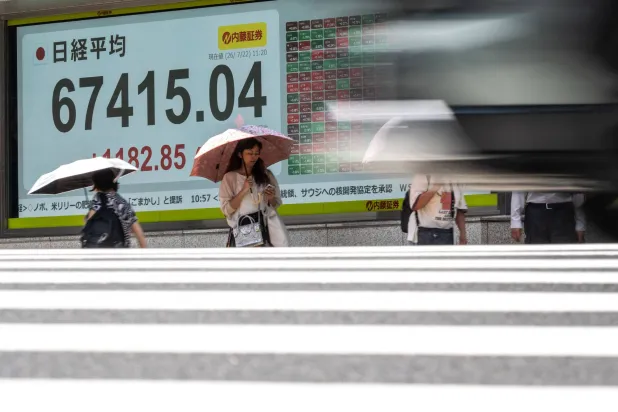
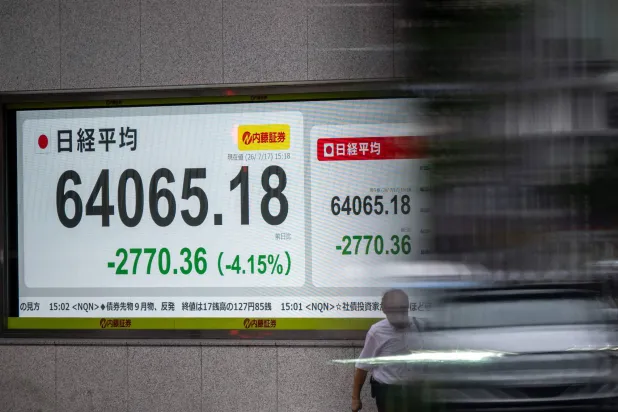
The Nikkei fell 2.73 percent to close at 64,611.15 points, but rose 0.7 percent for the week after dropping 6.4 percent the previous week. The broader Topix index slipped 1.05 percent to 4,011.31 points.
The Nikkei has lost nearly 8 percent so far this month and entered correction territory last week, with its movements heavily influenced by South Korea's tech-heavy Kospi index and the Philadelphia semiconductor index in the United States.
Alphabet shares fell 7 percent overnight after the company announced higher spending plans. Wall Street indexes closed lower, with the Nasdaq dropping more than 2 percent.
Kazuaki Shimada, chief strategist at Iwai Cosmo Securities, said 'Concerns have resurfaced about whether large spending on AI infrastructure is sustainable after Alphabet shares fell sharply overnight... The Nikkei is being affected by external factors, not domestic signals. Many Japanese companies will start reporting earnings from today, and if their outlooks are strong, the index direction may change.'
Chip-related stocks declined, with Advantest and Tokyo Electron losing 6.02 percent and 4.99 percent, respectively. Technology company SoftBank Group fell 7.06 percent, and memory chip maker Kioxia dropped 9.49 percent. Stocks supported by domestic demand rose, with East Japan Railway and West Japan Railway each gaining about 2 percent. Central Japan Railway, which operates bullet trains between Tokyo and Osaka, rose 1.62 percent.
Among more than 1,500 stocks traded on the Tokyo Stock Exchange's main market, 40 percent rose, 56 percent fell, and 3 percent were flat.
• Rise in yields
Separately, Japanese government bond yields rose sharply on Friday, as a weak yen and higher oil prices fueled bets that the Bank of Japan would raise interest rates sooner.
The two-year yield, most sensitive to BOJ interest rates, rose 2 basis points to 1.51 percent, its highest since May 1995. The 30-year bond yield, reflecting inflation concerns, rose to 4.0 percent, its highest since July 9.
The chances of an interest rate hike at the BOJ's policy meeting in October increased after a Bloomberg News report said BOJ officials are open to raising interest rates at a faster pace than the consensus among economists.
The two-year bond yield rose 8 basis points this week, its biggest weekly gain since mid-May.
Rento Maruyama, chief strategist for foreign exchange and interest rates at SMBC Nikko Securities, said: 'Market expectations for an interest rate hike in October may be too high... The central bank needs more time to review the effects of the June rate hike on the economy, such as higher interest rates on corporate lending.'
The Bloomberg report came after the yen fell to its lowest level in nearly four decades against the US dollar, raising concerns about import costs and accelerating inflation.
Maruyama said the BOJ is concerned about the weak yen and its impact on prices, and may turn hawkish to reverse the trend if necessary. But he said such messages will come from public speeches by senior BOJ officials or board members.
On Friday, long-term selling was more pronounced amid rising inflation concerns after oil prices steadied above $100 overnight, leading to a steepening of the yield curve.
Katsutoshi Inadome, senior strategist at Sumitomo Mitsui Trust Asset Management, said market players may have sold long-term bonds after the yield curve stabilized in the previous session. The rise in two- and five-year yields had been constrained until recently, as their yields were priced into the future path of BOJ rate hikes.
"); googletag.cmd.push(function() { onDvtagReady(function () { googletag.display('div-gpt-ad-3341368-4'); }); }); }
Original source: Asharq Al-Awsat


Comments (0)
Be the first to comment.