Oil Rises to Multi-Week High Amid Renewed Supply Disruptions

Interruption of Gulf oil exports hampers the recovery of Asian fuel production as oil prices climb to six-week highs amidst ongoing military escalations and shipping reroutes.
Disruptions to Gulf oil exports are hindering the recovery of Asian fuel production.
Oil rises to a multi-week high amid renewed supply disruptions.
Oil prices continued to rise, trading near six-week highs on Wednesday, as concerns grew over renewed supply disruptions after US forces launched airstrikes on Iranian military targets for the eleventh consecutive night, while oil tankers were forced to reroute in the Red Sea following warnings from the Iran-backed Houthi militia.
Brent crude futures rose $1.84, or 2.0%, to reach $92.85 a barrel, their highest level since June 11. US West Texas Intermediate crude also rose $1.67, or 2%, to reach $86.01, its highest level since June 12. These gains came after oil prices settled at a five-week high on Tuesday, following US airstrikes on targets in southern and western Iran, while Iran attacked US facilities in Bahrain, Kuwait, and Jordan. The US military announced it began its latest strikes on Iran early Wednesday morning, Tehran time. The US attacks came shortly after the Kuwaiti military announced that its air defenses intercepted Iranian drones on Wednesday. The ongoing exchange of strikes has raised concerns about further disruptions to global energy supplies after Yemen's Iran-allied Houthi movement opened a new front in the Iranian war by threatening to target ships carrying Saudi oil in the Bab al-Mandab Strait and announcing a naval blockade on the strait's supplies.
The Bab al-Mandab water corridor, at the southern entrance to the Red Sea, has become an increasingly vital route for Saudi crude oil exports given the sharp decline in shipping traffic through the Strait of Hormuz since the collapse of the US-Iran ceasefire earlier this month.
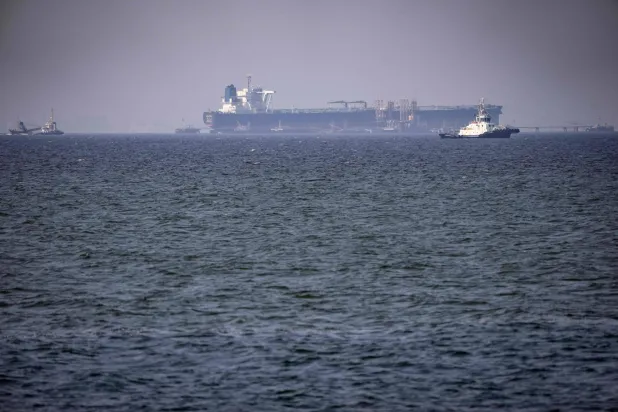
Three oil tankers carrying Saudi crude bound for China and India rerouted in the Red Sea on Tuesday, heading toward the Suez Canal instead of transiting the Yemeni coast, following a warning from the Iran-allied Yemeni Houthi militia. Commodity strategy analysts at ING Bank said on Wednesday: "This will force oil tankers to enter and exit the Red Sea via the Suez Canal, adding prohibitive time and costs to voyages to Asia," adding that tensions in the Black Sea are also compounding supply uncertainty.
The Caspian Pipeline Consortium suspended oil intake from Kazakhstan after shipping operations were halted on Monday, following drone attacks attributed to Ukrainian aircraft targeting tankers at its Black Sea terminal. ING Bank said: "The longer the suspension lasts, the more likely Kazakhstan will be forced to cut its oil and gas production."
Market sources reported that data from the American Petroleum Institute showed an increase in US crude and petroleum product inventories last week, while gasoline inventories declined. On Tuesday, three tankers carrying Saudi crude bound for China and India via Bab al-Mandab changed course, heading toward the Suez Canal. Consequently, Asian refiners, which had arranged August crude supplies, are bracing for delays in shipments from the Middle East, while refiners in the US and Europe are operating at near-full capacity.
Meanwhile, Russia has banned diesel exports due to Ukrainian drone attacks on its refineries, meaning global petroleum product supplies will remain constrained, driving up gasoline, diesel, and jet fuel prices. Elevated fuel prices have pushed refinery profit margins to record highs in the US and Europe, and to two-month highs in Asia.
Neil Crosby, an analyst at Sparta Commodities, said: "Margins are expected to remain high. Quite simply, there is not enough refining capacity in the world to deal with the double blow of the Strait of Hormuz shutdown and the Russian export ban. Prices have to rise to destroy end-consumer demand."
For gasoil and jet fuel, Asian refinery profit margins jumped to over $65 a barrel, up from just over $20 before the war. Globally, refiners were expected to run 81.6 million barrels per day in the third quarter, according to the International Energy Agency on July 10, up more than 4% from the second quarter, driven by a recovery in Asia, but still down 4% from the previous year. In Asia, consulting firm Wood Mackenzie projected output to reach 30.37 million barrels per day in August, recovering from about 28 million barrels per day in May and June. However, this recovery could falter if shipments through the Strait of Hormuz decline further.
K.Y. Lin, chairman of Taiwan's Formosa Petrochemical Corporation, a major exporter, said his company was planning to ramp up production to 480,000 barrels per day, or about 90% of its capacity, in August.
Lin said: "While Formosa Petrochemical has managed to secure crude oil supplies for August arrivals, the delivery and arrival of some of these shipments remain uncertain at present, given the renewed conflict in the Middle East." He added: "Crude export flows from the Strait of Hormuz are expected to continue, but these volumes remain far below pre-war levels." Meanwhile, a Chinese oil refining executive said he expects some delays in July/August shipments, making it difficult to increase production. Global refinery utilization rates are expected to rise in the third quarter thanks to strong profit margins. China could help bridge the fuel supply gap. Sumit Ritolia, an analyst at Kpler, said that refiners in Asia, excluding China, are operating at 93% to 95% of pre-war levels. In contrast, Chinese refinery utilization rates dropped to just 58% of capacity in June. China has the greatest scope to increase production and is less dependent than others on imported crude, given its large stockpiles.
Its refineries have kept output low due to weak domestic demand and fuel export restrictions. Beijing eased export curbs for July, but it remains unclear whether this measure will extend into August.
Original source: Al-Riyadh


Comments (0)
Be the first to comment.