Palestine warns of risks of cutting correspondent banking relations with Israeli banks
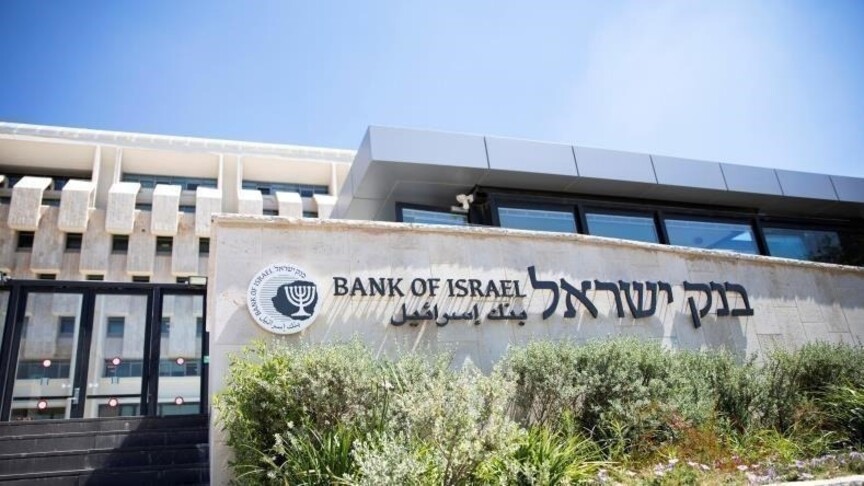
The Governor of the Palestine Monetary Authority said these relations represent 'the only way to access goods and services worldwide'..
International
Palestine warns of risks of cutting correspondent banking relations with Israeli banks
The Governor of the Palestine Monetary Authority said that correspondent banking relations with Israel represent 'the only way to access goods and services worldwide', warning of the risks of stopping them.
These warnings come at a time when economic relations between Palestinians and Israel are experiencing increasing tension, as the Palestinian Authority relies on the Israeli banking system to carry out international transactions.
Awad Rjoob 23 July 2026•Updated: 23 July 2026 RAMALLAH Ramallah / Awad Rjoob / Anadolu
The Palestine Monetary Authority warned on Thursday that the termination of correspondent banking relations by Israeli banks with Palestinian banks would negatively affect trade movement, essential goods supplies, and economic stability.
This came during an international meeting held by the Monetary Authority at its headquarters in Ramallah under the title 'Breaking Point' to discuss the repercussions of ending correspondent banking relations with Israel, according to a statement from the Authority.
During his speech at the meeting, the Governor of the Palestine Monetary Authority, Yahya Shannar, stated that the continuation of Israeli policies 'undermines the Palestinian economy and threatens food security and basic services'.
He called on the international community and international financial institutions to act to preserve correspondent banking relations with Israeli banks.
Shannar pointed out that these relations are 'the only way to access goods and services worldwide under the Paris Economic Protocol', stressing the need to reach stable banking arrangements to ensure the flow of Palestinian trade to and from Israel and the world.
Under the Paris Economic Protocol signed in 1994 as an annex to the Oslo Accords, the Palestine Monetary Authority oversees the banking sector and acts as its regulator and the official financial advisor to the Palestinian Authority.
Earlier on Thursday, Western media reports indicated that the Israeli banks Hapoalim and Discount informed a number of Palestinian banks of their intention to stop correspondent banking services in the coming weeks.
Currently, the two banks manage banking relations between Palestinian banks and the Israeli banking system, including financial transfers and trade payments.
Shannar warned that any disruption or termination of these relations 'will have an impact beyond the financial sector' and could lead to 'a broader economic and humanitarian crisis'.
He explained that disruption of supply chains could affect the availability of fuel, energy, and basic foodstuffs, along with rising prices, slowing economic activity, and rising unemployment and poverty rates.
The Governor of the Monetary Authority pointed out that the Palestinian economy relies heavily on these financial channels, as about 90 percent of Palestinian exports go to Israel, while all Palestinian imports come from or through Israel, including vital goods such as energy, fuel, water, medicine, and food, according to the statement.
He added that correspondent banking relations processed transactions worth about 51 billion shekels (about $17 billion) during 2025, reflecting their importance for the continuity of economic activity and the flow of goods and services.
The meeting was attended by a number of ambassadors and representatives of international financial institutions, including Governor of the Central Bank of Jordan Adel Sharkas, Director General and Chairman of the Board of the Arab Monetary Fund Fahd Mohammed Al-Turki, and the Resident Representative of the International Monetary Fund in the West Bank and Gaza Strip Tobias Roy, along with UN officials and Palestinian bankers.
It is noteworthy that the Paris Economic Protocol signed in 1994 regulates economic relations between the two sides, granting the Palestine Monetary Authority a regulatory role, but leaves Palestinian banks dependent on their Israeli counterparts for correspondent banking. Experts warn that cutting these relations could lead to financial isolation for Palestinians and increased reliance on informal channels. If Israeli banks carry out their threat, Palestinian banks may face difficulties in transferring funds and financing trade. This development comes at a time when the Palestinian economy is suffering from multiple crises, which could worsen living conditions. The international community is closely monitoring these developments, with calls to pressure Israel to preserve Palestinian financial stability.
Original source: Anadolu Agency



Comments (0)
Be the first to comment.