Roads Authority: Two Routes from Riyadh to AlUla to Support Tourism
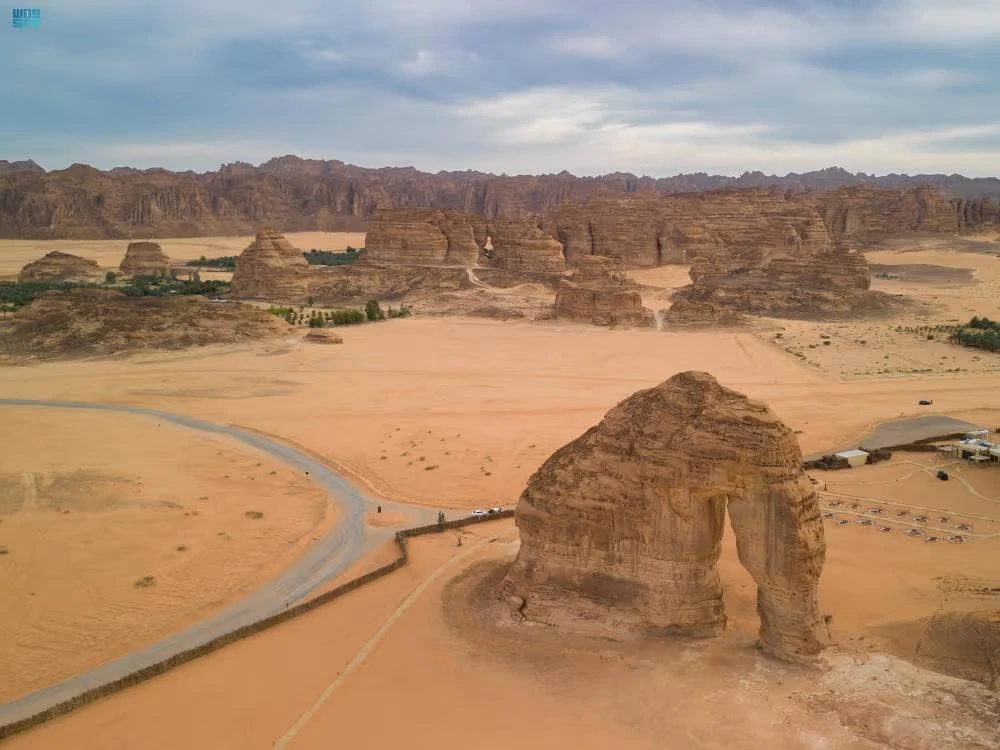
The General Authority for Roads revealed that there are two diverse land routes from Riyadh to AlUla Governorate, differing in distance, travel time, and the stops they pass through, as part of facilitating the movement of road users and supporting tourism.
The Kingdom has witnessed a remarkable development in its road network, which spans 73,000 km.
The first route, which is the fastest according to the authority, starts from Riyadh passing through the cities of Qassim and Hail, with a length of about 1,040 km, and the journey takes about 11 hours. The second route passes through Qassim and Madinah, with a length of about 1,163 km, and the journey takes about 11 hours and 35 minutes.
AlUla is distinguished by its strategic location, as it is located in the northwest of the Kingdom, 300 km from Madinah, and falls within the administrative scope of the Madinah region. Its climate is continental, with high temperatures in summer and low in winter.
AlUla includes a green oasis known since ancient times for its agricultural wealth, and is famous for growing citrus fruits irrigated by fresh water over a stretch of 20 km. The number of citrus trees there is about 200,000 trees, comprising 29 varieties.
The Kingdom has witnessed a remarkable development in its road network, extending over 73,000 km, which enabled it to rank first globally in the Road Network Connectivity Index, according to reports from the World Competitiveness Forum. This contributes to enhancing connectivity between cities and governorates, serving road users, and facilitating their mobility.
The Roads Authority explained that the road sector is one of the vital enablers for many other sectors, including tourism, noting that the Madinah region has an advanced road network extending over 8,184 km, forming a vital artery that enhances the region's status as one of the most prominent religious and tourist destinations in the Kingdom.
This network comes as part of the authority's efforts to facilitate the access of pilgrims, visitors, and tourists to the natural and cultural landmarks that abound in the region, allowing them to explore its natural beauty and ancient history.
Original source: Akhbaar24



Comments (0)
Be the first to comment.