3 Land Routes Connect Riyadh to Abha
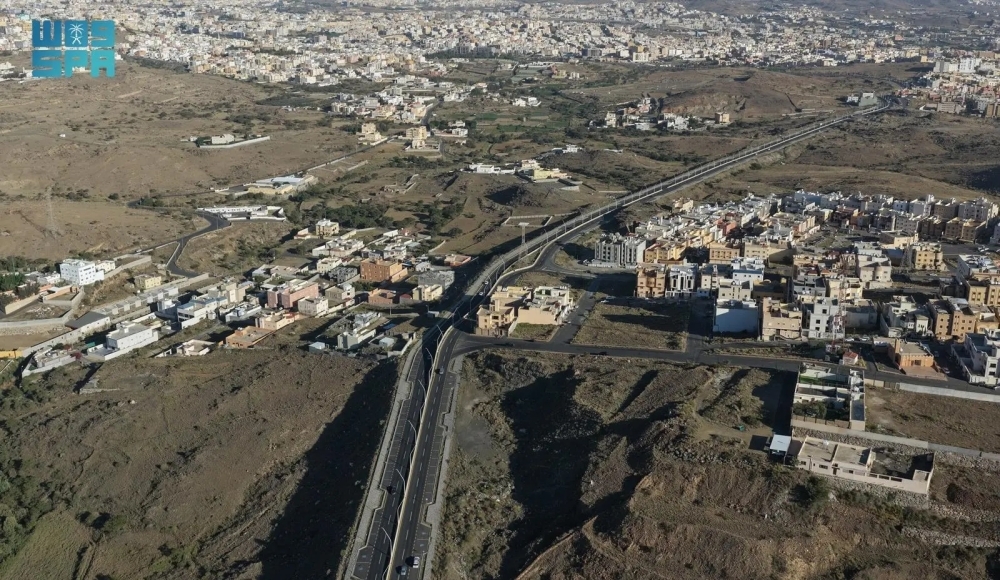
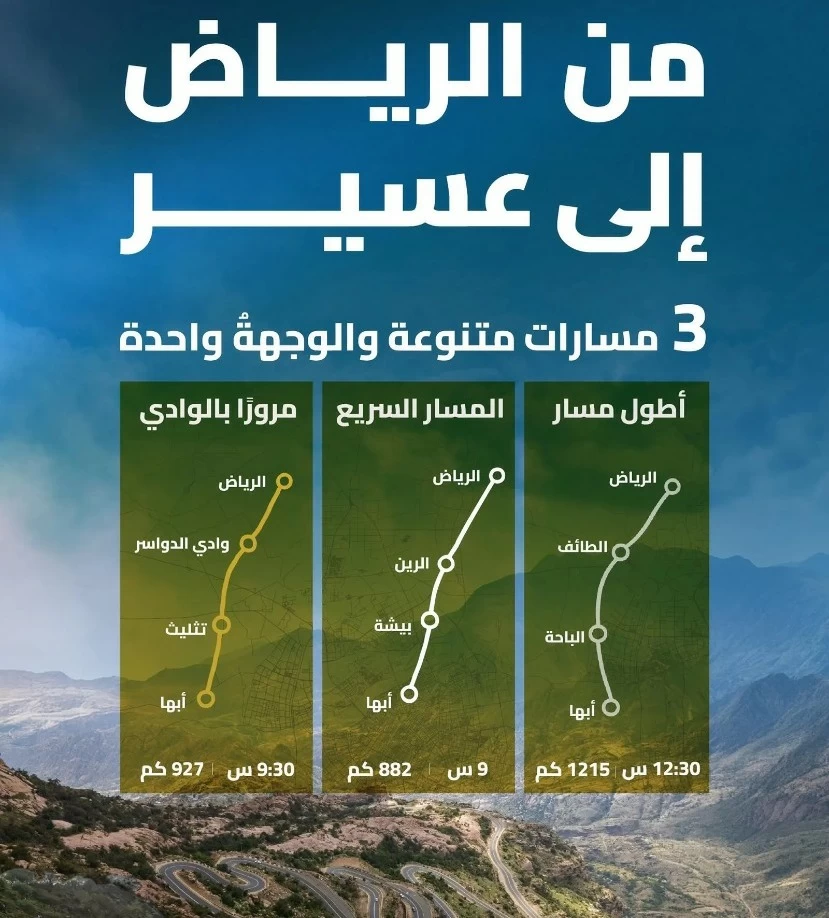
The General Authority for Roads confirmed that the road sector is one of the vital and enabling sectors for many other sectors, foremost among them tourism, noting that the Asir region possesses an advanced road network extending over 5,304 kilometers, forming a vital artery that enhances the region's status as one of the most prominent tourist destinations in the Kingdom. The authority explained that this network is part of its efforts to facilitate visitors and tourists' access to the natural and cultural landmarks and heritage villages that the region abounds with, allowing them to explore Asir's diverse nature and rich history. The city of Abha—the authority stated that travelers by road from Riyadh to the Asir region can choose from three different routes, all ending in Abha, varying in distance, travel time, and stops along the way, which helps facilitate movement for road users. The first route is the fastest, starting from Riyadh passing through Al-Rayn, then Bisha, arriving at Abha, with a length of about 882 kilometers, and the trip takes about 9 hours. The second route passes through Wadi Al-Dawasir governorate then Tathleeth governorate, with a length of about 927 kilometers, and the trip takes about 9 hours and 30 minutes. The third route is the longest in distance and time, starting from Riyadh passing through Taif city then Al-Baha before reaching Abha, with a length of about 1,215 kilometers, and the trip takes about 12 hours and 30 minutes. The Asir highlands—the Asir region is located in the southwest of the Kingdom, bordered to the north by Makkah region, to the east by Najran region, and to the west by the Red Sea coast. It is characterized by geographical and cultural diversity, including the towering Sarawat Mountains, deep valleys such as Wadi Abha and Wadi Aud, as well as fertile plains. The Asir highlands enjoy moderate weather during the summer with scattered rainfall, and its vegetation cover varies between juniper forests in the highlands, and sidr, athl, and palm trees in the plains, while its heritage villages and agricultural communities reflect the values of authentic Arab hospitality and the harmony of man with his environment.
< Previous PageNext Page >
Original source: Al-Watan




Comments (0)
Be the first to comment.