Iraq's exports in July reach 1.5 million barrels per day, three times higher than expectations
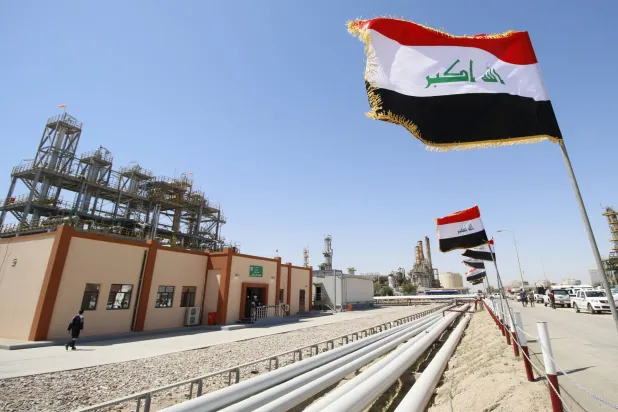
Iraq has succeeded in raising oil export rates through the Strait of Hormuz during the current month of July, despite the ongoing Iran war and its repercussions, most notably the closure of the strait, as reported by Asharq Bloomberg quoting Iraqi Oil Minister Bassam Mohammed Khudair on Saturday.
Khudair revealed that average exports via the Strait of Hormuz and the Kirkuk-Ceyhan pipeline reached about 1.5 million barrels per day before the renewed military escalation in recent days between the US and Iran, a level significantly lower than the rates the country recorded before the war, but about three times higher than Bloomberg's estimates for exports in June.
The Strait of Hormuz is the main outlet for Baghdad's oil sales, and after the recent disturbances in the strait, Iraq is seeking to accelerate plans to create alternative routes for exporting crude through Turkey and Syria.
About 20 percent of global oil and gas supplies passed through the Strait of Hormuz before the war.
Iraqi Oil Minister Bassam Mohammed Khudair (X)
Khudair spoke to Asharq Bloomberg at the conclusion of a high-level Iraqi delegation visit to the United States, led by Prime Minister Ali al-Zaidi, which witnessed the signing of several agreements related to the oil and gas sector, including a memorandum of understanding with Syria to rehabilitate and operate the oil pipeline extending from his country to the Mediterranean coast.
The minister said the agreement aims to find an alternative export outlet, explaining that Iraq is holding talks with a coalition comprising US companies Chevron and TI Capital, along with Qatar's UCC Holding, regarding the construction and development of a pipeline system connecting southern Iraq to the north and the Syrian coast.
The vision includes building a line from Basra to Kirkuk and then to the Turkish port of Ceyhan, in addition to another line extending from Haditha in western Iraq to the Syrian port of Banias on the Mediterranean.
The initial targeted capacity of the line, according to project data, is estimated at about two million barrels per day when operational, which could give Iraq one of the largest overland export routes in the region.
The Iraqi oil minister confirmed positive dialogue with Turkey regarding an agreement to operate the Iraq-Turkey oil pipeline extending between Kirkuk and Ceyhan, saying the two sides agreed on a temporary contractual arrangement pending the completion of a draft new agreement regulating the pipeline's operation.
Khudair described exports via Ceyhan as a pillar of the Iraqi oil industry, calling for expanded cooperation with Ankara to include Turkish companies' participation in developing oil fields and projects, rather than limiting it to crude transportation through pipelines.
Original source: Asharq Al-Awsat





Comments (0)
Be the first to comment.