Saudi industrial production rebounds 3.2% in month, driven by oil activities
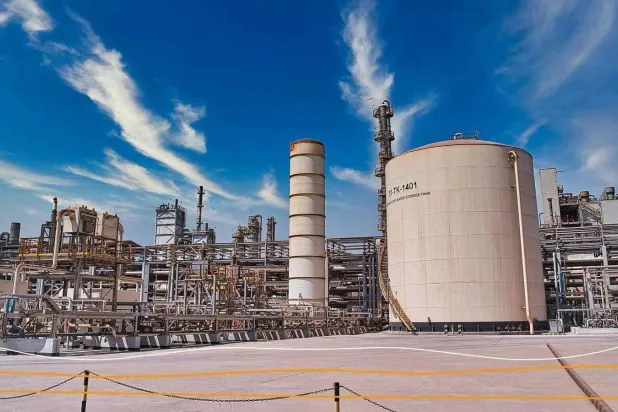
The latest statistical reading from the General Authority for Statistics has shown a significant positive rebound in the monthly pace of Saudi domestic production.
Global investors received a strong reminder of how quickly inflation concerns and oil market volatility can return, after US President Donald Trump announced on Wednesday that the interim agreement with Iran to end the war had 'ended'.
Inflation-sensitive assets such as bonds and gold fell as oil prices rose about 5 percent on Wednesday, before markets remained volatile during Thursday's trading, according to Reuters.
Anika Gupta, head of macroeconomic research at WisdomTree, said it was 'a strong wake-up call for markets.' She added that expectations had pointed to 'oil starting to flow back to markets, and inflation expectations likely declining.'
All eyes on oil prices
Oil prices were the first assets to be affected, jumping up to 6 percent on Wednesday, hitting their highest levels in two weeks, following Trump's comments.
However, Brent crude futures, hovering around $78 a barrel, remain far from the levels of $120 and above reached during the two months from mid-March, which pushed policymakers to confront record inflation levels.
Prices quickly retreated after the US and Iran signed an initial memorandum of understanding in June, reopening the Strait of Hormuz, allowing the resumption of oil flows from tankers that had been stuck in the Gulf, and leading to a limited supply surplus.
The key question remains: where will prices go after this slight surplus recedes?
Ships in the Strait of Hormuz as seen from Musandam, Oman (Reuters)
Holding on to hope
These developments came at a sensitive time for stocks, as doubts began to grow about the future of the artificial intelligence sector, with investors questioning whether companies that made billions of dollars from AI chips and models would continue this performance if supply chains improved or demand came in below expectations.
Since the Nasdaq index recorded its all-time high on June 1, shares of memory chip makers have undergone a sharp correction. The memory chip stock ETF fell about 9 percent, while the Philadelphia Semiconductor Index dropped 3 percent.
In contrast, markets less tied to AI performed much better, with the S&P 500 index, after excluding the outsized impact of the largest stocks, rising more than 1.5 percent, and the European Stoxx 500 index, which has limited exposure to AI stocks, climbing 2.4 percent.
Bond yields rise
Bond yields jumped following Trump's comments, influenced by rising oil prices, as markets raised their inflation expectations and investors prepared for the possibility of higher interest rates, a reversal from the retreat in tightening bets in recent weeks.
One-year inflation expectations contracts in the eurozone rose by 25 basis points over two days, reaching 2.12 percent. Traders also began pricing in additional monetary policy tightening by the European Central Bank of around 35 basis points this year, compared to 25 basis points on Tuesday.
A trader works at the New York Stock Exchange (AP)
At the same time, markets priced in 36 basis points of tightening from the Federal Reserve and 32 basis points from the Bank of England, according to LSEG data on the federal funds market.
Nevertheless, markets still expect US consumer price inflation to be around 2.21 percent over the next year, significantly down from the 4.2 percent recorded in May.
Short-term bonds, which are most sensitive to interest rate expectations, were the most affected by market moves.
German and British two-year bond yields jumped more than 10 basis points on Wednesday, hitting their highest levels in less than a month. In the United States, an energy-exporting country, the reaction was more moderate, with two-year bond yields rising just 4 basis points.
Volatility rebounds
After a long period of relative calm in recent months, Wednesday's developments pushed many volatility indicators higher.
The VIX volatility index, known as the 'fear gauge,' had returned to pre-war levels by early June, except for a limited spike due to concerns about high-flying tech stocks.
The same applies to bond and currency volatility indices, which had seen an almost continuous decline in recent weeks before rising on Wednesday.
The only exception was stock indices with heavy exposure to the semiconductor sector, such as South Korea and Taiwan, where volatility levels reached record highs.
An employee places gold bars in the vault of the National Bank of Kazakhstan in Almaty (Reuters)
Gold loses some luster
The price of gold has fallen 23 percent from its level before the outbreak of the war, despite having recorded a strong rise in the previous six months, climbing about 70 percent as central banks, institutional investors, and retail traders increased their purchases of the precious metal.
After a slight rise since the beginning of July, gold returned almost to the start-of-month levels, falling 0.7 percent on Wednesday, reaching around $4,090 an ounce by Thursday.
Gold, typically seen as a safe haven and an inflation hedge, initially rose with the outbreak of the Iranian war, but quickly fell sharply.
Instead of safe-haven flows, investors focused on the strength of the dollar and the growing likelihood of central bank rate hikes, which added pressure on gold prices.
Original source: Asharq Al-Awsat




Comments (0)
Be the first to comment.