Saudi market declines amid rising regional tensions and earnings anticipation
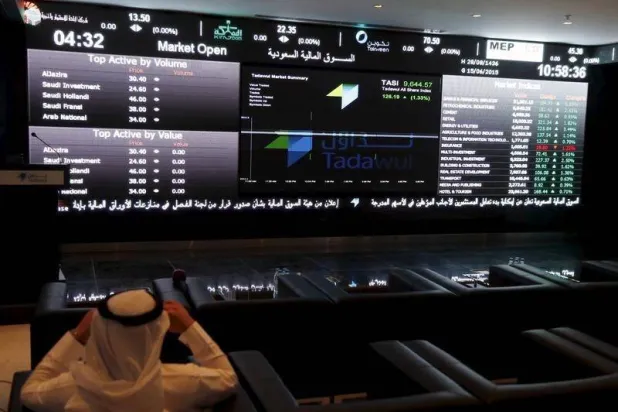
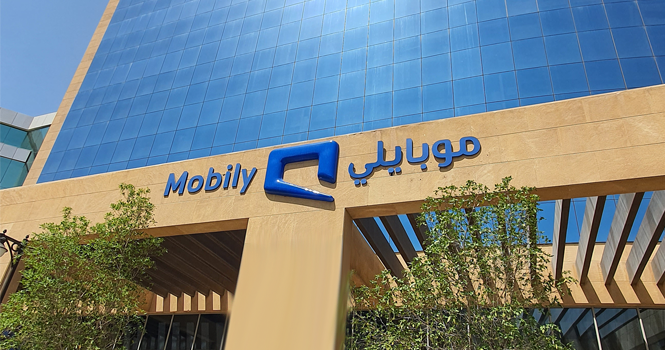
TASI declines under pressure from regional tensions and drop in ACWA Power, while Mobily stock supported the telecom sector after announcing cash dividends.
The pace of the economic partnership between Saudi Arabia and Canada is accelerating towards a new and qualitative phase; after a full year of intensive diplomatic and investment movement between the two countries, Crown Prince and Prime Minister Mohammed bin Salman and Canadian Prime Minister Mark Carney inaugurated a new strategic era centered on qualitative and future sectors, during an official meeting held at Al-Salam Palace in Jeddah. This political momentum was immediately crowned by the signing of 15 agreements and memorandums of understanding at the Saudi-Canadian Investment Forum, setting a broader path for cooperation that reflects the deep and mutual desire of both sides for its continuation.
In this integrated landscape, attention is now turning to the mining and critical minerals sector as the first beneficiary of this partnership, driven by the two countries' unique complementary advantages combining resource abundance and Canada’s longstanding engineering expertise with the Kingdom’s vast industrial and investment capabilities to unlock its untapped mineral wealth estimated at about $2.5 trillion. This mining sector is expected to lead the early returns of the recent agreements, before its integrated effects extend to energy, advanced technology, and data center sectors, ensuring enhanced value chains and the creation of investment and industrial opportunities of global scope.
Regular meetings
To ensure these 'understandings' are transformed from 'framework memoranda' into 'actual projects' on the ground, the head of the Saudi-Canadian Business Council, Mohammed Nasser Al Duleim, revealed that there are new agreements to be announced in due course, and that there will be meticulous follow-up on what has been signed between the two sides.
He told Asharq Al-Awsat that there is extensive movement between the two sides and a plan for exchanging trade delegations between Saudi Arabia and Canada, as well as regular meetings between companies during the current year, and that these vital meetings will continue next year, 2027.
This aligns with what Canadian Minister of Energy and Natural Resources, Tim Hodgson, had announced, who stressed that deepening cooperation with Saudi Arabia – Canada's largest trading partner in the region – is a fundamental pillar within Ottawa’s ambitious strategy to spur $500 billion in private investments and double its non-US exports over the next decade.
The global Canadian engineering company Hatch had signed at the beginning of this year a strategic agreement with Saudi Ma'aden worth up to $700 million to develop its project portfolio in gold, phosphate, and aluminum. Also announced was a qualitative partnership between Canadian Northern Graphite and Saudi Al-Obeikan Investment Group to establish an advanced battery anode material processing plant inside the Kingdom, a key step towards securing and diversifying clean energy supply chains of the future.
Regarding the fastest returns expected to flow from this rapprochement, Al Duleim predicted that the mining and critical minerals sector would top the scene as the backbone of this partnership, which proceeds according to a strategic equation he formulated as: 'Canada supplies, Saudi Arabia transforms, and the world benefits.' He added that this vital axis will be followed successively by energy, advanced technology, and data center sectors, stressing that this entire system represents integrated, non-competing sectors serving common future goals.
Technology and Data Centers
Al Duleim affirmed that the Council's priorities after the Jeddah forum 'are clear: transforming the 15 agreements from memoranda into actual projects. An executive follow-up mechanism has been adopted for each agreement, including a timeline and measurement indicators to be reviewed periodically with the signatory parties, and a follow-up report will be issued in the coming period.'
The Council's head also touched on the significant growth in the trade balance, saying: 'We are confident that it will exceed its previous levels in the coming years, driven by the political and economic momentum generated by the recent forum and the state visit of the Canadian Prime Minister.'
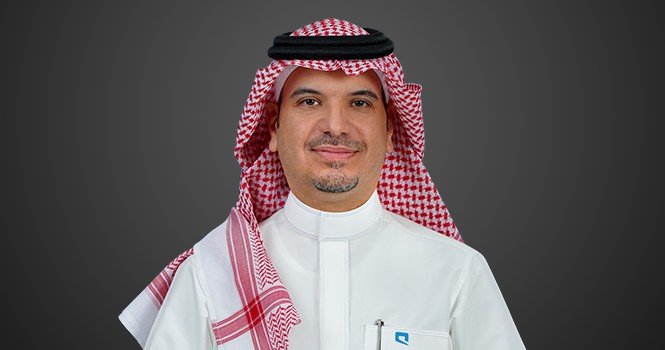
Mohammed Nasser Al Duleim, head of the Saudi-Canadian Business Council (Asharq Al-Awsat)
Sectoral Working Groups
Regarding the Council's role in the next phase, he clarified that the Council's role on the regulatory side is to act as a link between investors and government entities in both countries, and that the Council's sectoral working groups play an effective role, forming a permanent platform for following up on partnerships and overcoming any challenges.
The Saudi-Canadian Investment Forum, attended by an elite group of businessmen and investors from both sides led by officials from the two countries, has whetted appetites to enhance this path and seek the promising opportunity in the Saudi economy, which has reached about $1.3 trillion, with non-oil activities exceeding 50 percent of GDP.
It appears that both sides explored promising investment opportunities during the forum, and that investors identified target sectors; some were announced, and some are being negotiated from all aspects although not disclosed; but they will not stray beyond the scope of 'financial services, mining, advanced industries, artificial intelligence, data centers, education, and innovation.'
Original source: Asharq Al-Awsat



Comments (0)
Be the first to comment.