The Missing Link in Human Capital Development
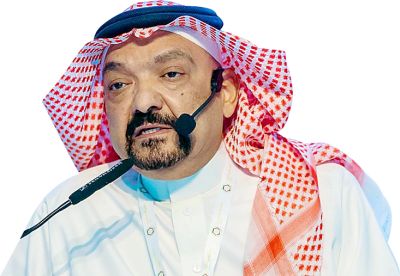
Abdul Latif Al-Duwaikhi
The Missing Link in Human Capital Development
21 July 2026 - 00:30 | Last updated 21 July 2026 - 00:30
Follow Okaz channel on WhatsApp
Change moves, striking everywhere and in all directions; change has become the norm. It proceeds to dismantle the structures of societies, families, and institutions and rebuilds them according to non-final and unknown rules, rapidly and unpredictably, with the labor market at the forefront. We no longer know how to prepare young people capable of adapting to jobs not yet created, technologies not yet invented, and markets changing faster than the very idea of change ever before?
The world has entered an unprecedented phase; change is no longer an exception, professions change, required skills shift, the value of some specializations declines, while new sectors emerge every year. In this accelerating environment, school and university alone are no longer sufficient to prepare people for professional life, no matter how high the quality of education.
Here arises the need to consider a modern national conscription program, not as a military project in the traditional sense, but as the largest national project for human development, combining military discipline, vocational qualification, technical and digital training, national culture, volunteer work, physical fitness, leadership skills, and self-confidence, so that young people emerge more capable of understanding themselves and their surroundings, and more able to cope with this amount of change and assume responsibility in service of their families and country in peace as well as in emergencies.
Such a program aims not only to prepare a national reserve for crises, but to develop national human capital and create a generation capable of leading the knowledge economy, more ready and competitive in the fastest-changing labor market in history. A disciplined, learning-loving generation able to work, shoulder responsibility, and make sacrifices when needed; one that does not wait for opportunities but creates them, and is not a victim of market fluctuations but possesses the flexibility and skill to take the initiative in thought and action to rebuild their future whenever circumstances change.
Perhaps the greatest achievement of this program is that it prepares people psychologically, physically, and mentally before qualifying them professionally. It builds physical, psychological, mental, professional, and technical readiness in one integrated framework, instead of leaving young people to gather scattered skills from disparate courses and programs that may add information but do not build character or a cohesive work culture.
National conscription, in this concept, does not only make a soldier; it makes a culture. A culture of respect for time, discipline, responsibility, teamwork, leadership, self-reliance, innovation and production, initiative, and the ability to work under pressure. These are not separate skills but an integrated system of values, habits, and behaviors that are difficult to acquire through short, scattered programs.
This program will certainly have a social impact no less important than its economic impact. The shared national experience expands circles of acquaintance and trust among young people from different regions and backgrounds, and builds professional and human relationship networks that may later turn into innovation teams, economic partnerships, entrepreneurial projects, or volunteer initiatives serving society. Modern economies are not based on individual skills alone but on the strength of human networks, mutual trust, and the ability to work collectively.
Moreover, the program is likely to play a role as a national incubator for discovering talented individuals themselves before others, and recognizing their real inclinations and interests that had not found a suitable environment before. Many young people waste their lives in specializations and career paths that are not for them, and do not respond to their nature, true thinking, and inclinations, so they only discover their abilities after it is too late and after years of study and work, and perhaps after costly experiences of changing majors or jobs.
But the intensive practical experience in a disciplined and diverse environment helps young people discover their inclinations and abilities in leadership, technology, industry, first aid, cybersecurity, management, or entrepreneurship at an early stage, so they build their career path on knowledge and experience, not guesswork.
Another effect worth contemplating is that the program may contribute to rearranging life priorities for many young people. It instills the value of future planning, saving, responsibility, productive work, and building a family on stable foundations. When these values take root, marriage becomes a life project, not a social occasion dominated by conspicuous spending and one-upmanship over investment in the family's future.
Society needs a culture that prioritizes building a family, a home, and a joint project over exaggeration in the cost of a single night.
This does not mean that today's youth lack values, ambition, or vision; many of the current generation have proven their ability to achieve in many fields with high efficiency. But social, economic, and technological changes have become deeper and faster to be addressed by scattered training programs or partial solutions. What young people need is an integrated national framework that keeps pace with this transformation and gives them a common base of skills, values, and practical experience.
Modern national conscription should not be framed only by the traditional concept of conscription, but first as a strategic investment in people; because countries that want to lead the knowledge economy need citizens who combine discipline and innovation, physical fitness and digital competence, team spirit and leadership ability, national belonging and readiness for lifelong learning.
Perhaps the time has come to move from the concept of 'conscription to train the soldier' to the concept of 'conscription to train the citizen.' The qualified citizen is the basis of security, the engine of the economy, the pillar of society, and the guarantee of the future. If this project succeeds in building the human being, it will have achieved the most important investment: investment in human capital, which drives all other forms of development to include military, technical, health, industrial, agricultural, environmental, and cyber tracks, while granting participants accredited professional certificates in various fields of human capital and the knowledge economy.
Original source: Okaz






Comments (0)
Be the first to comment.