The Syrian People's Assembly: How the Legislative Institution Has Changed Since 1919?
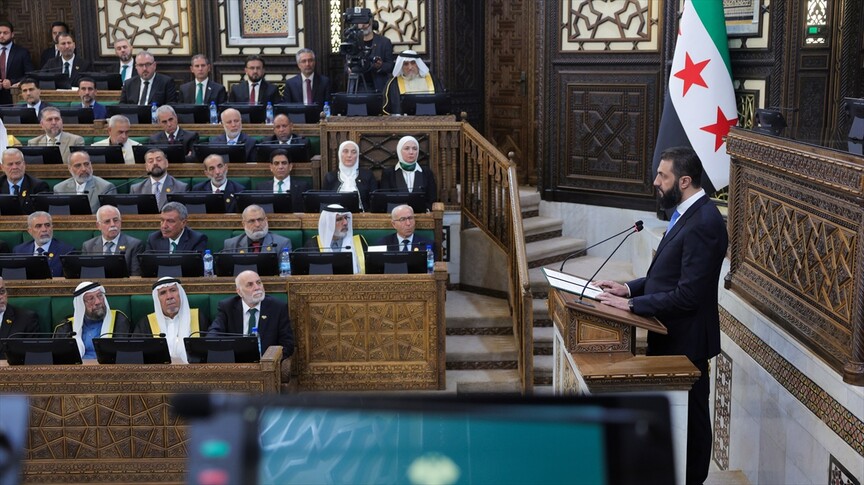
The Syrian People's Assembly held its first session on Sunday within the framework of the transitional period, opening a new chapter in the history of the legislative institution, which has seen different names and systems over more than 100 years.
The council begins its legislative tasks stipulated in the Constitutional Declaration, which include enacting laws, approving the budget, and ratifying treaties, in addition to electing its presidium and its members taking the constitutional oath, a step that represents the launch of the legislative authority's work during the transitional period.
The first parliament in modern Syria
The roots of the legislative authority in Syria date back to 1919, with the establishment of the Syrian General Congress after the end of World War I and the withdrawal of the Ottoman Empire. The congress included representatives from various regions of the Levant and formed the first elected representative body in modern Syria's history,
On March 8, 1920, the congress declared Syria's independence and installed Prince Faisal bin Hussein as king of the country, and also approved the first constitution of the Arab Kingdom of Syria, before French forces ended this experiment after the Battle of Maysalun and imposed the French mandate over Syria.
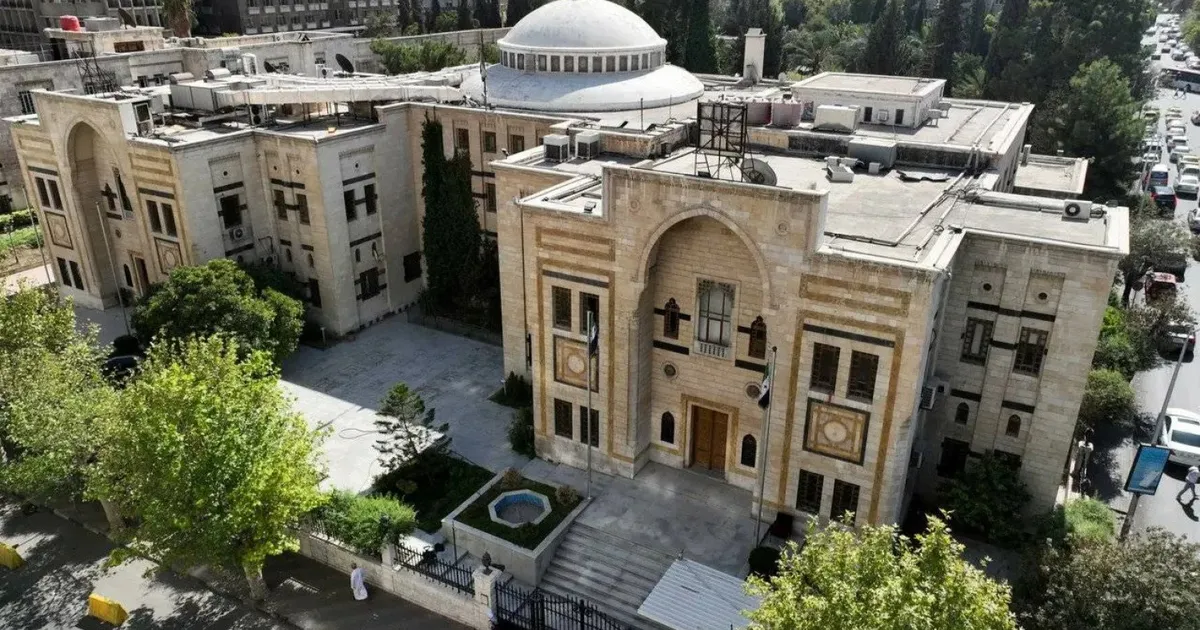
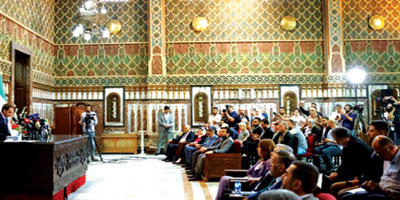
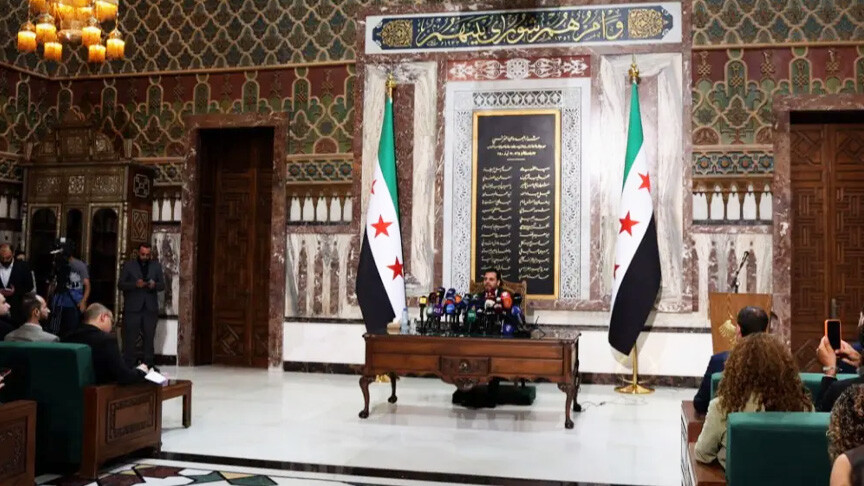
The headquarters of the Syrian People's Assembly in the capital Damascus - SANA
After the imposition of the mandate, the French authorities reshaped political life through multiple councils and legislative bodies, most notably the Constituent Assembly elected in 1928 to draft a new constitution.
In 1930, the Syrian constitution was issued, and the Chamber of Deputies was established, which undertook legislation and oversight within powers that remained limited due to the authority of the French High Commissioner. This system continued until the withdrawal of French forces in 1946.
The Chamber of Deputies after independence
With Syria's independence, the Chamber of Deputies became the legislative institution of the independent state, and took on the role of enacting laws, approving the budget, and monitoring the government, under a pluralistic parliamentary system that witnessed competition among political parties.
However, the successive military coups since 1949, and the subsequent constitutional changes, frequently affected the work of the council, as it was dissolved and reconstituted more than once according to political developments.
The Ba'ath Party coup on March 8, 1963, marked a turning point in Syrian legislative life, as parliament was dissolved, a state of emergency was declared, and legislative powers were transferred to the Revolutionary Command Council and the party's Regional Command, while temporary councils with limited powers were later established.
The People's Assembly continued under the same name during the era of former President Bashar al-Assad, and witnessed constitutional amendments, most notably the 2012 constitution which abolished the phrase 'the Ba'ath Party is the leader of the state and society,' while retaining the council as the legislative authority.
During the war years, several parliamentary elections were held, while the council remained responsible for legislation, approving budgets, and discussing government performance, as stipulated in the constitution.
The People's Assembly in the transitional period
After the political change in Syria, the Constitutional Declaration for the transitional period stipulated the formation of a new People's Assembly to assume legislative authority until a permanent constitution is adopted and general elections are held.
The council consists of members, two-thirds of whom are elected through electoral bodies supervised by a supreme committee, while the President of the Republic appoints the remaining third to ensure representation and competence.
The council is responsible for proposing and approving laws, amending legislation, ratifying international treaties, approving the general budget, granting general amnesty, holding hearings for ministers, in addition to considering the lifting of immunity from its members according to its internal regulations.
According to the Constitutional Declaration, the council undertakes 7 main tasks, including proposing and approving laws, amending or repealing existing laws, and ratifying international treaties and agreements.
It is also responsible for approving the state's general budget, granting general amnesty, considering the acceptance or rejection of resignations of its members, and lifting parliamentary immunity from them according to its internal regulations, in addition to holding hearings for ministers.
The Constitutional Declaration states that the council makes its decisions by majority, and its term extends for 30 months, renewable.
In its first meeting, the council elects a president, two vice-presidents, and a secretary by secret ballot and majority, with the oldest member presiding over the first session until the presidium is elected. The council is committed to preparing its internal regulations within one month of its first session.
The declaration affirmed that members of the People's Assembly enjoy parliamentary immunity, and that no member may be removed except with the approval of two-thirds of the council members.
The Interim Electoral System
The interim electoral system for the People's Assembly, which was ratified by President Ahmad al-Shara' under Decree No. (143), regulates the procedures for convening the first session, taking the constitutional oath, and electing the council's presidium.
The system stipulates that the head of the Supreme Committee for the People's Assembly Elections calls on the oldest member to preside over the first session, while the youngest member takes on the role of secretary.
During the session, council members take the constitutional oath as follows: 'I swear by Almighty God to be loyal to the homeland, to preserve the country's independence, unity, and territorial integrity, to respect the constitution and the law, and to perform my duties with honesty and sincerity.'
If a member cannot attend the oath session, he takes it in a later session determined by the council president. If he refuses to take the oath or fails to attend without justification, his membership is immediately revoked, and a replacement is appointed according to the decree's provisions.
How was the new council formed?
The Constitutional Declaration specified the mechanism for forming the People's Assembly during the transitional period, stipulating that the President of the Republic forms a supreme committee that oversees the formation of sub-electoral bodies that will elect two-thirds of the council members, while the President of the Republic appoints the remaining third to ensure fair representation and competence.
On July 1 of this year, President Ahmad al-Shara' issued Decree No. (143) for the year 2026, which includes the appointment of the new People's Assembly members, including the complementary third.
The Supreme Committee for the People's Assembly Elections had announced on July 5 the postponement of the council's first session, which was scheduled for July 6, to a later date, before deciding to hold it today, Sunday.
Original source: Asharq News

Comments (0)
Be the first to comment.