Trump Redraws Global Trade Map with New Tariffs Covering 99.4% of U.S. Imports
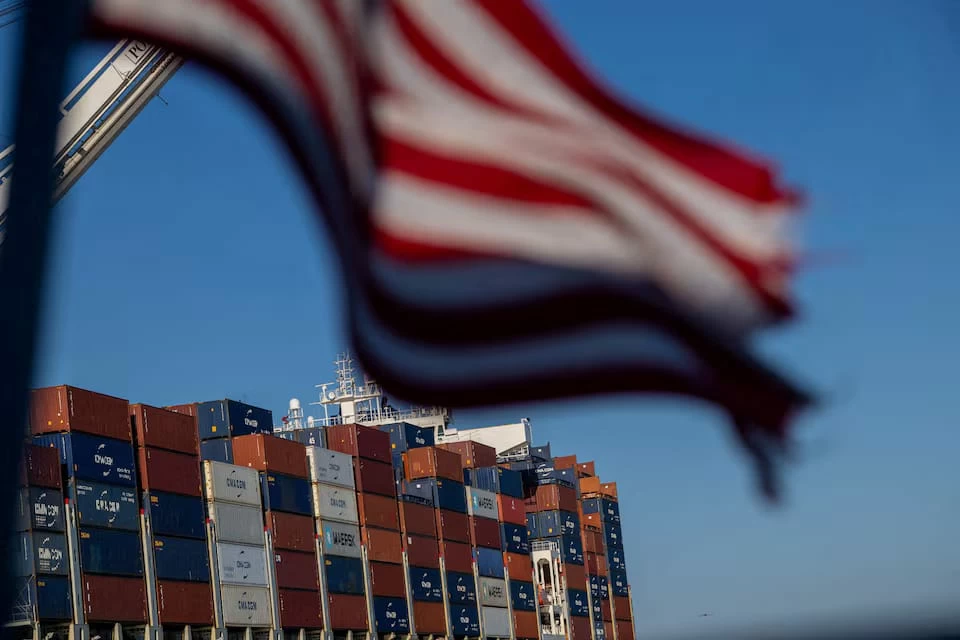
In a move that revives global trade tensions, the U.S. administration under President Donald Trump has imposed new tariffs on 60 trading partners, citing weak enforcement of forced labor laws, while exempting several key sectors.
In a new step that reintroduces tension into global trade relations, the administration of U.S. President Donald Trump has imposed new tariffs on imports coming from 60 trading partners, including the European Union, China, Japan, and South Korea, justifying the decision by what it described as "weak enforcement of anti-forced labor laws" in those countries.
According to Reuters, the decision, which came into effect early today (Friday), coincides with the expiration of the temporary 10% global tariff, in a new attempt by the White House to revive the broad tariff policy adopted by Trump, after the U.S. Supreme Court struck down part of the tariffs he previously imposed under the National Emergency Act last February.
Tariffs ranging between 10% and 12.5%
According to a notice published in the Federal Register, the United States imposed new tariffs of 10% and 12.5% on imports covering approximately 99.4% of total U.S. imports, while exempting a large number of essential goods, including oil, gas, fertilizers, and certain food products, in addition to aircraft, their spare parts, and critical metals.
Products previously subject to national security tariffs under Section 232, such as automobiles, steel, aluminum, and copper, were also exempted.
White House: The time has come for our partners to comply
U.S. Trade Representative Jamieson Greer stated that the United States has applied a ban on importing products manufactured using forced labor for nearly a century, adding that the time has come for trading partners to apply the same standards.
He explained that the new tariffs aim to address what he described as "human rights violations and trade practices that distort competition," affirming that the step will contribute to improving workers' conditions around the world.
Based on the Trade Act of 1974
The U.S. administration based its imposition of the tariffs on Section 301 of the Trade Act of 1974, which grants it a stronger legal foundation compared to the previous tariffs struck down by the Supreme Court.
Experts believe this pathway reduces the likelihood of the decision being overturned in the judiciary, given that Section 301 has withstood legal challenges in previous cases.
Implementation began immediately upon the expiration of the temporary tariffs
The temporary 10% global tariff expired at 12:01 AM Friday, Eastern Time in the United States, with the new tariffs taking effect at the exact same moment.
The U.S. administration exempted goods that were already en route to the United States before the implementation began, with this exemption continuing through July 28.
Included countries
Washington imposed a 10% tariff on imports coming from a number of countries, including: Argentina, Bangladesh, the United Kingdom, Cambodia, Canada, Ecuador, El Salvador, Guatemala, Honduras, India, Indonesia, Jordan, Malaysia, Mexico, Pakistan, Sri Lanka, and Trinidad and Tobago.
As for the European Union, Taiwan, Japan, South Korea, and Switzerland, they were subjected to tariffs that bring the total duties imposed on them, after adding previous tariffs, to 10% or 12.5%.
In contrast, a 12.5% rate was imposed on 38 other countries, including China and Vietnam.
China and Vietnam among the targets
The step comes at a time when the United States accuses China of using minorities, most notably the Uyghurs, in forced labor inside labor camps, allegations that Beijing consistently denies.
The tariffs also included Vietnam, despite its passage this week of new legislation tightening oversight on goods manufactured using forced labor.
At the same time, U.S. officials assured their Chinese counterparts that the Trump administration intends to return the tariffs imposed on Chinese goods to 20%, the level agreed upon during the trade truce between Trump and Chinese President Xi Jinping in November 2025, without exceeding it.
Tariffs on Chinese imports had recently dropped to 10%, excluding previous 25% tariffs on industrial products imposed during Trump's first term.
Widespread international objections
The decision sparked a wave of criticism from a number of U.S. trading partners.
Australia and Brazil both described the new tariffs as unjustified, affirming they will seek their cancellation, while Norway considered that there is "no basis whatsoever" for imposing them.
As for Canada, which Washington hit with additional tariffs earlier in the week on $20 billion worth of imports, it affirmed that it will continue dialogue with the United States to reach solutions that serve the interests of both countries.
Europe and Britain: Limited impact
For its part, the European Union welcomed Washington's adherence to the tariff cap agreed upon between the two sides, affirming that the decision aligns with the joint statement between the parties and opens the door for discussing further exemptions and enhancing trade cooperation.
The Swiss government also announced that the United States adhered to the previously agreed tariff cap.
In Britain, the government confirmed that the decision will not negatively impact British companies, pointing to the continuation of the trade agreement with the United States and the achievement of new gains, including the exemption of whiskey exports and medical device technologies from tariffs.
Broad exemptions and beneficiaries
Despite the broad scope of the tariffs, the decision included a long list of exemptions covering energy, fertilizers, food, and certain strategic industries.
Among the most prominent beneficiaries is the Belgian diamond sector, after polished diamond exports regained their exemption from U.S. tariffs, which the Antwerp World Diamond Centre considered an important development, especially since Belgium exported $2.1 billion worth of polished diamonds to the United States in 2024.
In a new step that reintroduces tension into global trade relations, the administration of U.S. President Donald Trump has imposed new tariffs on imports from 60 trading partners, including the European Union, China, Japan, and South Korea, justifying the decision by citing what it described as "weak enforcement of anti-forced labor laws" in those countries.
According to Reuters, the decision, which took effect early today (Friday), coincides with the expiration of the temporary global tariff of 10%, in a new attempt by the White House to revive the broad tariff policy adopted by Trump, after the U.S. Supreme Court overturned part of the tariffs he previously imposed under the National Emergency Act last February.
Tariffs ranging from 10% to 12.5%
According to a notice published in the Federal Register, the United States has imposed new tariffs of 10% and 12.5% on imports covering approximately 99.4% of total U.S. imports, while exempting a large number of essential goods, including oil, gas, fertilizers, and some food products, in addition to aircraft and their parts and critical metals.
Products already subject to national security tariffs under Section 232, such as cars, steel, aluminum, and copper, were also exempted.
Original source: Okaz


Comments (0)
Be the first to comment.