Turkey: Central Bank Holds Interest Rate at 37% Driven by Developments in Iran War
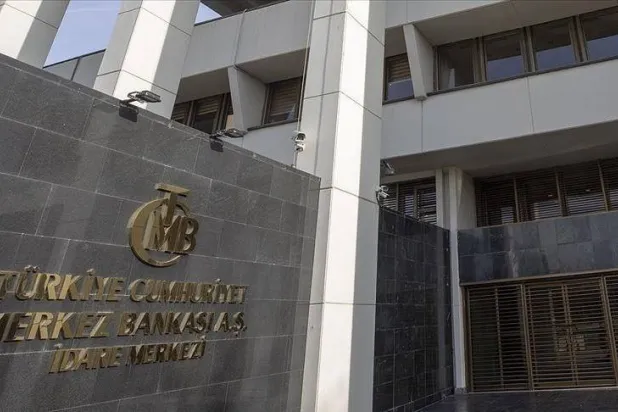
The Turkish Central Bank held the interest rate at 37% for the fourth consecutive time, driven by geopolitical developments and inflation indicators.
The Turkish Central Bank held the benchmark one-week repo rate at 37% for the fourth consecutive time, driven by inflation indicators and energy price fluctuations due to tensions from the Iran war and inflation.
The bank's Monetary Policy Committee, in its meeting on Thursday, kept the overnight lending rate at 40% and the overnight borrowing rate at 35.5% unchanged, in line with previous expectations.
The committee said in a statement after the meeting that the core inflation rate recorded a slight decrease in June, while leading indicators show that this rate will temporarily rise in July.
Consumer price inflation in Turkey recorded a slight decline in June for the first time since the outbreak of the Iran war in February, driven by a drop in the energy bill cost to 0.99%, while the annual rate reached 32.11%.
Inflation had continued its rise in May, recording an increase of 1.71% month-on-month and 32.61% year-on-year, the highest level since October 2025. This followed a large jump in April of 4.18%, due to energy price fluctuations resulting from geopolitical developments.
Uncertainty
The statement noted that energy prices are rising again due to increasing uncertainty arising from developments in Iran, and recent data indicates a notable weakening in domestic demand. The effects of geopolitical developments on inflation expectations are being closely monitored through cost, economic activity, and expectations channels.
Inflation indicators continue to pressure the Central Bank of Turkey in determining its monetary policy (C.B.)
The statement pointed out that energy prices remain high, and that first-quarter data indicates a continued slowdown in economic activity, while key indicators show continued weakness in domestic demand.
The central bank cut the interest rate by 100 basis points in January, from 38% to 37%. It ended the 9-month easing cycle in March, holding the rate at 37%, and has kept it unchanged since April.
The committee affirmed in its statement that the tight monetary policy, which will continue until price stability, will strengthen the disinflation process through demand, exchange rate, and market expectations.
It stated that it will determine the steps to be taken regarding the interest rate through a cautious approach, in a way that limits the rise in the underlying trend of inflation and provides monetary and financial conditions that will bring inflation down to the medium-term target of 5%, taking into account the lagged effects of monetary tightening.
It emphasized that all monetary policy tools will be used decisively, and the committee will make its decisions within a predictable, data-driven, and transparent framework, and policy will be tightened if there is a sudden deterioration in inflation expectations.
Trade with Syria
On another front, Turkey and Syria affirmed their determination to continue working towards the goal of raising trade volume to $10 billion.
Turkish Trade Minister Omar Bolat said during his participation in the 'Free Trade and Industrial Zones in Syria and Investment Environment' meeting held in Ankara on Wednesday, attended by the head of the General Authority for Land and Sea Ports in Syria, Qutaiba Ahmed Badawi, and the head of the Union of Chambers and Commodity Exchanges of Turkey, Rifat Hisarcıklıoğlu, that the trade volume between Turkey and Syria reached about $3.75 billion in 2025, an increase of over 40%.
Turkish Trade Minister Omar Bolat speaking during a meeting on trade and investment with Syria in Ankara (from his account on 'X')
Bolat affirmed that both countries are determined to increase production and investments, along with strengthening, expanding, and modernizing land customs crossings and maritime transport lines, which would contribute to developing trade movement between them, noting that trade and passenger transit through border crossings between the two countries continues uninterrupted.
Bolat pointed out that work is continuing at an accelerated pace to open the Nusaybin-Qamishli crossing, located at the far east of the Turkish border with Syria, for trade, passenger, and transit traffic before the end of the year.
He added that the actual launch of transit traffic between Turkey and Syria since last April has contributed to revitalizing trade with Lebanon, Jordan, Iraq, Saudi Arabia, Kuwait, Qatar, the UAE, Oman, and Bahrain, considering this a positive development.
Bolat stressed the importance of expanding and creating new land transport corridors, in addition to corridors for oil and natural gas transport extending from Turkey through Syria to Jordan, Iraq, and Gulf states, in light of the disruptions the region has experienced due to war and the closure of the Strait of Hormuz, noting that the two countries' governments have made progress in accelerating transit trade with Gulf states.
He pointed out that transit traffic through Saudi Arabia, which had been suspended for about 14 years, as well as through Syria and Jordan, resumed on a regular basis as of last April 15.
For his part, the head of the General Authority for Ports and Customs in Syria, Qutaiba Badawi, said that the projects of the Idlib Free Trade Zone and the dry port in the governorate constitute an integrated center for industry, trade, and logistics services, calling on Turkish investors and companies to participate in Syria's new economic success story by being present in this strategic location.
\"); googletag.cmd.push(function() { onDvtagReady(function () { googletag.display('div-gpt-ad-3341368-4'); }); }); }
Original source: Asharq Al-Awsat

Comments (0)
Be the first to comment.