Sri Lanka's Central Bank Holds Rate at 8.75% as Inflation Expected to Ease Gradually
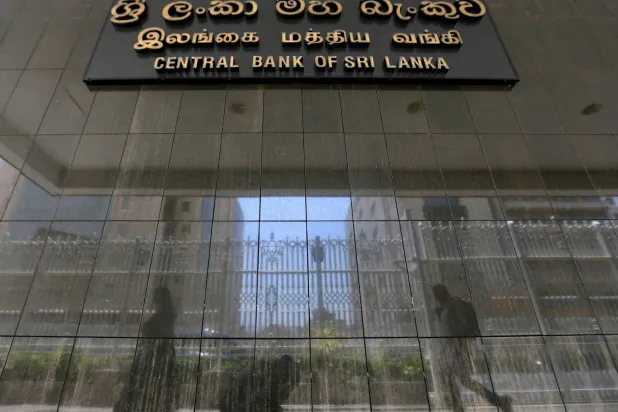
The decision was in line with market expectations after the central bank raised the interest rate by 100 basis points in May to support the local currency.
Sri Lanka's central bank kept its key interest rate unchanged at 8.75 percent on Wednesday, expecting that previous sharp rate hikes would gradually ease inflationary pressures, despite the impact of the Middle East crisis on global energy prices.
The decision was in line with market expectations, after the central bank raised the interest rate by 100 basis points in May to support the local currency and boost foreign exchange reserves, according to Reuters.
Sri Lanka, which relies almost entirely on fuel imports, has faced an energy supply crisis since the outbreak of the Iranian war, prompting it to raise domestic fuel prices by 40 percent, impose rationing, and declare Wednesday a public holiday.
Latest data showed consumer price inflation rose to 6.8 percent in June, compared to 2.2 percent in March, while foreign exchange reserves fell 6.3 percent to $6.4 billion.
The Central Bank of Sri Lanka said in a statement that 'renewed tensions in the Middle East have led to a sharp rise in global commodity prices, particularly oil.'
It added that 'these developments are likely to negatively affect global economic prospects, with potential spillover effects to the domestic economy through multiple channels.'
The bank expects the headline inflation rate to remain above the target level of 5 percent in the near term, before gradually declining as the effects of the May rate hike transmit more broadly through the economy, helping to ease demand pressures.
Anjali Hewabathage, deputy head of research at Frontier Research, said: 'The return of liquidity to normal levels since the period of turmoil in April and May also indicates that the effects of the previous rate hike are starting to reflect on market sentiment, and the central bank seems to view this stability as a safeguard against any new waves of panic in markets.'
Analysts believe that higher interest rates could help ease pressure on imports, giving Sri Lanka's central bank more room to boost its foreign exchange reserves, in line with targets under the International Monetary Fund's $2.9 billion program.
The International Monetary Fund had approved the disbursement of a $700 million tranche from the program following the May rate hike decision.
The fund expects the Sri Lankan economy to grow by 3 percent this year, after recording growth of 5 percent in 2025.
Original source: Asharq Al-Awsat


Comments (0)
Be the first to comment.