US army expands campaign against Iran, targets bridges and control tower at key port

The United States expanded its airstrikes against Iran early Friday, after targeting a number of bridges and toppling a tower at a major Iranian port, as part of US President Donald Trump's threats to attack infrastructure to pressure Tehran to stop its attacks in the Strait of Hormuz.
The US Central Command (CENTCOM) announced that it targeted dozens of objectives in its latest airstrikes, which concluded early Friday, marking the sixth consecutive night of US attacks.
In a statement, Central Command said that US fighter jets, drones, and warships used precision-guided munitions to strike dozens of Iranian military targets.
It clarified that the targets included coastal surveillance and air defense sites, military logistics facilities, and naval capabilities.
Targeting of bridges and Iranian port tower
Iranian state television reported that US airstrikes targeted five bridges overnight in Hormozgan province in southern Iran, killing at least seven people. The attacks occurred in the coastal city of Bandar Khamir on the Strait of Hormuz.
The strikes also caused the collapse of a tower at Iran's Chabahar port on the Gulf of Oman, a vital trade route for landlocked neighboring Afghanistan, according to the official Iranian news agency IRNA.
US Secretary of War Pete Hegseth released a picture of the control tower collapsing, as part of efforts to impose US control over the strait. The photo had circulated on social media before Hegseth posted it, according to the Associated Press.
Chabahar port has been a frequent target of US airstrikes. Iranian state media acknowledged that the port had been subjected to a third round of strikes, without immediately mentioning the tower's collapse.
Iran said the tower oversaw commercial navigation traffic in the port. However, the Iranian Revolutionary Guard also controls ports across the country, according to the Associated Press.
Qatar's Defense Ministry said Friday that the armed forces thwarted several missile attacks targeting the country. Qatar's Interior Ministry announced that a child was injured by shrapnel resulting from interception of an Iranian attack.
Airstrikes also targeted Bahrain and Kuwait early Friday.
Explosions were heard Friday morning in Erbil and Sulaymaniyah in Iraq's Kurdistan region, where air defenses targeted incoming missiles. No immediate reports of damage.
In recent days, US President Donald Trump has repeated his threats to target Iranian power plants and bridges in an attempt to force Iran to ease its control over the strait, through which about a fifth of global oil and natural gas trade passed in peacetime. The United States also reimposed a naval blockade on Iranian ports to halt crude oil shipments.
Weekly cargo shipments through the strait fell by about a quarter at the beginning of the month, according to Lloyd's List Intelligence, a specialist in maritime navigation data. That was before the recent escalation of mutual attacks.
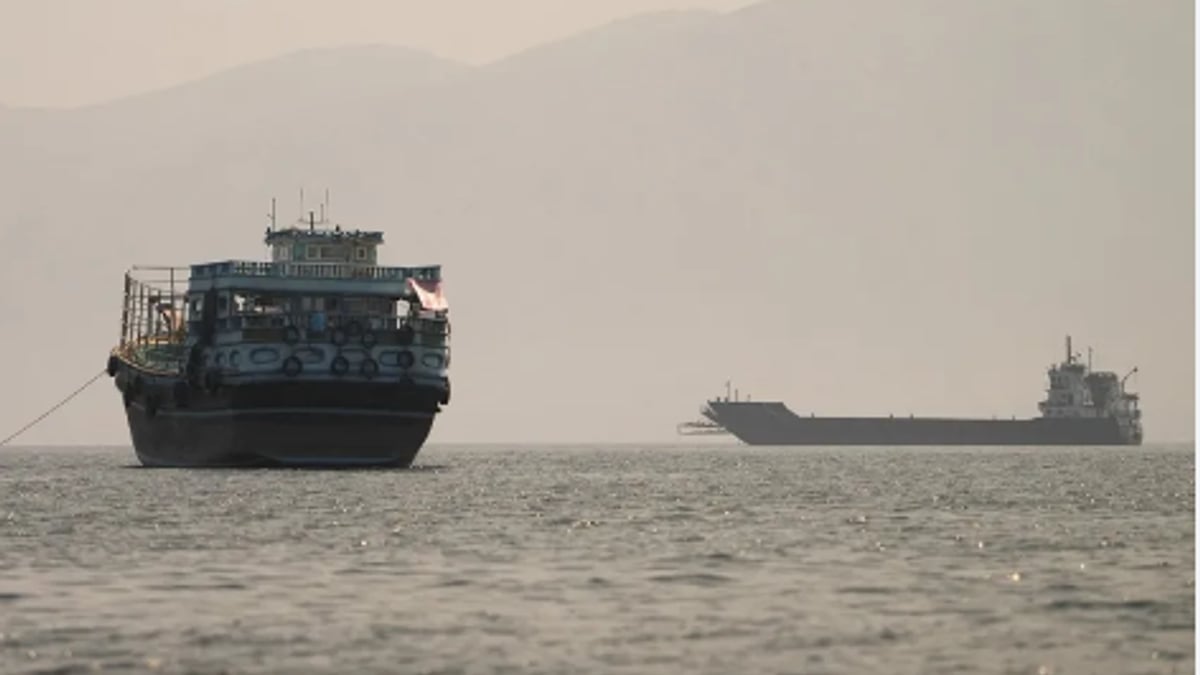
Due to the risks, some oil tankers are transiting the strait with their GPS transponders turned off, while many remain at their positions, according to Lloyd's on Thursday.
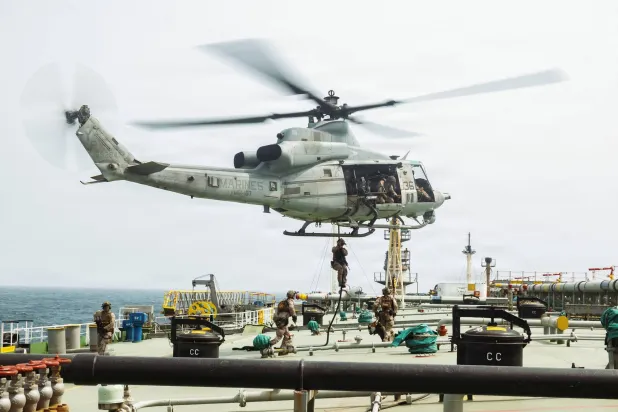
In a post on the platform X, US Central Command said its forces redirected three commercial vessels that attempted to breach the blockade, disabled a ship that did not comply, and boarded another 'to ensure full compliance'.
Original source: Asharq News


Comments (0)
Be the first to comment.