US gold reserves exceed $1 trillion as prices rise
); googletag.cmd.push(function() { onDvtagReady(function () { googletag.display('div-gpt-ad-3341368-3'); }); }); }
Summary
As central banks continue to increase gold purchases to replace the US dollar in their reserves, the price of the precious metal continues to rise. Additionally, disruption and uncertainty caused by the policies of US President Donald Trump's administration, which have led to a continued decline in the dollar exchange rate, are driving investors toward gold as a store of value.
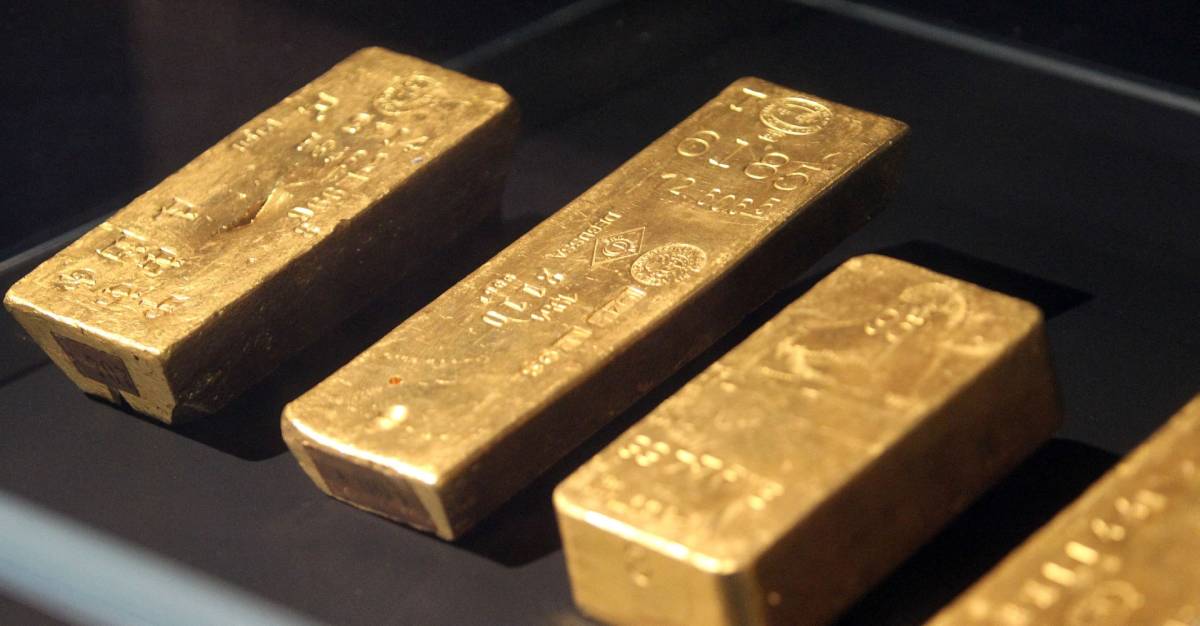
As gold prices rose above the $3,800 per ounce threshold, the value of the US precious metal reserves exceeded the trillion-dollar mark.
Gold prices rose by about 10 percent in September, with an increase of 45 percent during the current year, in addition to a rise of more than 30 percent in 2024, amid expectations that this year's increase in the precious metal price will be the largest since 1979.
As central banks continue to increase gold purchases to replace the US dollar in their reserves, the price of the precious metal continues to rise. Additionally, disruption and uncertainty caused by the policies of US President Donald Trump's administration, which have led to a continued decline in the dollar exchange rate, are driving investors toward gold as a store of value in the face of potential increases in inflation rates, which contributes to the rise in gold prices, as well as the path of interest rate cuts by central banks in major economies.
Half of US gold reserves in deep storage
The volume of US gold reserves is about 261.5 million ounces, according to data from the US Treasury Department.
Unlike most countries that keep their gold reserves at the central bank, the US government directly holds its gold at the Treasury, not the Federal Reserve (the US central bank).
The Fed holds gold certificates equivalent to the value of the Treasury's holdings of the precious metal, adding dollars in return.
Read more
This section contains related articles, placed in (Related Nodes field)
More than half of US gold reserves are stored in a deep vault next to the US Army's Fort Knox base in Kentucky, as gold was moved from New York and Philadelphia in the 1930s to make it less vulnerable to foreign military attacks across the Atlantic.
The remainder is distributed among vaults at West Point, Denver, and a vault 24 meters deep beneath the Fed building in Manhattan, New York.
Difference in gold stock valuation
The book value of the US gold stock, i.e., the official value recorded in the accounts, remains at only about $11 billion, as the gold reserve value is calculated according to the fixed price set by Congress in 1973 at $42.22 per ounce. Thus, the actual market value of the US stock of the precious metal is now about 90 times greater than the book value.
In the event of a revaluation of the gold stock in the US reserves, the Treasury would have up to $990 billion (close to a trillion dollars).
Bloomberg reported that observers expect Trump to resort to revaluing the US reserve to bring its asset value to a trillion dollars, which would reduce public debt from $37.43 trillion to $36.43 trillion.
The report notes that the US administration may be considering taking advantage of this rise in gold prices driven by a wave of investors seeking safe havens amid global trade disruptions, geopolitical tensions, and concerns about a potential government financing crisis in the United States. Inflows to exchange-traded funds and the Fed's return to cutting interest rates have also contributed to boosting these gains.
Earlier, offhand remarks by Treasury Secretary Scott Bessent sparked speculation about the possibility of revaluing the gold reserve at market price, which could generate hundreds of billions of dollars for the federal government. However, Bessent later backed away from the idea, and reports indicated that this option is not under serious consideration. Nevertheless, given the difficulty of predicting Trump's policies, all possibilities remain open, as some observers see.
Although revaluing US gold stock at market price may seem tempting given government debt ceiling constraints, it would have far-reaching effects on the financial system, as it would boost liquidity, putting the Fed in a difficult position regarding US monetary policy control.
It is important to note that if the US government resorts to revaluing its gold stock to reduce the budget deficit and ease the public debt burden, it would not be the first to do so. Both Germany, Italy, and South Africa have previously made decisions to revalue their gold reserves in recent decades, as indicated by a memorandum issued by a Fed economic specialist in August.
); googletag.cmd.push(function() { onDvtagReady(function () { googletag.display('div-gpt-ad-3341368-4'); }); }); }
More about: America gold central banks gold reserve
Original source: Independent Arabia


Comments (0)
Be the first to comment.