War dries up plastic supplies and revives waste recycling in Egypt
Summary: The Middle East is a major global supplier of polyethylene, with approximately 85% of its exports passing through the Strait of Hormuz.
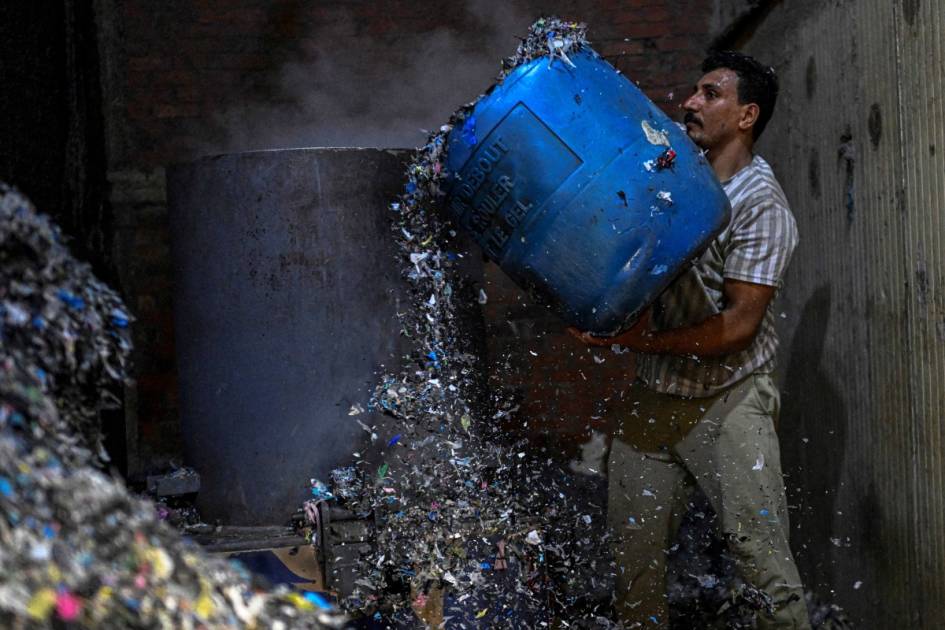
In the winding alleys of the 'Garbage Collectors' City,' known as the 'Zabaleen district' in Cairo, Peter Romani, a recycling worker, receives calls from factories desperate to obtain plastic to make up for the supply shortage caused by the war in the Middle East.
The 25-year-old is one of hundreds of individuals and companies specializing in recycling and manufacturing waste across Egypt, which have recently benefited from a sharp increase in demand following the closure of the Strait of Hormuz amid the war that broke out in the region with a US-Israeli attack on Iran on February 28.
Iran's closure of this vital corridor for oil, gas, and raw materials used to make plastic has caused disruptions in global markets.
However, it has had a positive impact in the sprawling Manshiyat Nasser district in eastern Cairo, where generations of garbage collectors have built one of the most advanced informal recycling systems in the world.
Romani told AFP, standing next to huge bales of compressed plastic, 'Before the war, we were the ones calling factories to offer them our raw materials.' He added, 'But once the war broke out, the situation changed, and factories started contacting us asking: How much do you have? Can you deliver today? Can you deliver everything you have? That has never happened before.'
More than a third of waste
Manshiyat Nasser, a predominantly Coptic Christian area with a population of more than 115,000, is located at the foot of the Mokattam plateau opposite the historic Cairo Citadel.
In this area, more than a third of the capital's waste is processed, according to government figures. There, families live where they work, often separated from mountains of trash by a staircase or a curtain, exposing them to foul odors, plastic fumes, and other health hazards.
On the lower levels, men sort plastic, cardboard, paper, metal, and glass into organized piles destined for workshops and factories.
On the upper levels, children study while mothers prepare food to the sound of televisions from cramped living rooms, all amid the noise of shredding and baling machines for sorted waste coming from below.
In the narrow alleys, the smell of garbage hangs thick in the air as trucks and small carts move to unload daily collected trash, and children run chasing soccer balls.
Cash in advance
Romani specializes in recycled polyethylene, one of the most widely used plastics in the world and a key component in packaging.
According to the Independent Commodity Information Services Group, which focuses on pricing, the Middle East is a major global supplier of polyethylene, with approximately 85 percent of its exports passing through the Strait of Hormuz.
Egypt imports about 40 percent of its raw plastic materials, mainly from Gulf states, Europe, China, and South Korea, according to the Chemical Industries Chamber.
Three industry workers reported that prices for packaging and plastic materials have more than doubled for some products, pushing manufacturers toward locally recycled alternatives.
Read more
Disposal of garbage in Egypt is hard work
The risk of plastic to human health will worsen in the coming years
Is Egypt paying the price of tensions in the Strait of Hormuz?
Rizk Youssef, who primarily recycles PET plastic, widely used in beverage and food packaging, says, 'Factories that used to delay payment now pay half in cash upfront and the other half by check, because they want to secure the raw material.' He adds that 'demand has increased by 200 percent,' noting that prices for some types of recycled plastic have risen by up to 60 percent.
Temporary boom?
The disruption in global markets has had a positive impact on local companies involved in the manufacturing chain.
Fayrouz al-Sayyed, executive director of a factory in Sadat City specializing in chemical polyester made from used plastic bottles, says, 'We have been working in this field for 16 years,' adding that they had not been able to break into distant new markets like Brazil until the recent crisis.
Nesma al-Aref, who works in marketing and sales at a company that converts plastic waste into new packaging materials, notes that demand for the company's recycled products has risen by about 40 percent.
She says, 'We have seen a huge increase in demand... especially from food and beverage companies, because we offer an available alternative to imported materials.'
Despite the gains, workers in the sector believe the boom may fade once supply routes stabilize.
Youssef points out that prices and demand began to drop shortly after US President Donald Trump announced last month that negotiations with Iran were progressing, adding, 'After just one post (by Trump on social media), the markets calmed down... After the war, I'm not sure if this situation will continue or not.'
However, Trump earlier this week announced that the United States would reimpose its blockade on Iranian ports and 'take control' of the Strait of Hormuz, amid renewed escalation with Tehran.
After that, orders returned to previous levels, according to Romani and Youssef.
Youssef says, 'We have gotten used to it,' adding, 'As soon as there is a problem there, customers start calling us.'
Original source: Independent Arabia


Comments (0)
Be the first to comment.