Warning from International Union: Deep-sea mining threatens half of mollusks
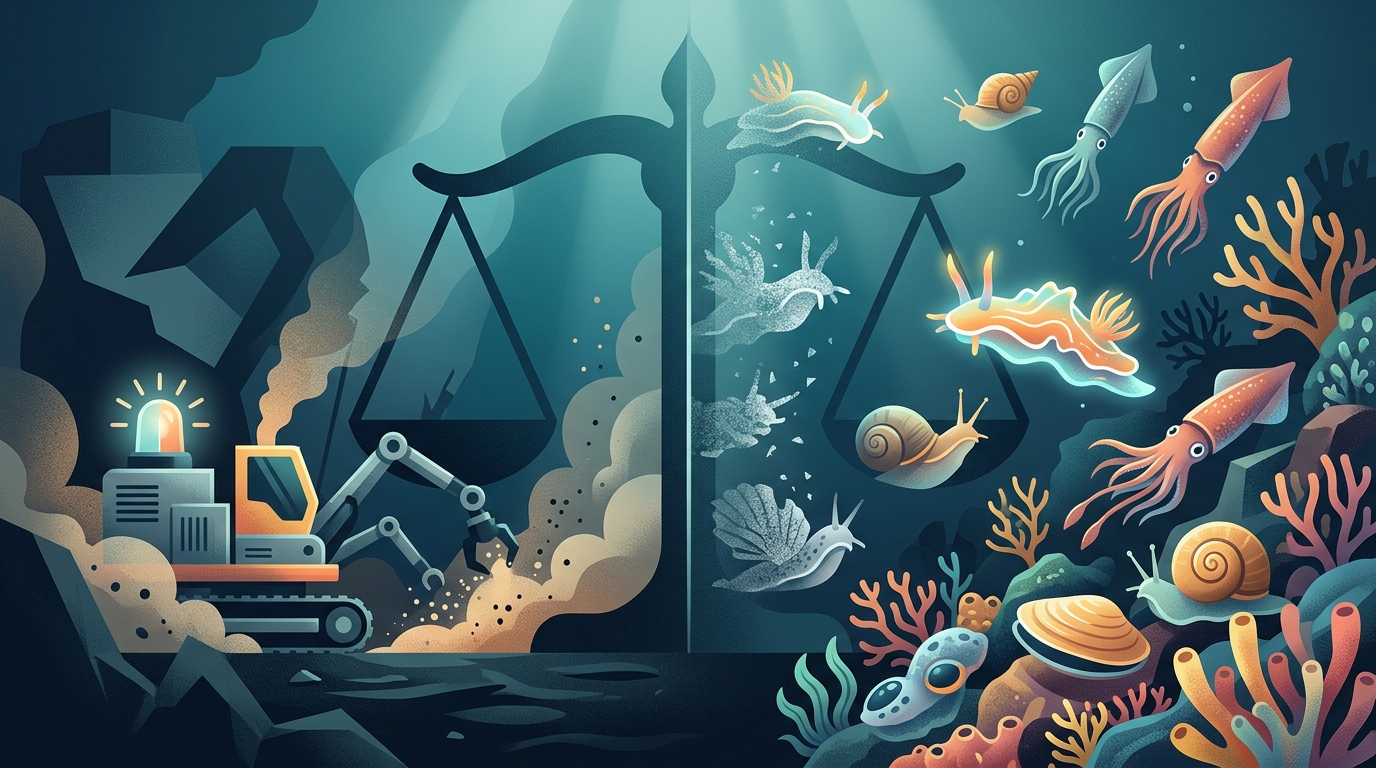
The world’s largest nature conservation network warned on Thursday that more than half of the species of mollusks that gather around underwater hydrothermal vents, and hold promising potential in the fields of medicine and technology, are at risk of extinction due to increasing deep-sea mining operations.
The International Union for Conservation of Nature reiterated its call for a temporary moratorium on these operations, ahead of talks on the matter this month led by the United Nations.
A growing number of companies are extracting vital metals, such as copper, cobalt, and zinc, from the extremely hot fluids emitted by natural hydrothermal vents on the ocean floor.
Although these mollusk species make up less than 1% of global mollusk biodiversity, they play a vital role in the food chains associated with deep-sea hydrothermal vents.
The union said in a statement that diamond mining and proposed industrial development in Namibia and South Africa have pushed the desert rain frog toward extinction.
It added: 'In Australia, the status of the numbat has improved thanks to decades of conservation measures, although its survival depends on ongoing efforts.'
The latest version of the Red List of Threatened Species published by the International Union for Conservation of Nature reports that 62% of mollusk species living in hydrothermal vents — 125 out of 201 species — are now classified as at risk of extinction due to mining operations that create layers of sediment disrupting entire ecosystems.
Dr. Chong Chen, a member of the union’s Mollusk Specialist Group, said: 'Deep-sea mining will suffocate the entire ecosystem,' explaining that the loss of mollusks in a particular vent field also means the loss of all other non-mollusk species living in those vents.
The Red List
Chen added that some mollusks living near hydrothermal vents have already proven their value to human society, such as the scaly-foot snail, which has developed a process of biomineralization that helps researchers obtain nanoparticles for new technologies like solar cells.
Other species are currently being studied to help develop alternatives to plastic.
Chen continued: 'Allowing these species to go extinct could also mean losing biological solutions to future challenges in medicine, raw materials, and technology before we even have a chance to discover them.'
The Red List was released ahead of a meeting of the UN's International Seabed Authority in Jamaica from July 13 to 31 this month, to decide how to regulate the extraction of minerals from the ocean floor.
Like other environmental organizations, the International Union for Conservation of Nature has called for a ban on such activities, but a number of governments want the opposite.
The administration of US President Donald Trump accelerated the process of issuing licenses to American companies searching for vital minerals in international waters.
Original source: Asharq News




Comments (0)
Be the first to comment.