Warsh in First Testimony Before Congress: Our Priority is to Bring Inflation Back to Target
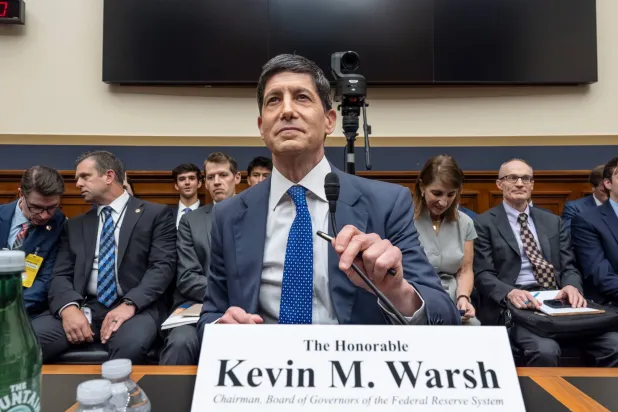
Federal Reserve Chairman Kevin Warsh pledged to bring inflation back to the central bank’s target through 'correct monetary policy'.
Federal Reserve Chairman Kevin Warsh sent a dual message to the markets in his first testimony before Congress; he pledged to bring inflation back to the central bank’s target through 'correct monetary policy,' while emphasizing that the U.S. economy continues to show remarkable strength, supported by an unprecedented boom in investments related to artificial intelligence, which is expected to boost growth and productivity in the long term.
The Fed chairman’s testimony before Congress holds exceptional importance, as it is the official occasion in which the central bank presents its assessment of the U.S. economy, and also represents an opportunity for markets to extract signals about the future path of interest rates. This week’s session carries even greater weight because it is Warsh’s first since he became central bank chief in May, after months of debate over his independence from President Donald Trump.
In his testimony before the House Financial Services Committee, ahead of a second session before the Senate Banking Committee on Wednesday, Warsh outlined the contours of the new phase for the U.S. central bank, placing fighting inflation, Fed independence, and institutional reform at the top of his priorities, while completely avoiding any hint of an imminent interest rate cut, despite repeated pressure from President Donald Trump.
Warsh said in his prepared testimony: 'The Fed’s primary goal is to get the monetary policy right, or as close to right as possible, and if we succeed in that — and we will — then the inflation wave the United States has experienced over the past five years will become a thing of the past.'
Trump speaks during Warsh’s swearing-in ceremony at the White House (Reuters)
Inflation Slows... But Risks Remain
Warsh’s remarks coincided with the release of data showing U.S. inflation slowed in June more than market expectations, a development that may ease pressure on American households but does not yet determine the path of interest rates amid ongoing turmoil in the Middle East and rising oil prices. The consumer price index slowed to 3.5% year-on-year in June, down from 4.2% in May, while economists had expected 3.8%.
The monthly index fell by 0.4% after rising 0.5% in the previous month, while core inflation, which excludes food and energy prices, held steady at 2.6% year-on-year, down from 2.9% in May, and recorded no monthly increase.
However, this improvement may be temporary; the truce collapsed last week after renewed attacks on oil tankers in the Strait of Hormuz, followed by new military escalation between Washington and Tehran, and the U.S. announcement of reimposing a naval blockade on Iran, which sent oil prices rising again.
Therefore, investors believe that the June data, despite its positivity, may not be enough to change the monetary policy path, given the possibility of inflationary pressures returning if energy prices remain high in the coming months.
Inflation... The Absolute Priority
Although markets were awaiting any signal about the timing of interest rate cuts, Warsh was careful to steer the discussion toward a completely different issue, stressing that the central bank’s primary task remains restoring price stability.
He said that the inflation wave lasting since 2021 has imposed a heavy burden on American households and businesses, while recent increases in energy prices have added to cost-of-living pressures, adding that monthly price fluctuations remain normal in a world experiencing successive disruptions, but sustained inflation is ultimately a product of monetary policy.
He affirmed that members of the Federal Open Market Committee 'do not tolerate persistently high inflation,' and that they are committed to bringing it back to the 2% target, a goal that has not been achieved for five years.
These messages carry special significance because they come at a time when markets have begun betting on the possibility of monetary policy easing in the second half of the year, something Warsh did not support in his testimony.
Warsh testifies before the House Financial Services Committee at the Capitol (AFP)
No Rate Cut... Yet
Perhaps the most notable thing that caught investors’ attention was that the Fed chairman did not mention interest rate cuts at all, a signal consistent with his stance during the first monetary policy committee meeting in June, when he kept rates unchanged and did not even discuss the option of a cut.
This represents a continuation of the hawkish approach he has adopted since taking office, even though President Donald Trump had selected him after repeatedly stating his desire to see a Fed chairman more inclined to cut rates. But Warsh appeared keen to affirm that monetary policy decisions will remain based on economic data, not political considerations.
A woman grocery shopping at a store in Los Angeles (dpa)
First Test of Independence
Warsh’s testimony holds exceptional importance because it is his first direct confrontation with Congress since taking office. When he was sworn in in May, Trump did not hide his support for him, but told the audience: 'Go and get the job done.'
However, the first steps taken by Warsh since becoming Fed chairman painted a different picture. He kept interest rates unchanged, showed no readiness to immediately respond to White House demands for cuts, and formed working groups comprising academic and banking figures known for their professional expertise, away from names with partisan backgrounds who held positions in other federal institutions.
John Faust, former adviser to former Fed Chairman Jerome Powell, believes that fears of Warsh becoming a mere executor of the U.S. president’s wishes quickly receded after his first press conference. He said his message was clear from the start, showing a tendency to maintain tight monetary policy rather than any inclination toward easing.
Artificial Intelligence... Between Opportunity and Inflation Risks
Among the most interesting aspects of Warsh’s testimony was his changed tone toward artificial intelligence. Whereas before becoming Fed chairman he believed AI would lead to a productivity boom that would quickly lower inflation, he appeared more cautious in his testimony, acknowledging that these gains may take time to materialize.
He said the U.S. economy is currently witnessing the biggest wave of investment in data centers, digital infrastructure, electronic chips, and software, stressing that these investments represent the most prominent feature of the U.S. economy at this stage.
He added: 'We do not know to what extent the economy will benefit from the AI revolution, but it seems inevitable that what we today call investment in AI will soon become just investment.'
In contrast, he acknowledged that this investment boom is currently raising demand for capital, skilled labor, and infrastructure, which may generate temporary inflationary pressures before productivity gains begin to appear in the long term.
Comprehensive Review of the Federal Reserve
Original source: Asharq Al-Awsat

Comments (0)
Be the first to comment.